
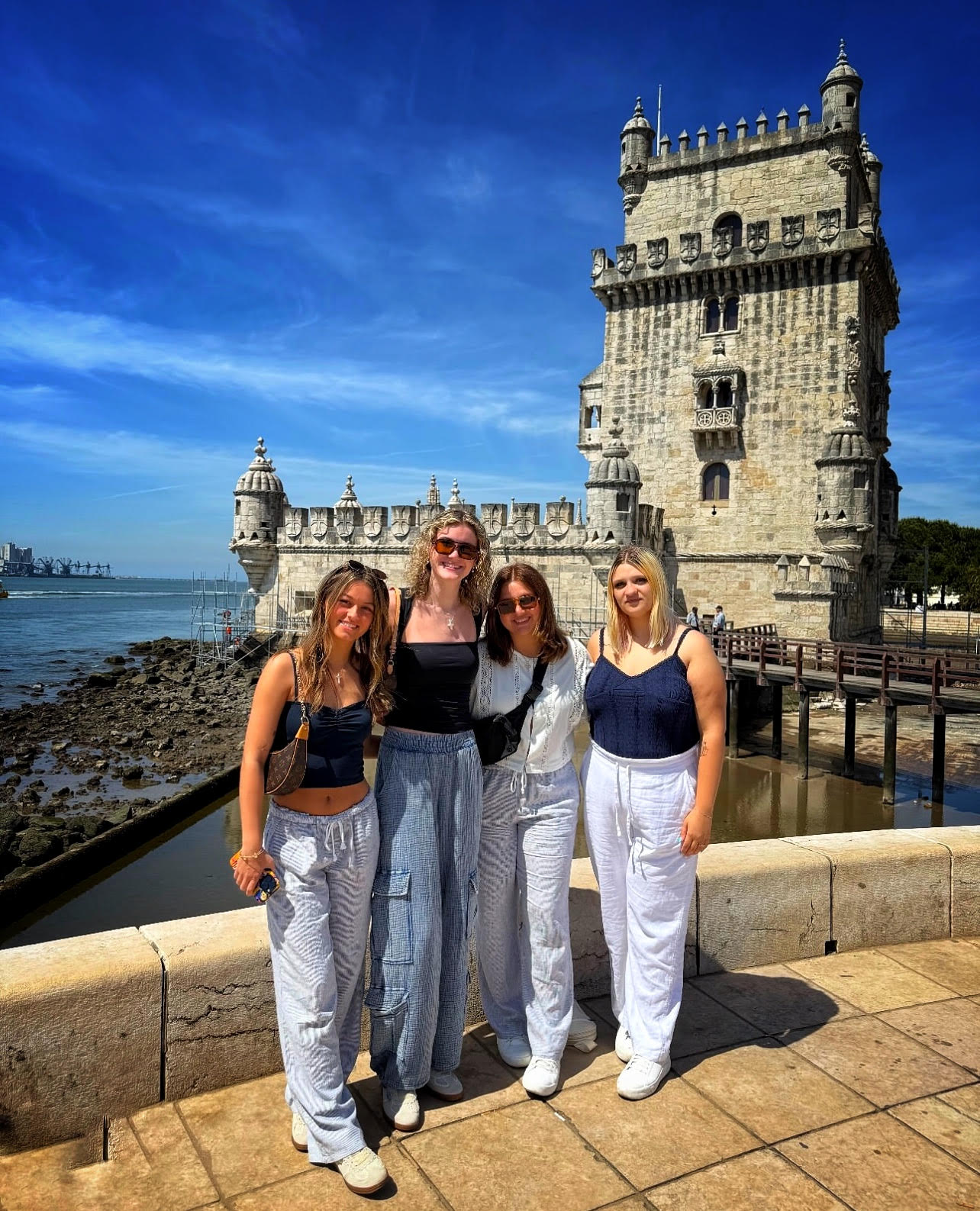
Belem Tower, Lisbon, Portugal, 2025
PSU Greater Allegheny students traveled to Portugal during the Summer of 2025. This particular trip focused on global social problems. In addition to visiting with public policy experts, who provided information on current initiatives that are underway to address social problems in connection with aging populations and drug use/misuse, the students also learned about related problems related to immigration, displacement, and gentrification.
Our students had the opportunity two great major cites – Lisbon and Porto. Some highlights of our trip are depicted here, though to be fair the photos can’t fully capture all of the experiences and memories that were made.
Overview
Please note that the activities represented on this post are extensive. We were further assisted in our efforts to see the city by our academic partners in Portugal, Universidade Nova de Lisboa and CIEE.
Studies and classes took place on the campus of the Universidade Nova de Lisboa, School of Social Sciences and Humanities (NOVA FCSH), CIEE’s partner institution. Universidade Nova de Lisboa was founded in 1977 and is now one of the highest-ranking social sciences and humanities schools in Portugal. It is dedicated to education, scientific research, and cultural creation. Courses are taught in Portuguese. The school hosts more than 2,800 undergraduate students and 16 research centers and is located in the heart of Lisbon.
CIEE is a nonprofit study abroad and intercultural exchange organization, who since 1947 has been bringing the world together, advancing peace by building bridges of mutual understanding between different people, countries, and cultures.
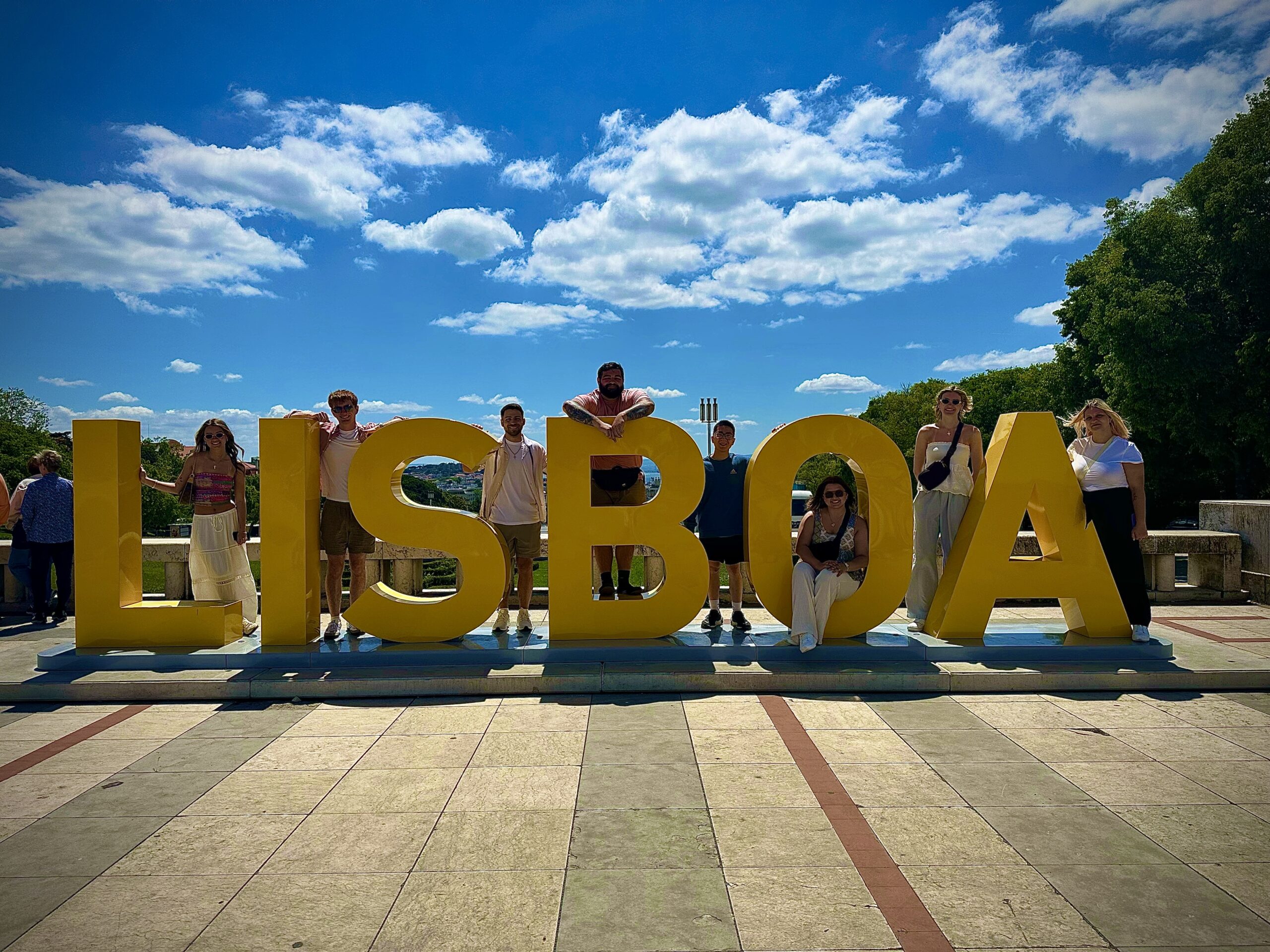
Lisbon
Lisbon is Portugal’s most cosmopolitan city, celebrated for its rich history, diverse artistic heritage, and dynamic cultural scene. From the medieval streets of Alfama to the surrealist works of artists and writers, the city offers endless inspiration for students studying literature, history, philosophy, the arts, and more. Whether you’re exploring the Jerónimos Monastery and other architectural masterpieces or engaging with the city’s thriving literary and artistic communities, Lisbon is the perfect place to study language and culture abroad (CIEE website).
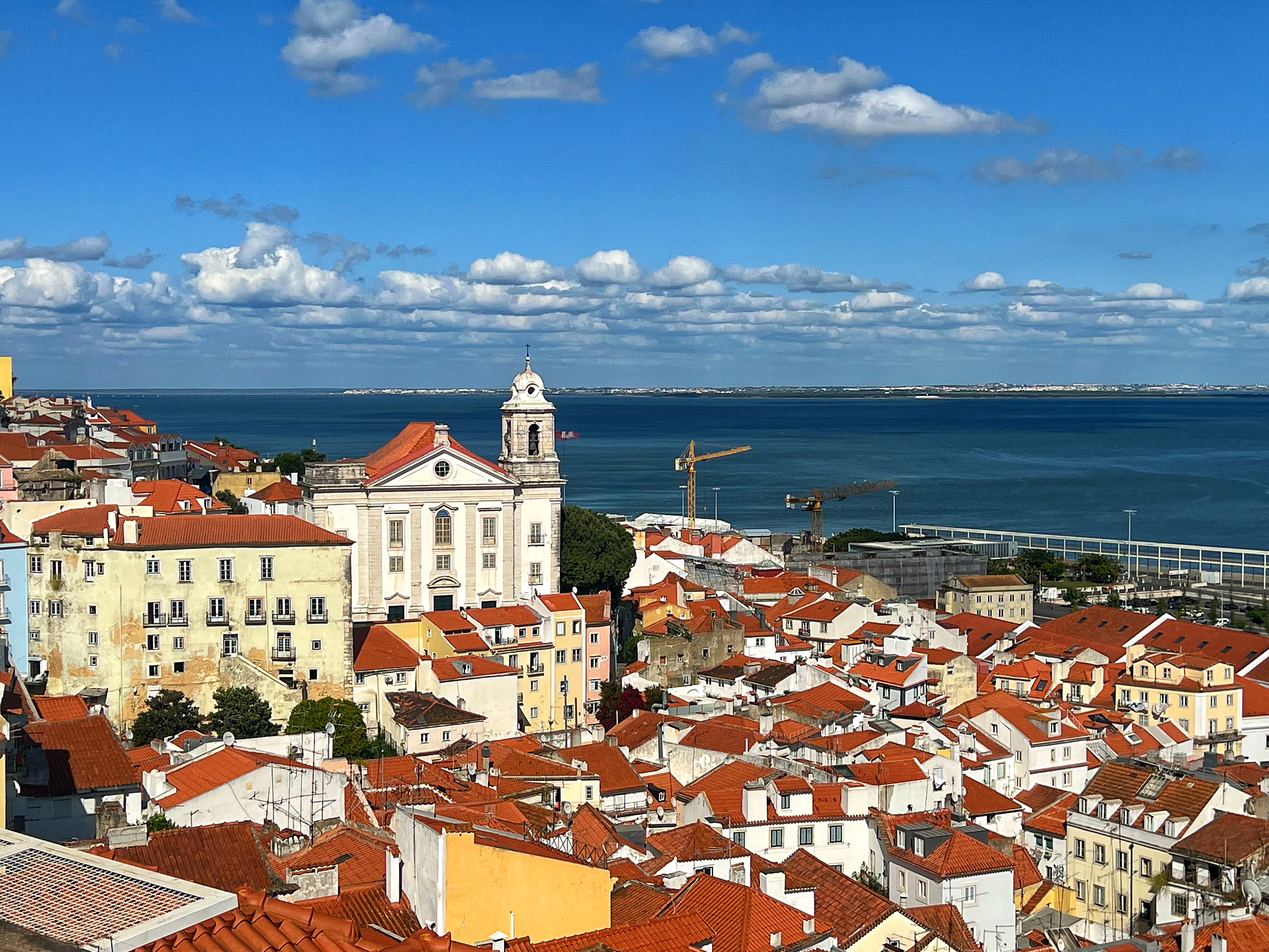
National Tile Museum, Lisbon
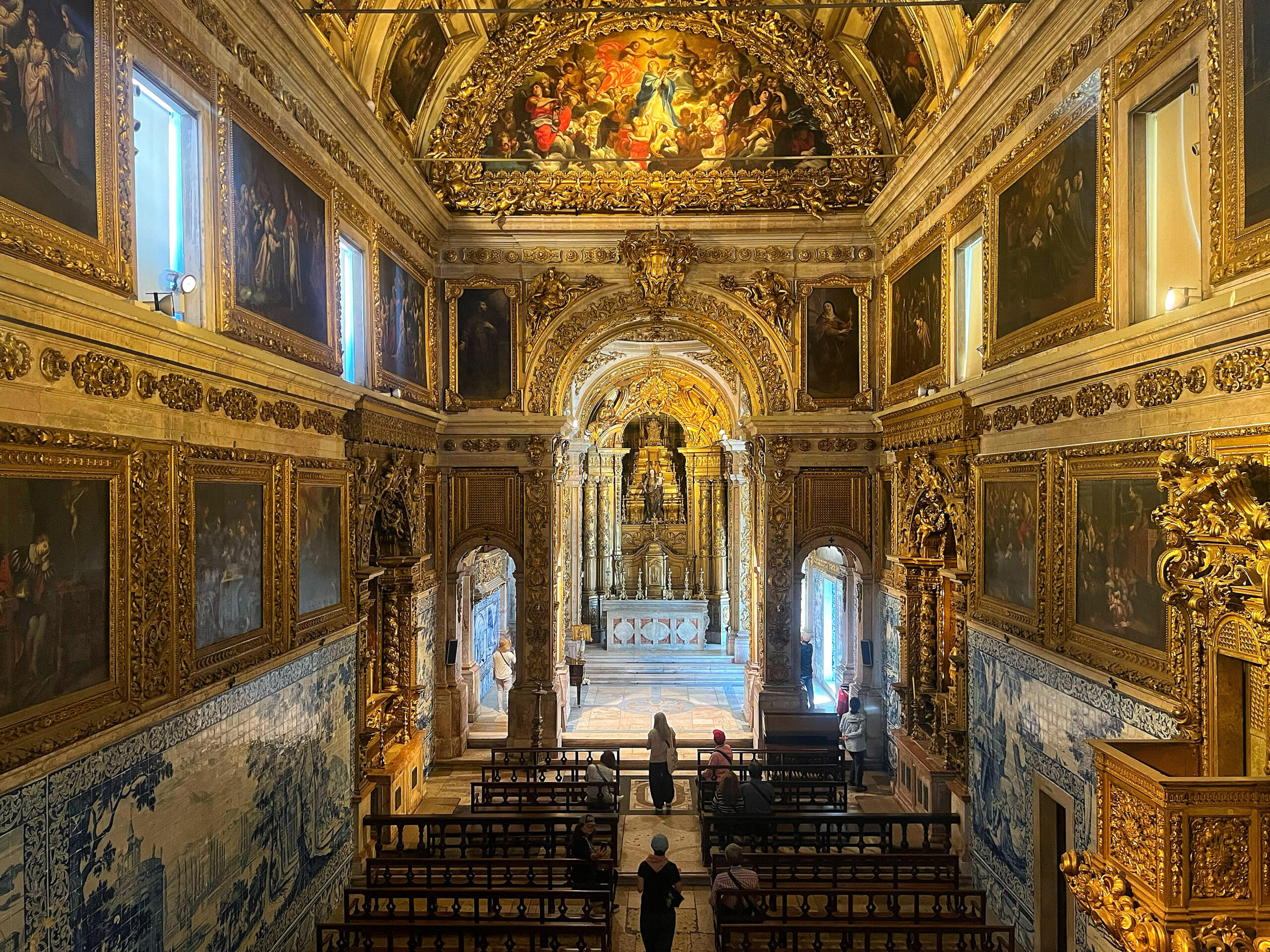
Church of the Madre de Deus
The Museu Nacional do Azulejo, also known in English as the National Tile Museum, is an art museum in Lisbon that is dedicated to showcasing the azulejo – the traditional tilework of Portugal. In addition to learning about the history as well as practice of tile making, students were able to visit the Convent and Church of the Madre de Deus, located on the museum premises.
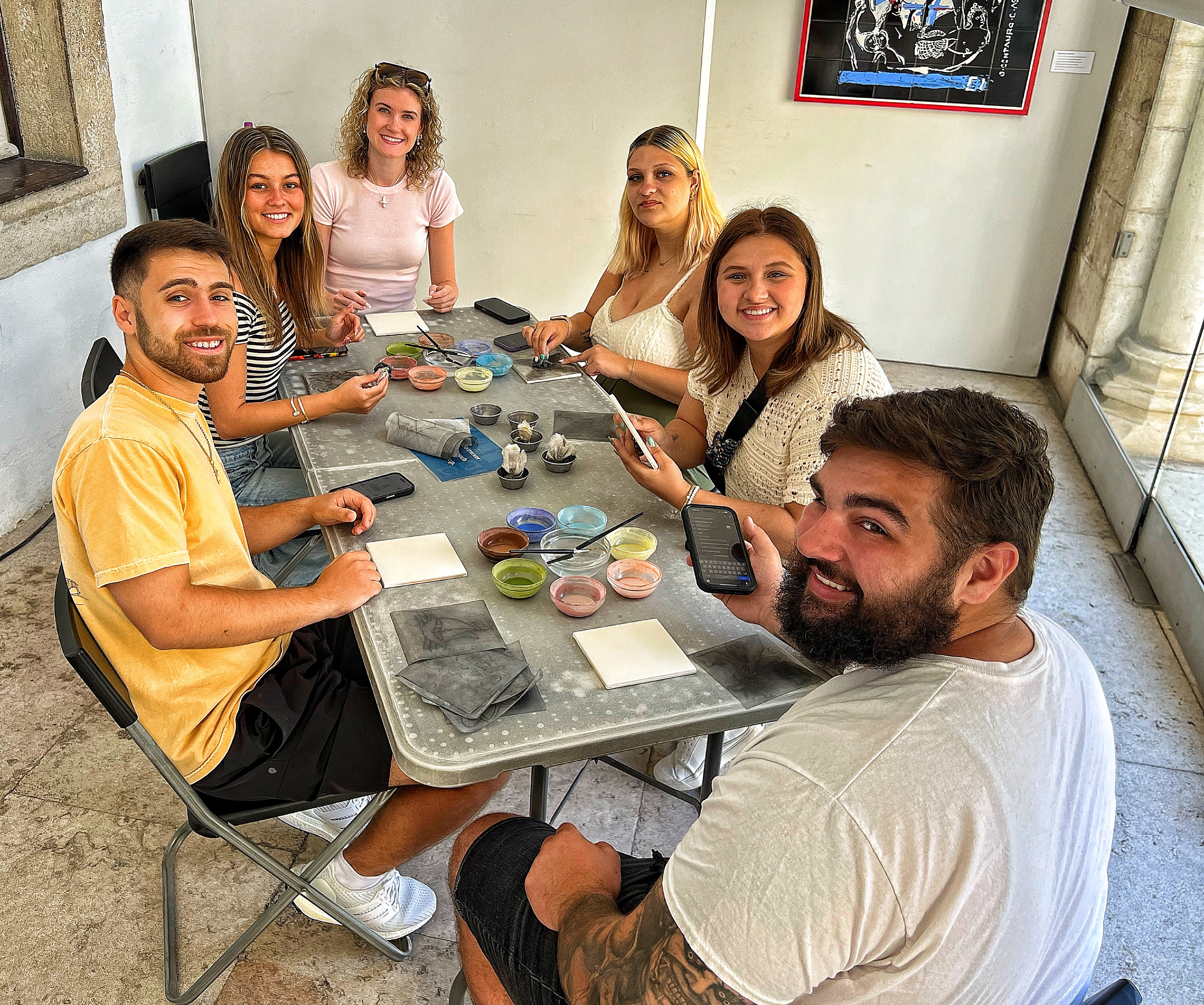
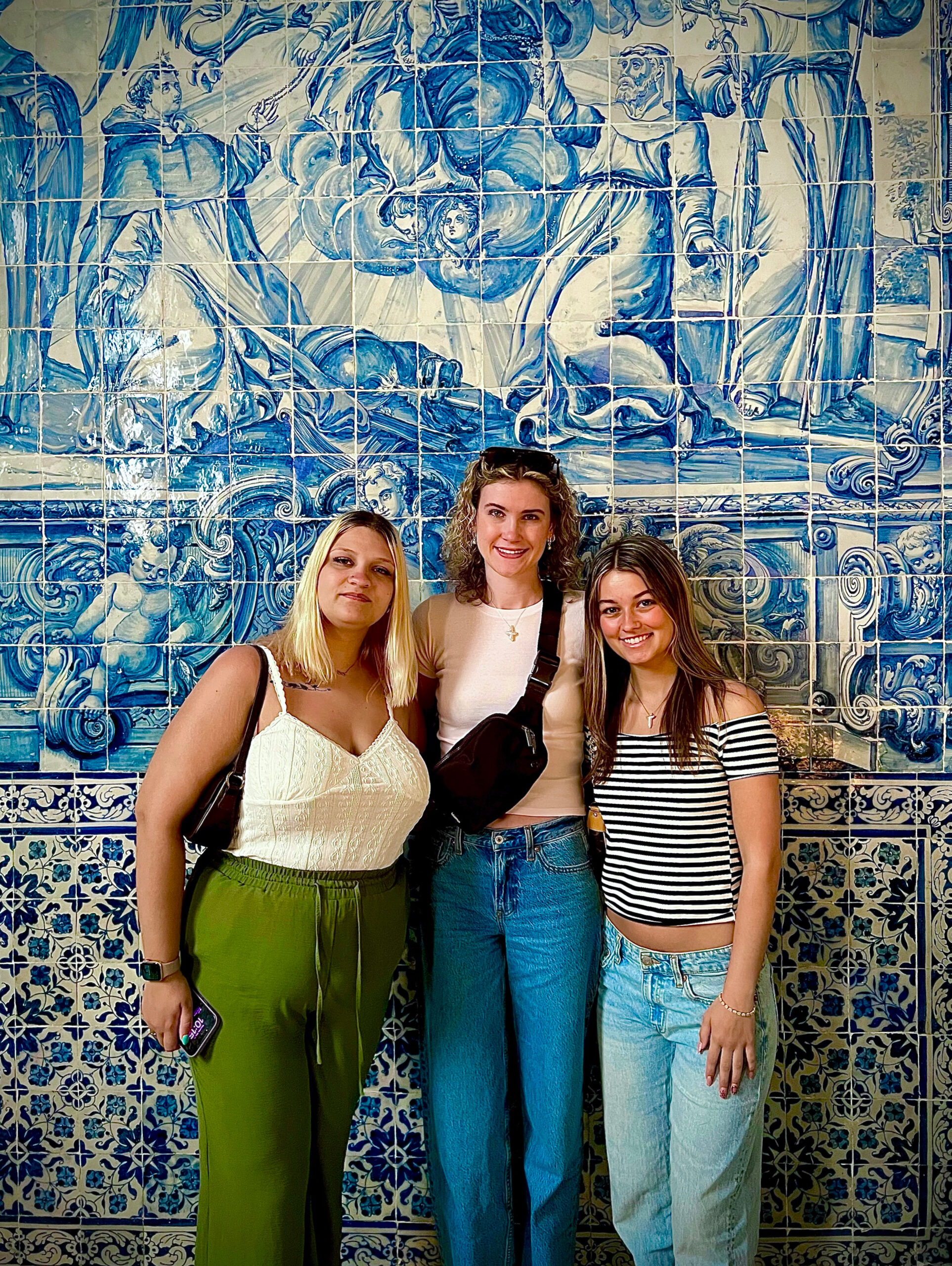
Alfama
The steep streets of Alfama, one of Lisbon’s oldest areas, are lined with shops selling traditional crafts and cafes. Passengers pack the historic no. 28 tram, which winds through Alfama on its way up to 11th-century São Jorge Castle. The students took some time here to wander the alley ways, while chatting up vendors and looking for souvenirs to purchase.
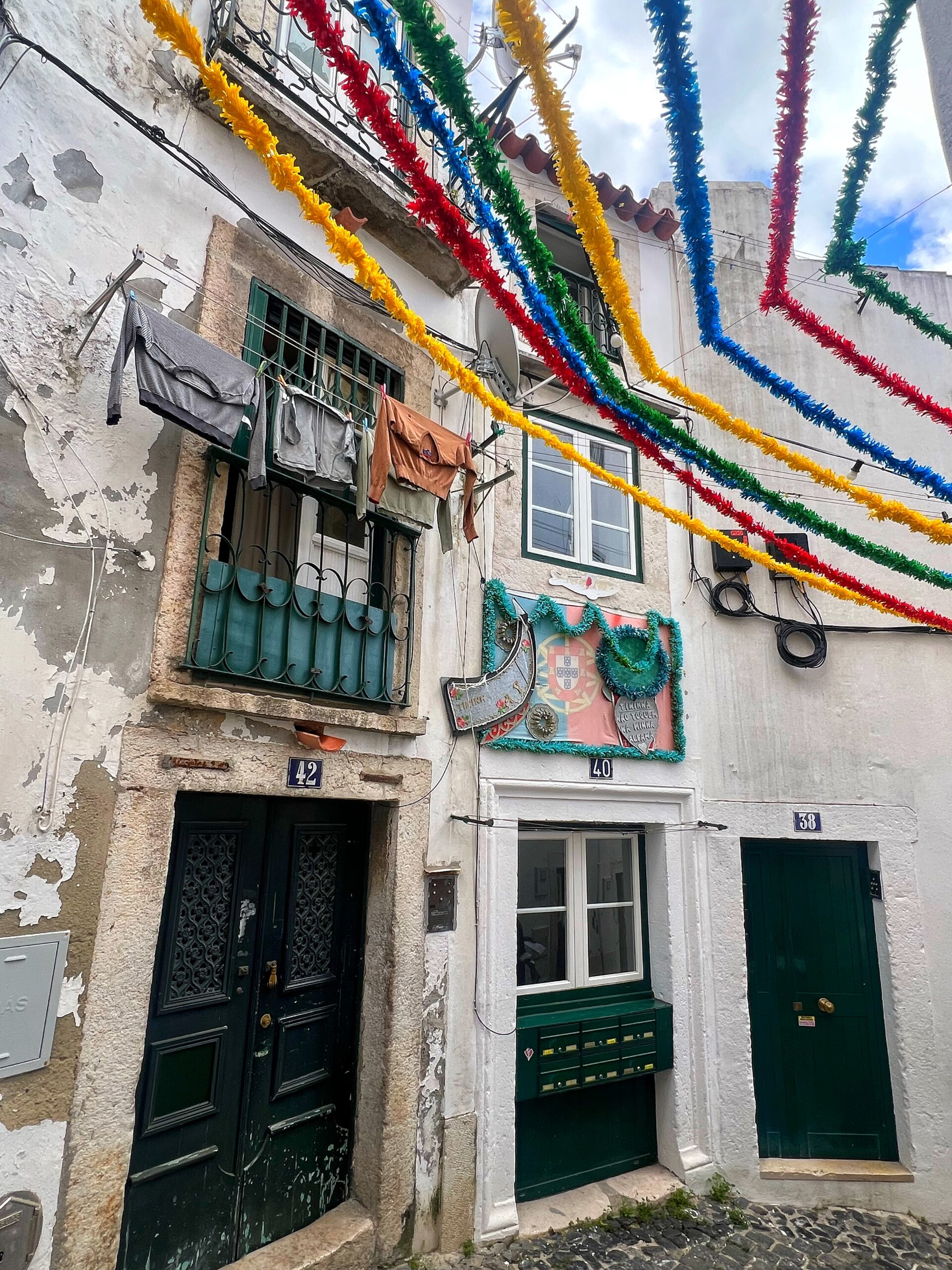
Alfama
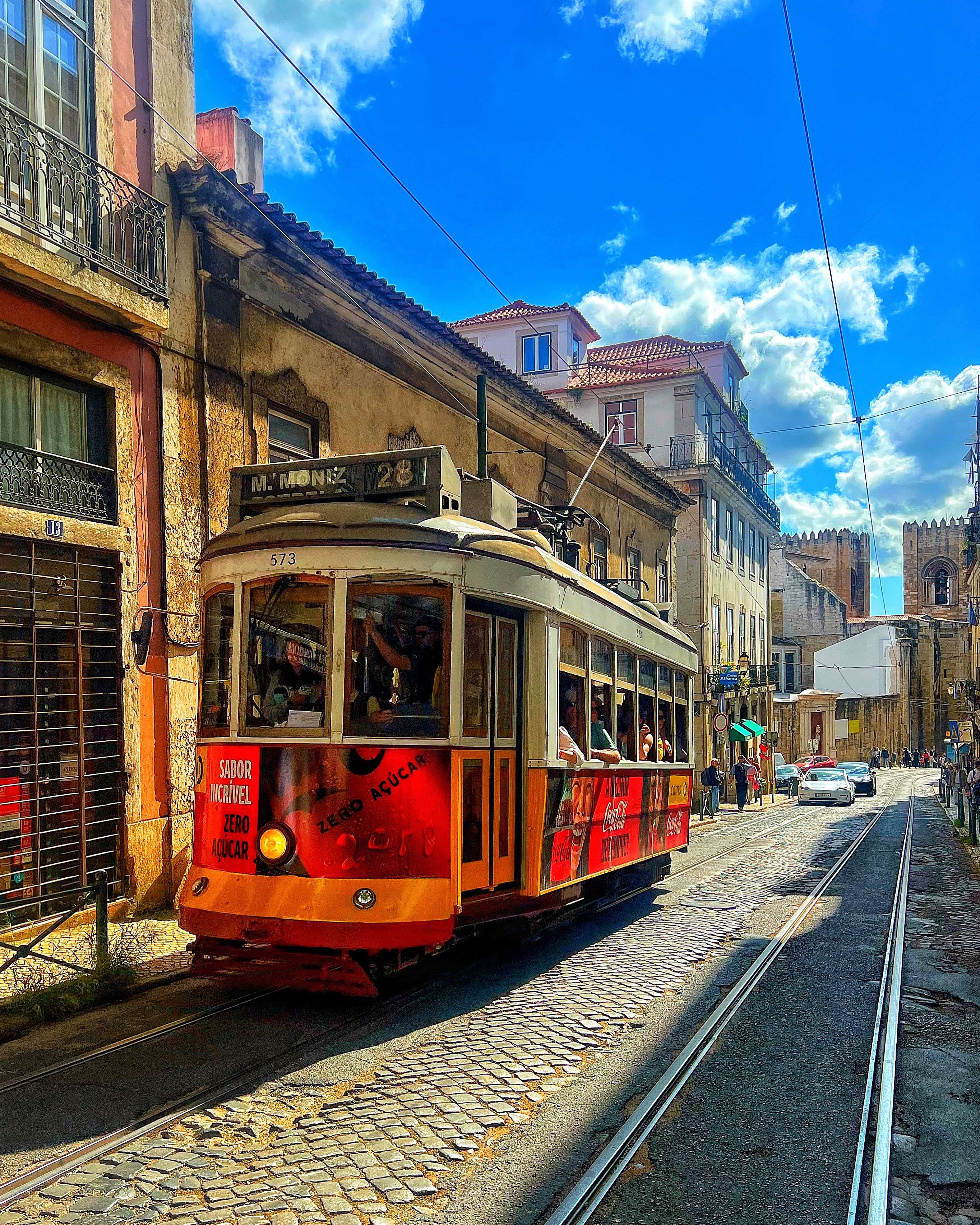
Tram 28
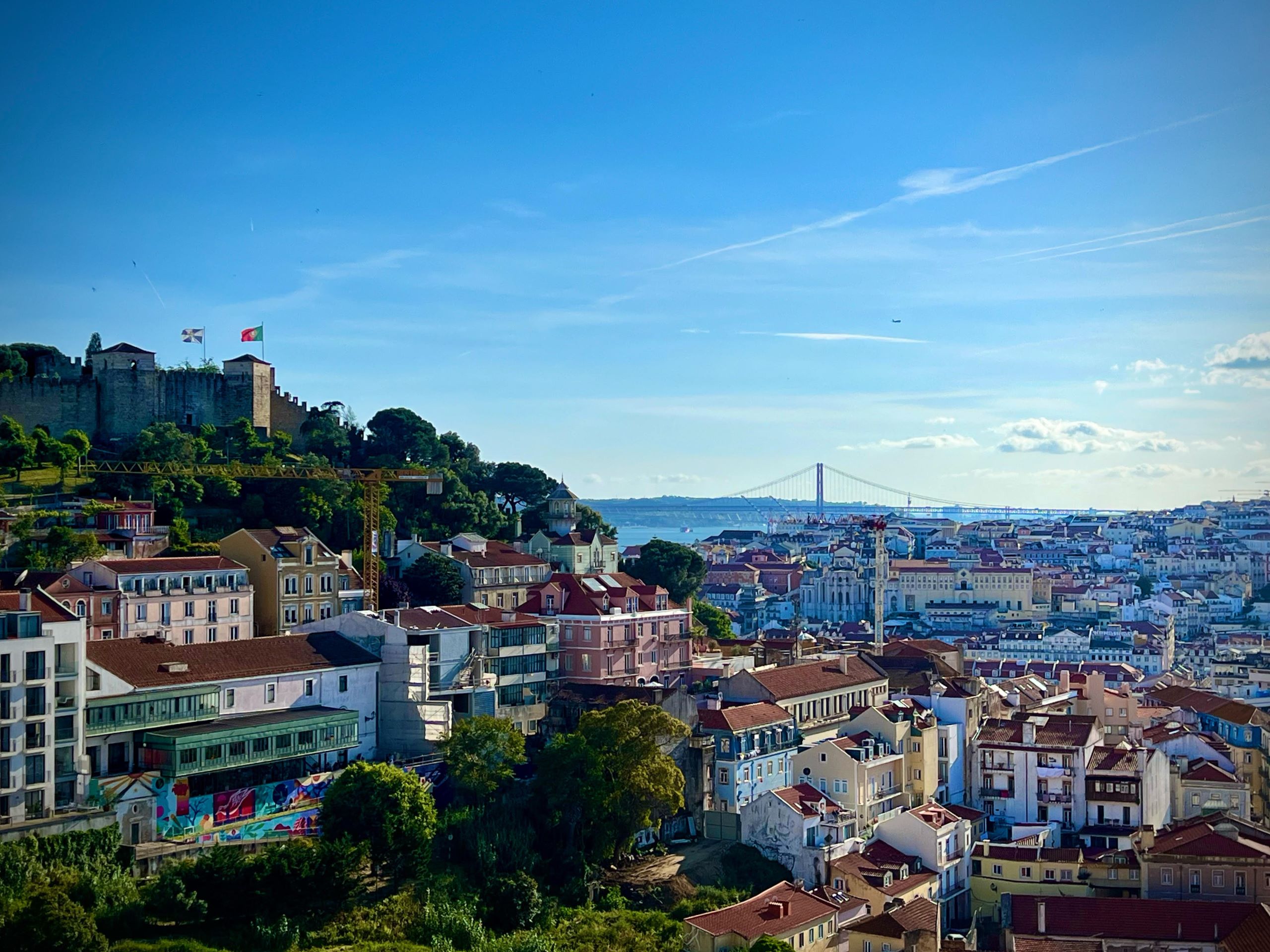
Miradouro da Graca (view over Lisbon and the São Jorge Castle from Graca)
Sintra
Sintra is a resort town in the foothills of Portugal’s Sintra Mountains, near the capital, Lisbon. A longtime royal sanctuary, its forested terrain is studded with pastel-colored villas and palaces. To access this area is to step into another world. Shrouded behind weeping forest covered in moss are palaces and castles that defy imagination. The Moorish- and Manueline-style Sintra National Palace is distinguished by dramatic twin chimneys and elaborate tilework. The hilltop 19th-century Pena National Palace is known for a whimsical design and sweeping views. And then there is Quinta da Regaleira and it’s Labyrinthic Grotto and Initiation Well. Nothing short of spectacular!
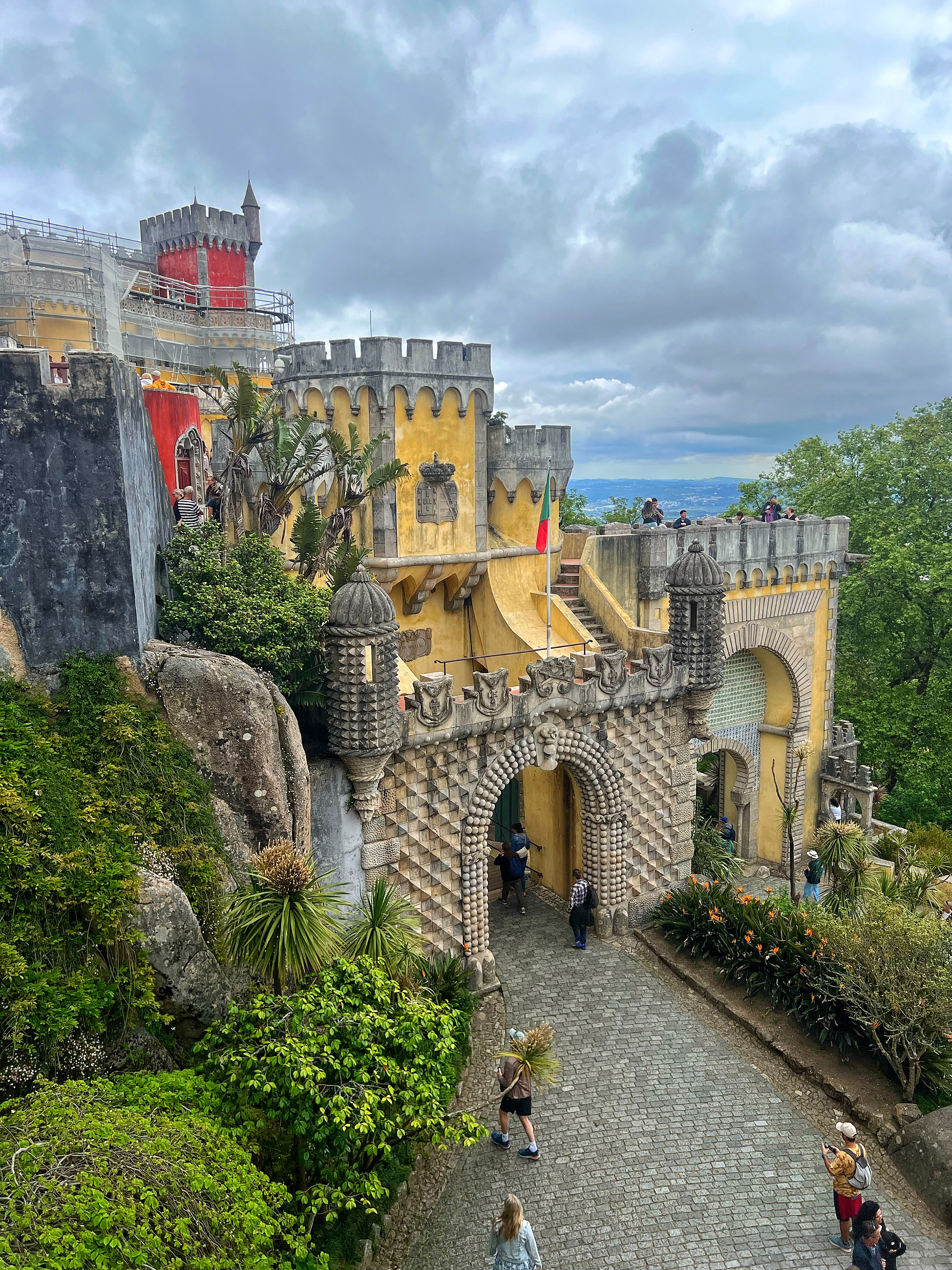
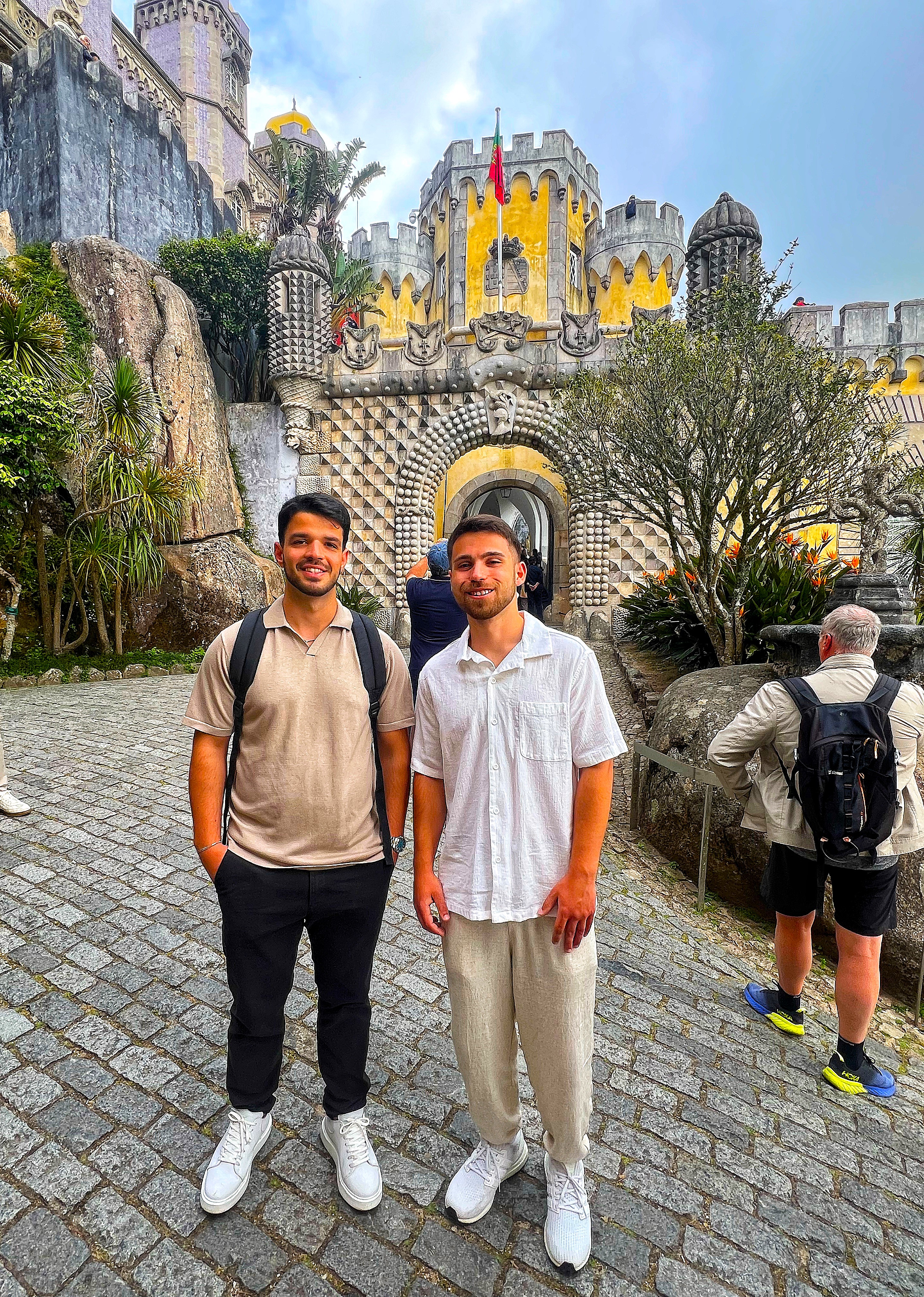
Pena Palace entrance
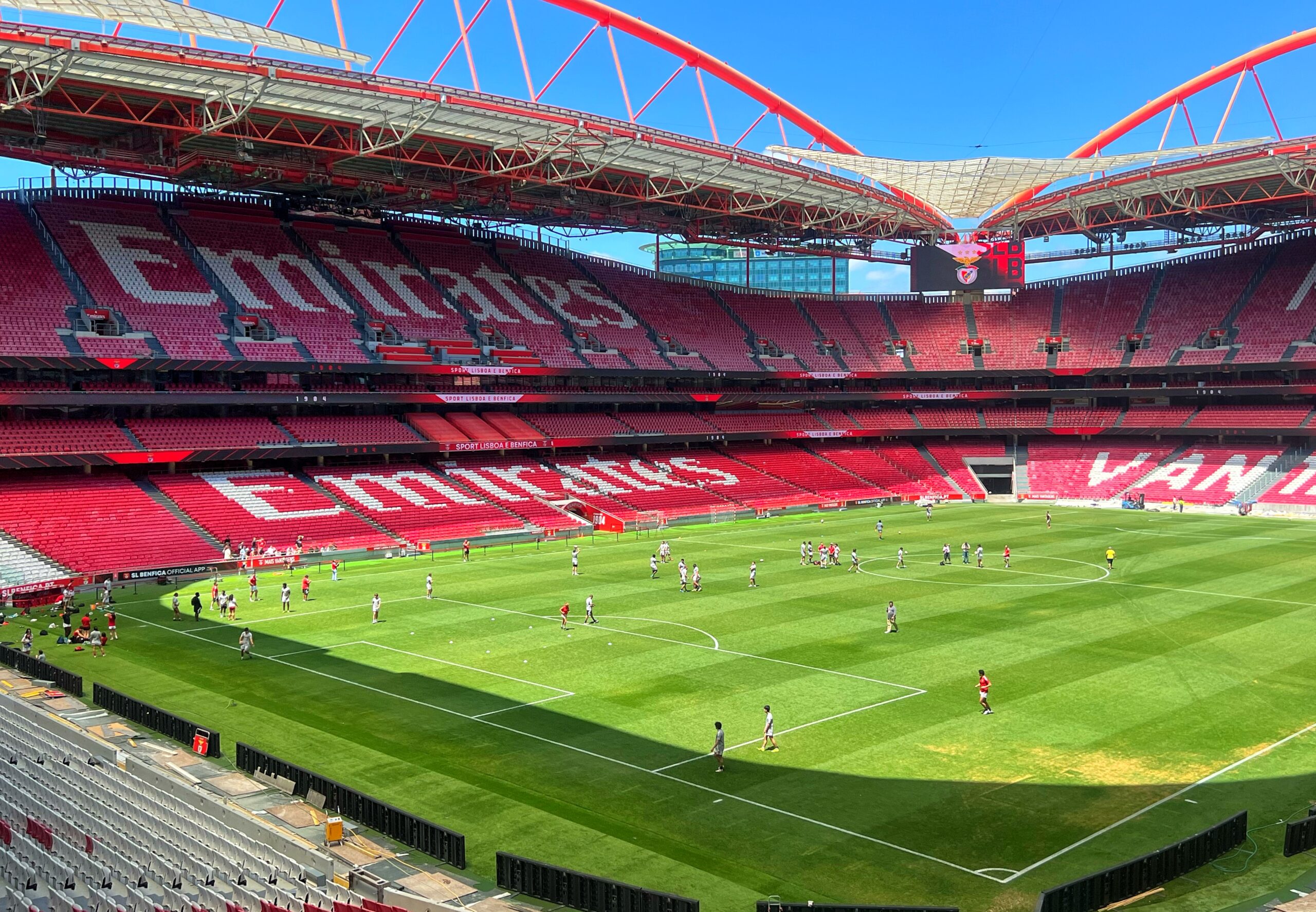
Estadio da Luz Lisboa
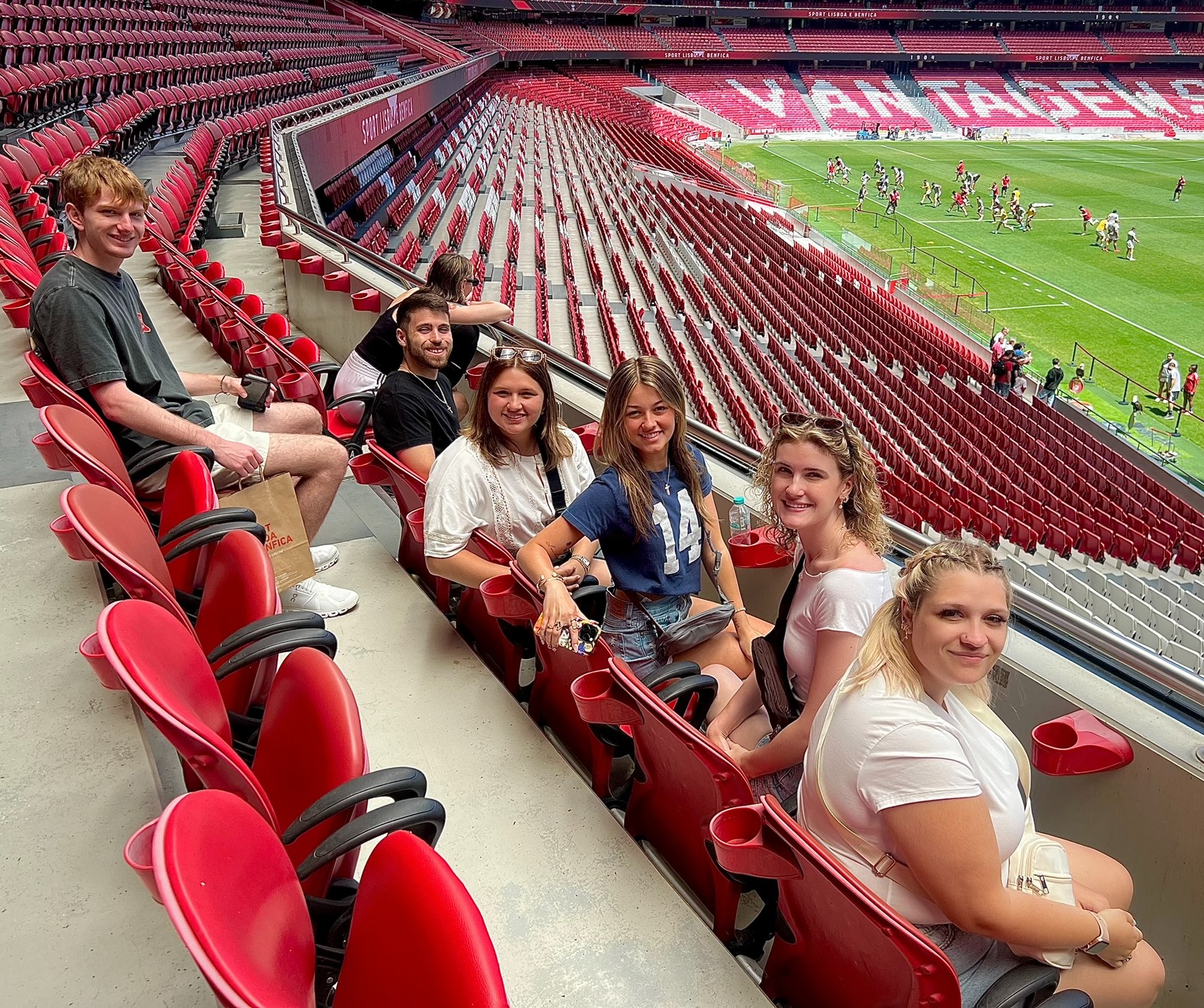
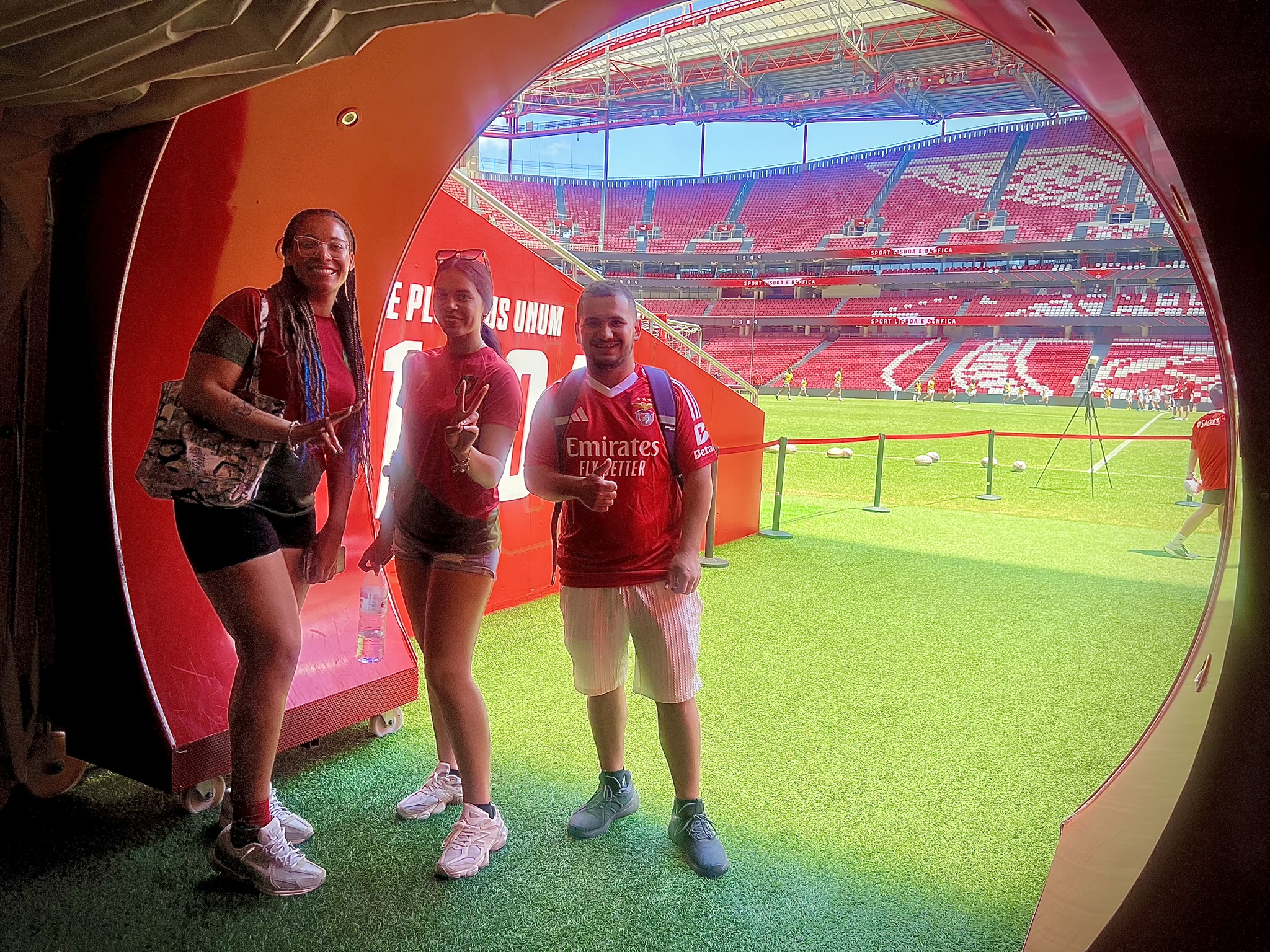
We have lots of football fans at GA, so a visit to Lisbon without making a visit to the famous Estádio da Luz (officially named Estádio do Sport Lisboa e Benfica) was not even thinkable. This multi-purpose stadium is used mostly for association football matches and hosts the home games of the Portuguese club Benfica.
As it so happens, it is also the largest stadium in Portugal, with a seating capacity of 64,642. The stadium is not only a venue for Benfica matches but also for the Portugal national team and has hosted major international events like the UEFA Euro 2004 final and two UEFA Champions League finals. In 2014, it was elected the most beautiful stadium of Europe in a 2014 online poll by L’Équipe.
Benfica
Founded on 28 February 1904, as Sport Lisboa, Benfica is one of the “Big Three” clubs in Portugal, along with rivals Sporting CP and FC Porto. Benfica are nicknamed As Águias (The Eagles), for the symbol atop the club’s crest, and Os Encarnados (The Reds), for their shirt color.
So you think Steeler fans are crazy? You ain’t seen nothing until you witness the Benfica – Sporting rivalry. Benfica undoubtedly is the most popular club in Portugal. Moreover, it has always been seen as the working-class club of Portugal. Benfica has approximately 14 million supporters worldwide: over 5.5 million in Europe (4.7 in Portugal); over 6 million in Mozambique (3.8) and Angola (2.7); over 1 million in the United States and Canada, with the remainder in Brazil, Venezuela, the Caribbean, Idochina, Australia, and India. According to a study performed for UEFA in 2012, Benfica is the European club with the highest share of football supporters in its own country (47%).

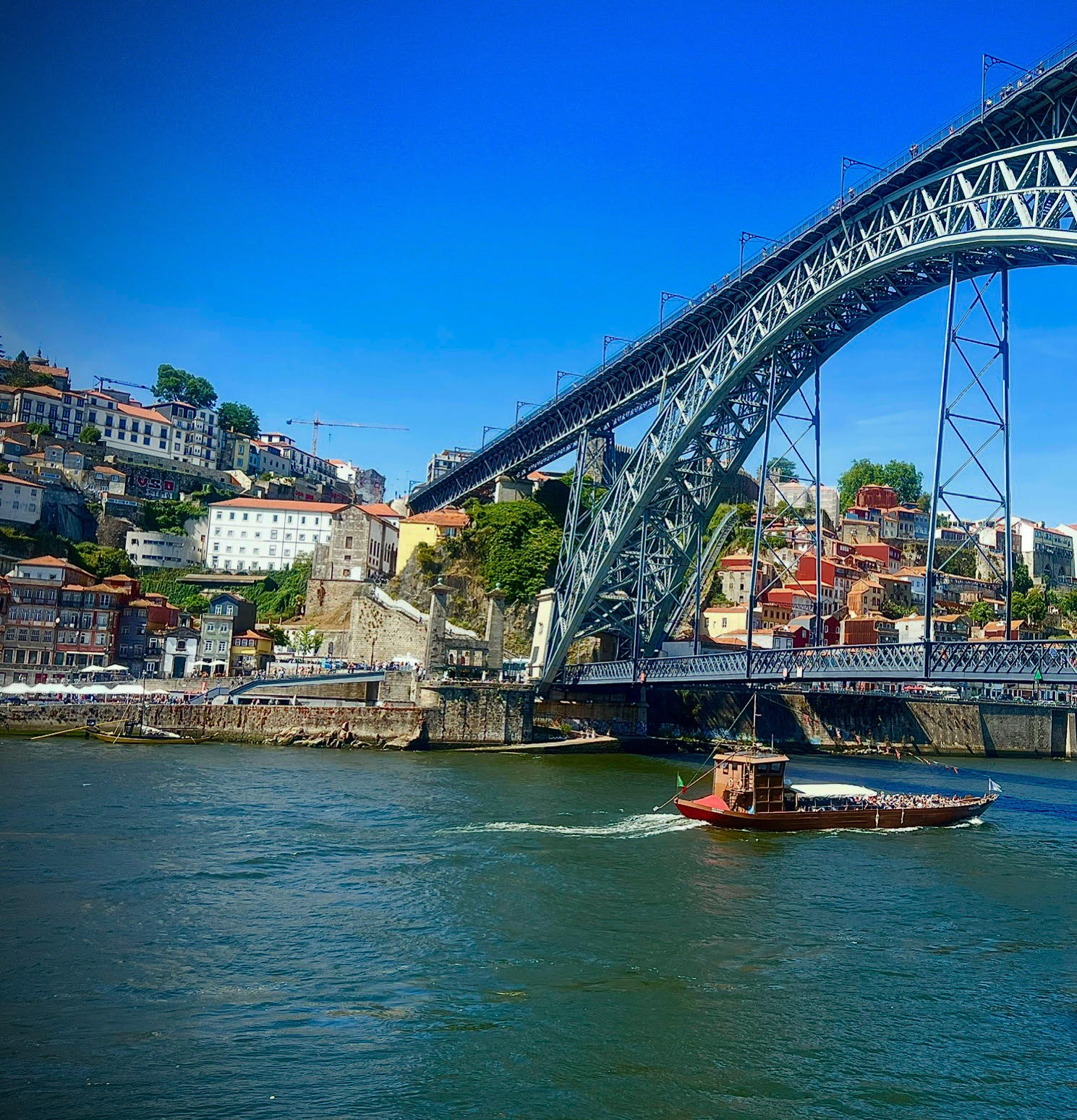
Porto
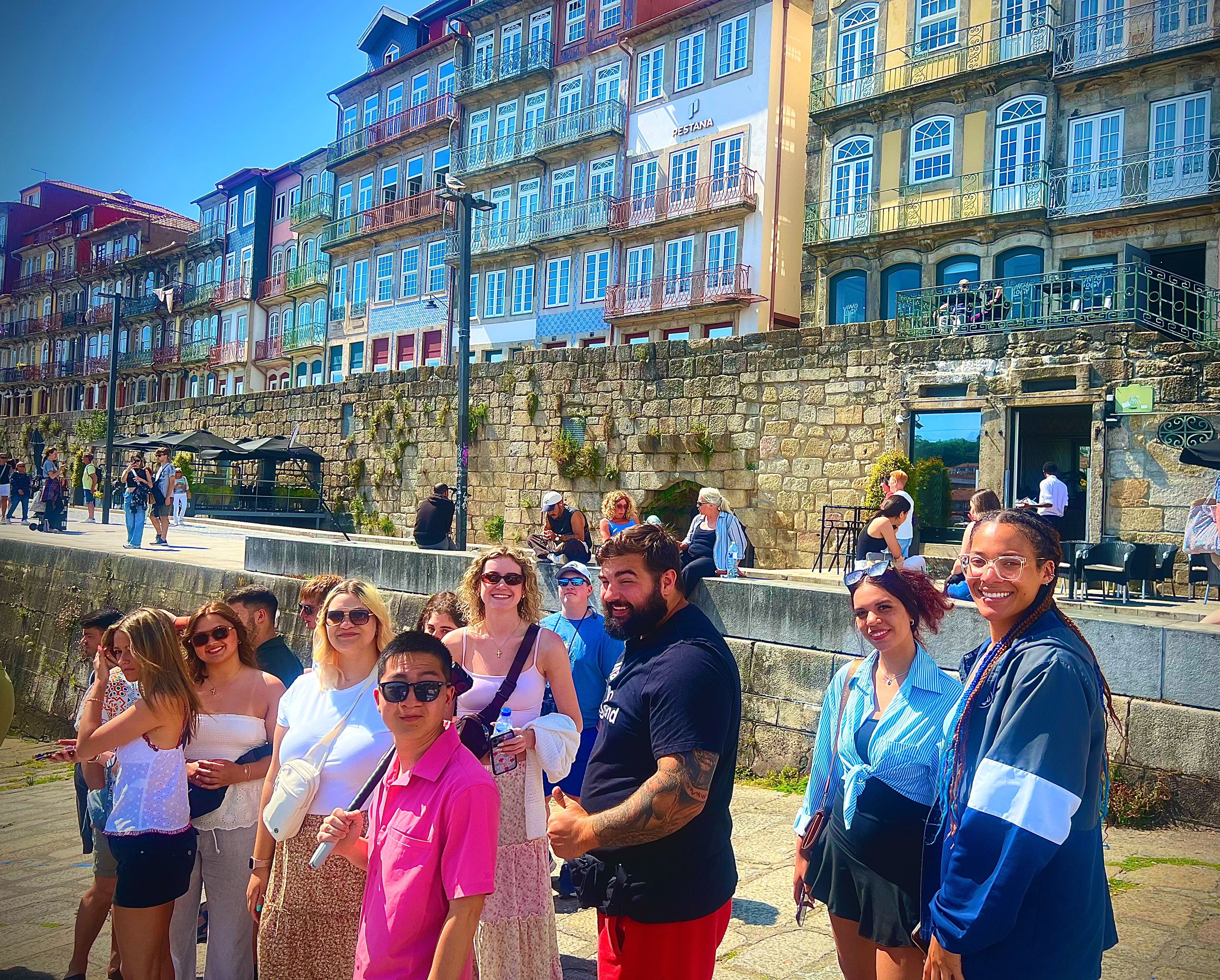
Porto is a coastal city in northwest Portugal known for its stately bridges and port wine production. In the medieval Ribeira (riverside) district, narrow cobbled streets wind past merchants’ houses and cafes. São Francisco Church is known for its lavish baroque interior with ornate gilded carvings. The palatial 19th-century Palácio de Bolsa, formerly a stock market, was built to impress potential European investors.
Porto is an easily walkable as well as safe city. One of our favorite things to do was to simply get lost walking in its numerous small yet welcoming alleyways
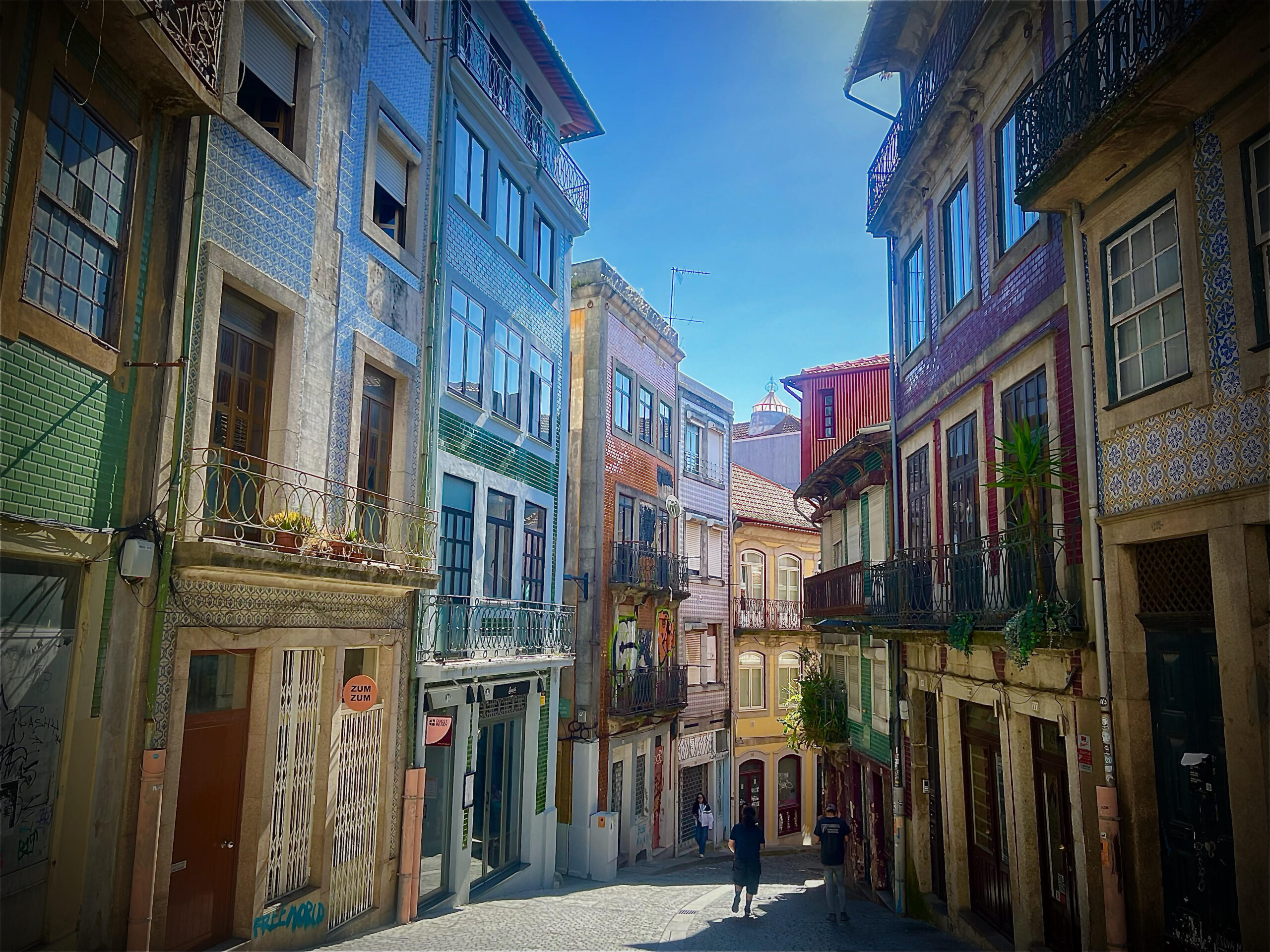
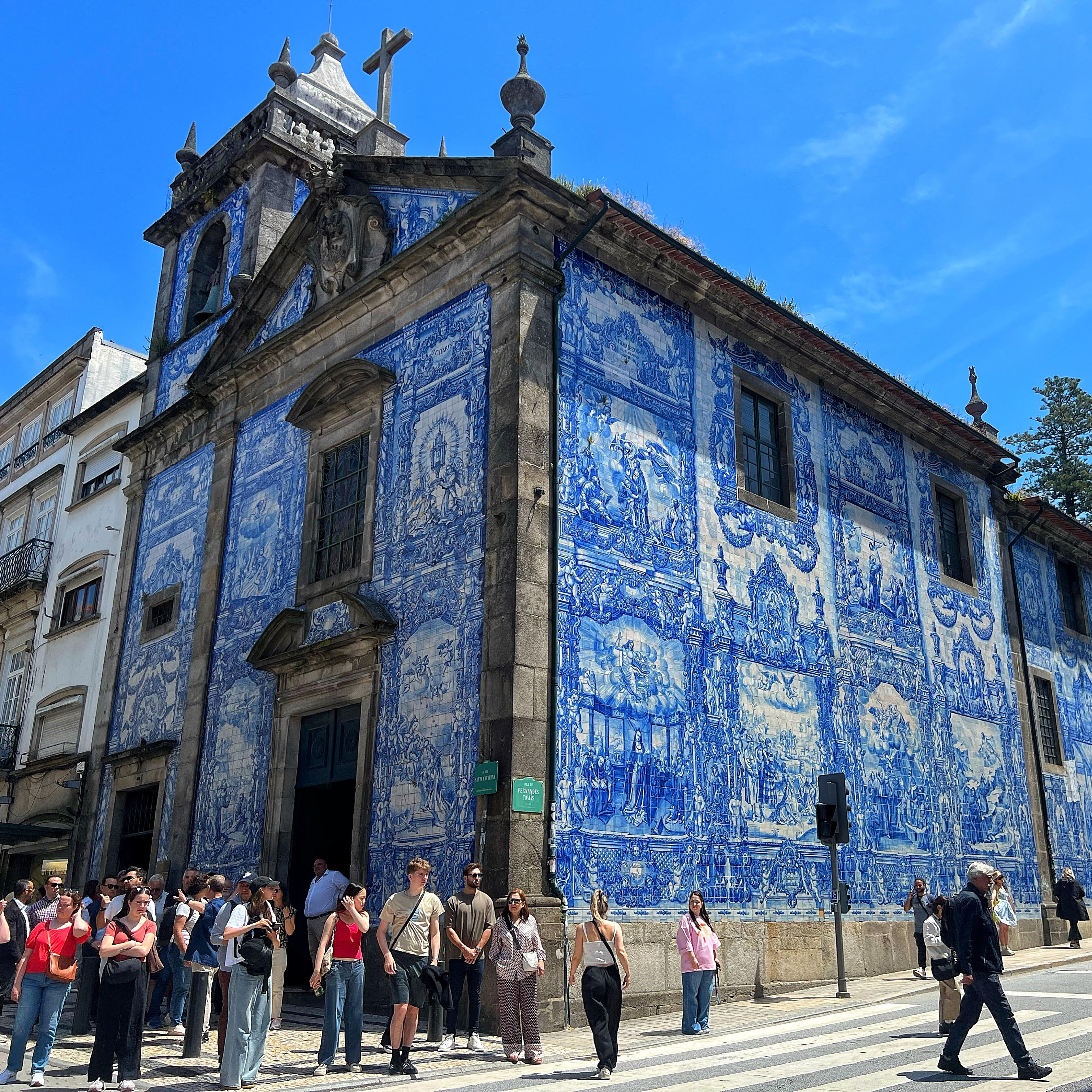
Porto in Blue
The color blue washes over you everywhere you go in Porto. From the stunning azuelo tiles that wrap the buildings to the evening sky, Porto envelopes you with a welcoming small town charm that is not to be missed!
Porto Train Station
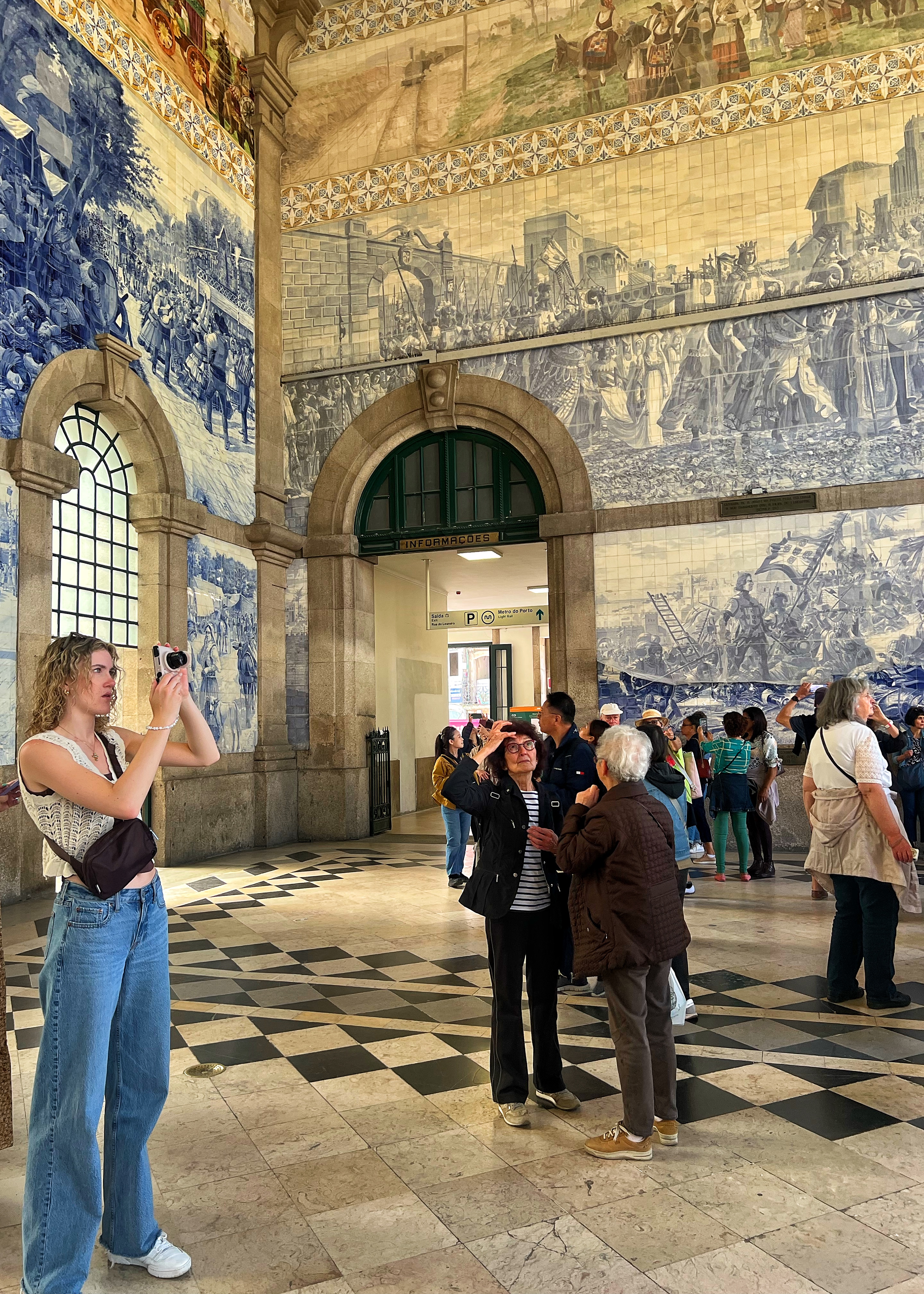
Not to be overlooked is the Porto Train station. Considered to be one of the oldest and most beautiful train stations in the world, it is the gateway to the city. The beautiful azuelo tiles in the station relate the history of the town in a visually stunning way.
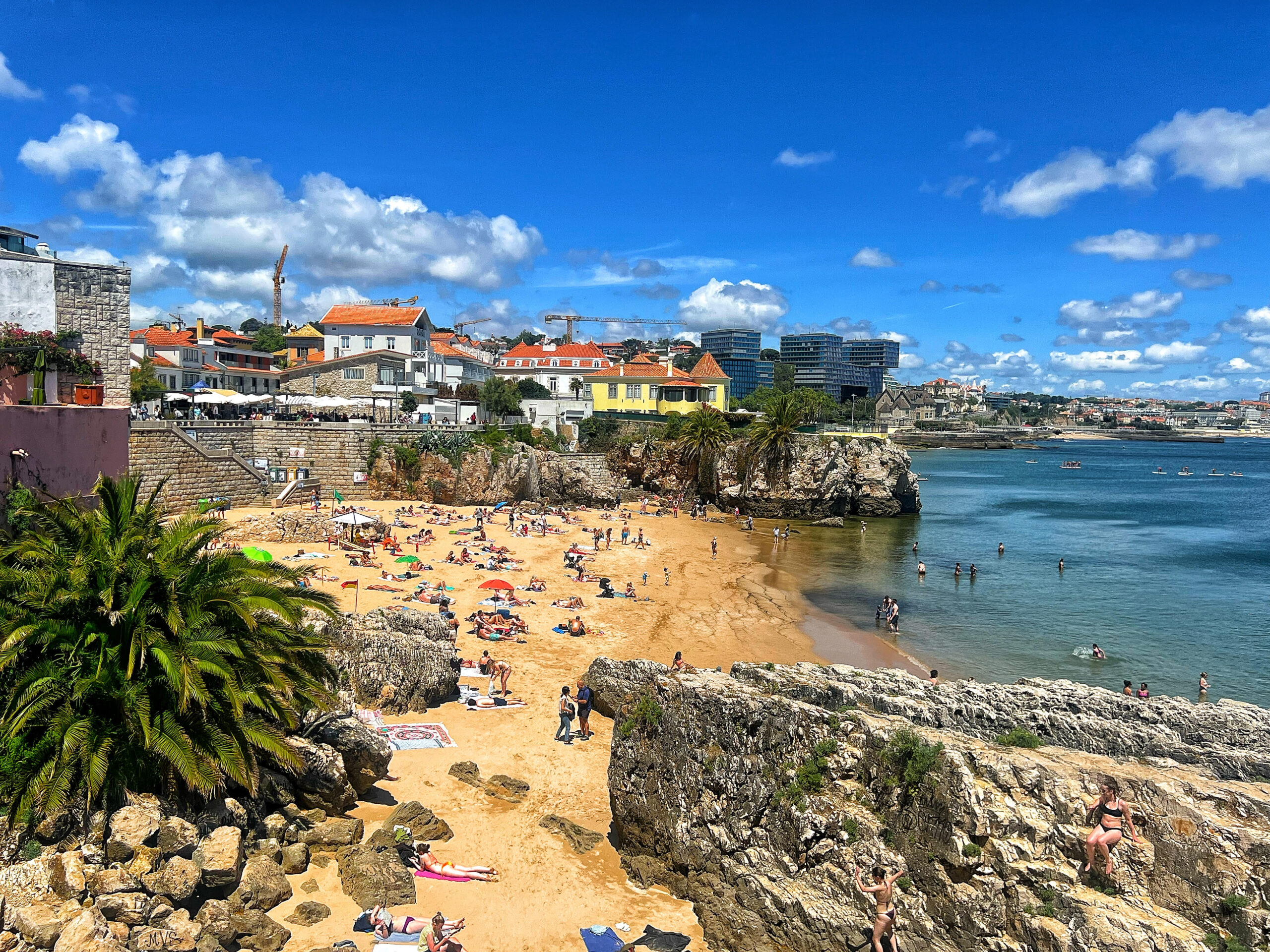
Cascais & Costa da Caparica
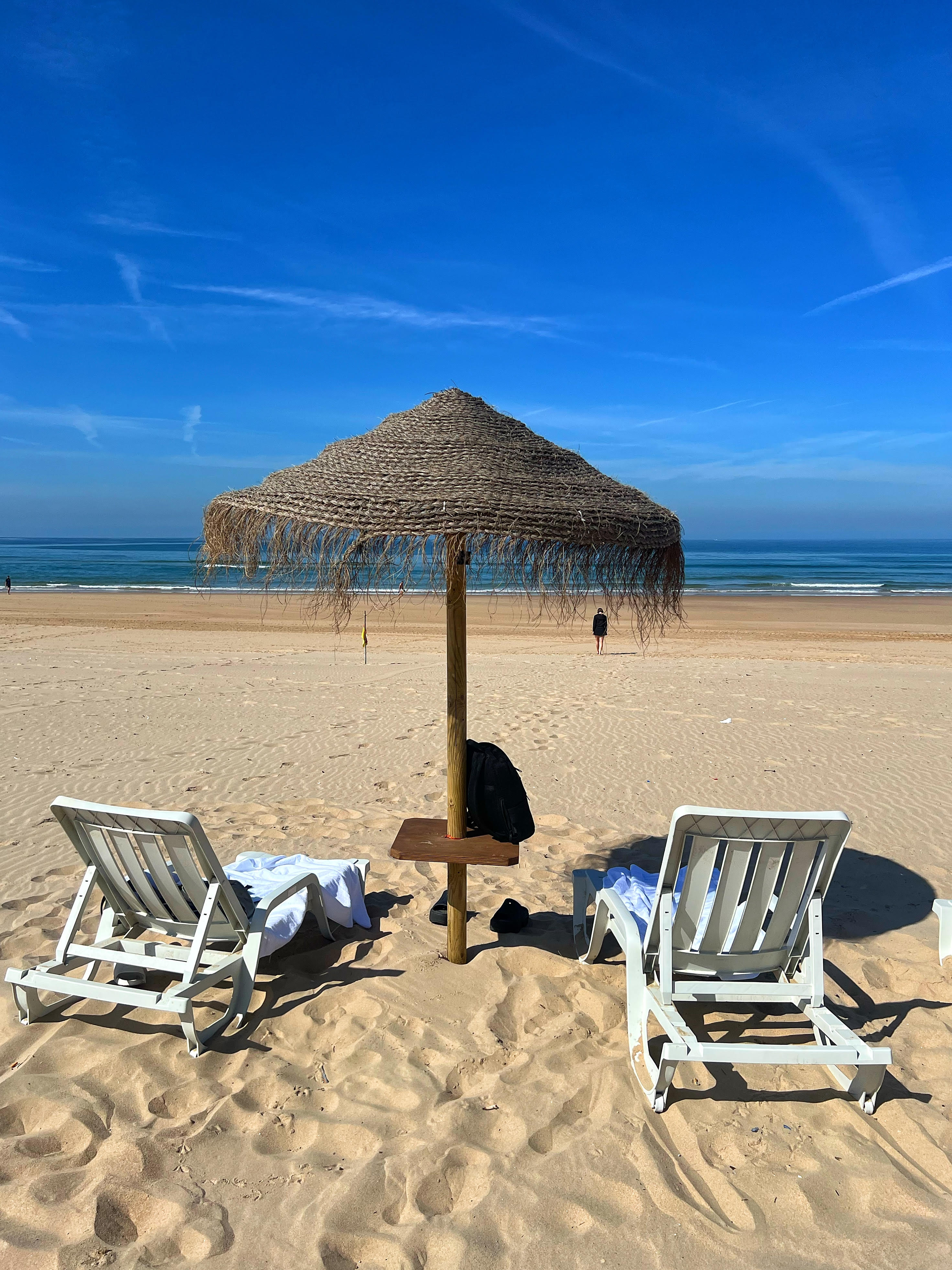
Beach time! We never imagined that the beaches could be so incredible in the area of Lisbon. One minute you are in the middle of the city, and the next a taxi or train can transport you a mere 20 mins. away, where you can enjoy pristine surf action.
Leave a Reply