
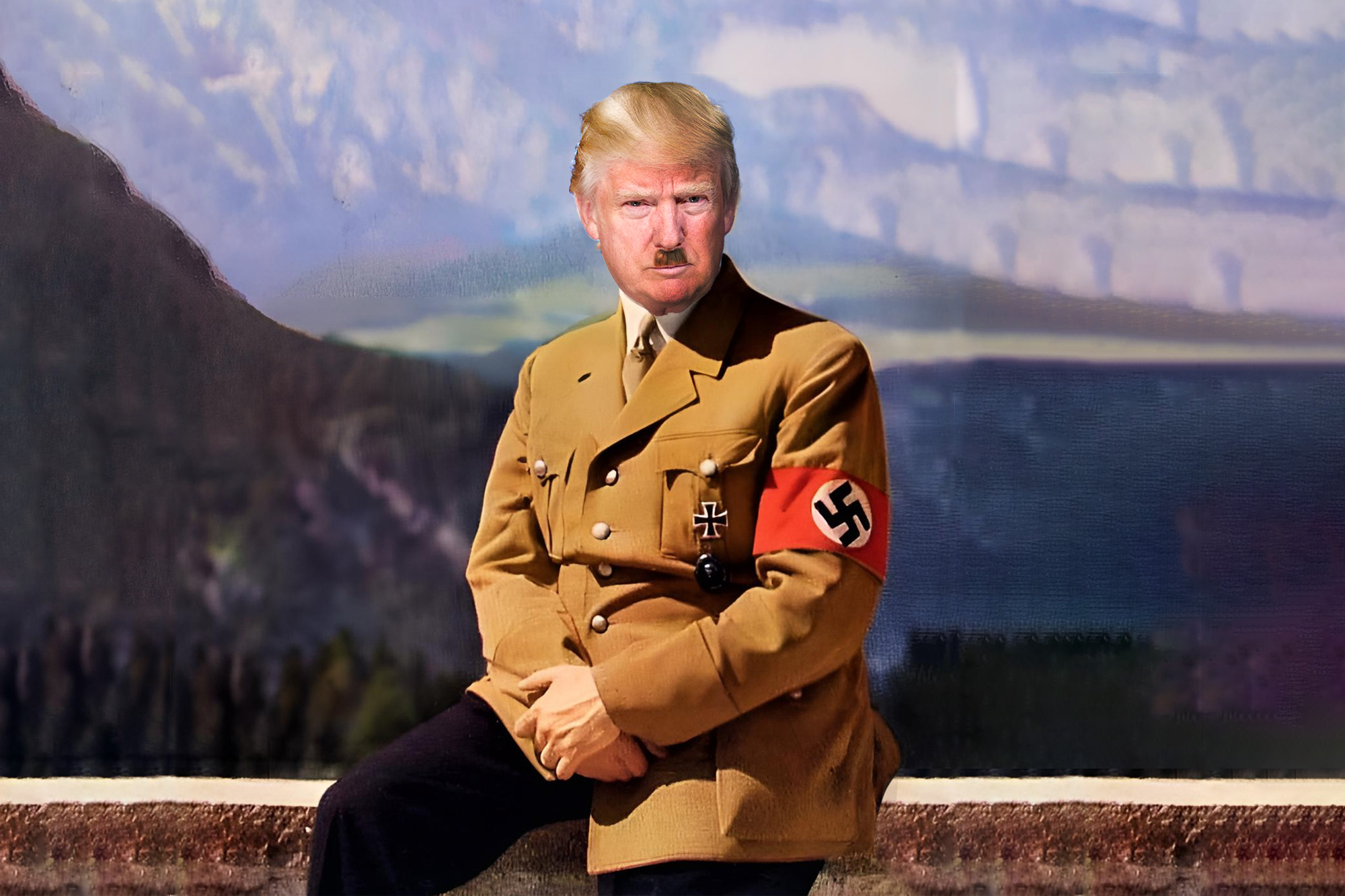
Mark Twain once wrote, “If you don’t read the newspaper, you’re uninformed. If you read the newspaper, you’re misinformed.” This is a good place to start, considering how much of the contemporary discourse outside of academic and activist circles continues to get everything wrong when it comes to talking about things like Capitalism, Communism, Marxism, Socialism, and Fascism.
People in the U.S. get caught up on these labels as well as others that try to classify people and reduce them to simplified categories like left-wing, and right wing. Sadly, they are often indoctrinated by their social groups to see these words through an “emotional” lens, where they don’t fully appreciate the history and meaning of the terms. This can prompt some to dive into the deep end of the pool, as they become convinced their non-favored political candidate poses an existential threat to their “freedom.”
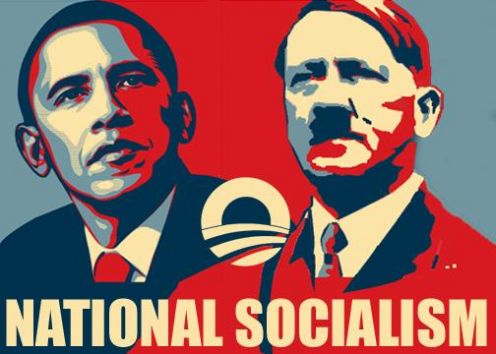
The Authoritarians
Traditionally, Nazism, Fascism, Communism, and Stalinism all represent different forms of authoritarianism governance. It is important to understand, however, that there are nuances that distinguish them. Unfortunately, the act of “labeling” too often unfolds as zero-sum parlor game. This has become a favorite political pastime for people, who throw these words around like hand grenades in public debates without pausing to think about their substantive meaning.
As it stands now, we have never seen communism effectively put into practice in the United States and the world for that matter (okay, maybe the kibbutzim in Israel come close). By the same token, many people don’t even realize that there are differences between Neoliberalism/Liberalism (both forms of Capitalism), Social Democracy (also a form of Capitalism), National Socialism, and actual Socialism.
Labels or “isms” like these ones provide people with an opportunity to feel smart while they are engaging with important social issues. Yet their very appeal is grounded in the fact that as “isms” they are attractive because they tend to be simple and totalizing at the same time.
Take a minute to reflect: what did the term socialism even mean to you before you might have passively learned it was used by Karl Marx to describe the tyranny of the proletariat? The fact that many don’t have a firm grasp on these terms owes much to our contemporary media landscape – online as well as print media – as both tend to privilege “entertainment” and “clicks” over providing substantive knowledge and information.
Driven to nearly endless distraction, the average person finds it is next to impossible to become informed and understand these concepts, which are all highly relevant to being able to participate in civil discourse. Even basic questions like “How many branches of government are there in the U.S.?” have managed to confound people.
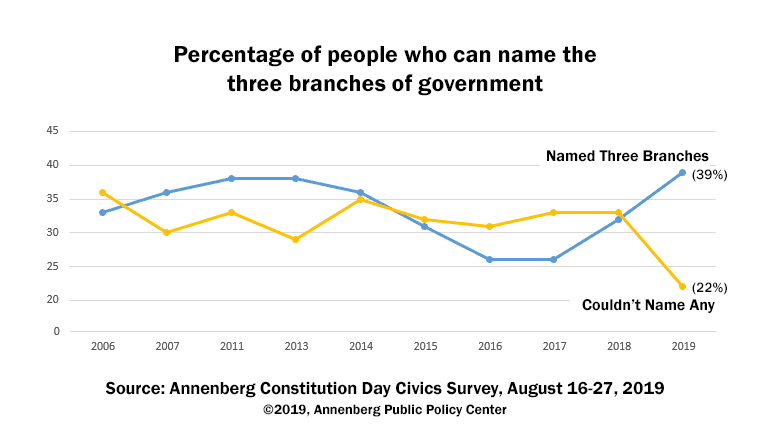
Think about it this: how many of you took High School civics classes that were taught by the football coach? Is it any wonder that people are barely literate in this regard?
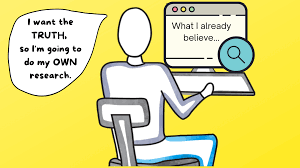
I Do My Own Research
Motivated learners might try to “do their research” on the Internet, but more than likely they are self- selecting (more like “cherry-picking”) sources of information that line up with a world view they have already formulated. This selection bias occurs even among good intentioned people who view themselves as “politically conscious”’ or “informed.”
Politics is a Spectrum
Ultimately, the labels themselves are a problem. Because, more often than not, labels are used to advance a narrow/limited spectrum of understanding of political ideologies. Again, this is because the appeal of labels is in no small way derived from how they provide intellectual shortcuts to people who tend to not want to think very hard about issues and problems that are, in reality, highly dynamic and complex.
Take the terms, for example, left wing and right wing. The polarity implies there are two diametrically opposed camps of thinking (beliefs) that are in perpetual opposition and conflict. The goal here is not to resolve the conflict, but to stage the battle, so people can choose a side and jump in the fight. Solving problems? Not so much. Creating a spectacle? Absolutely.
Meanings as such become more difficult to grasp when you try to compare their meaning to social contexts outside the U.S. For example, someone who identifies as right wing in the U.S. is not likely to share the exact views as someone who identifies as right wing in England. Far from it.

This is because right-wing ideology in the U.S, context privileges individualism at the expense of social order and social responsibility. Right wing and conservative ideologies in Europe, Australia, New Zealand, and Canada, though different, still lean toward a more mixed understanding of what constitutes an ideal social order and social responsibility, even as they remain within a capitalist economic framework.
The same can be said about left-wing ideology in the US. Sometimes, it is portrayed as nuanced and discerning, as it tends to privilege social responsibility and care for the human condition over unfettered individualism. But in many instances, professional commentators reduce it to existing as a general oppositional ideology to everything espoused by US right wing conservatism.
Labeling Theory: Governments & Social Systems
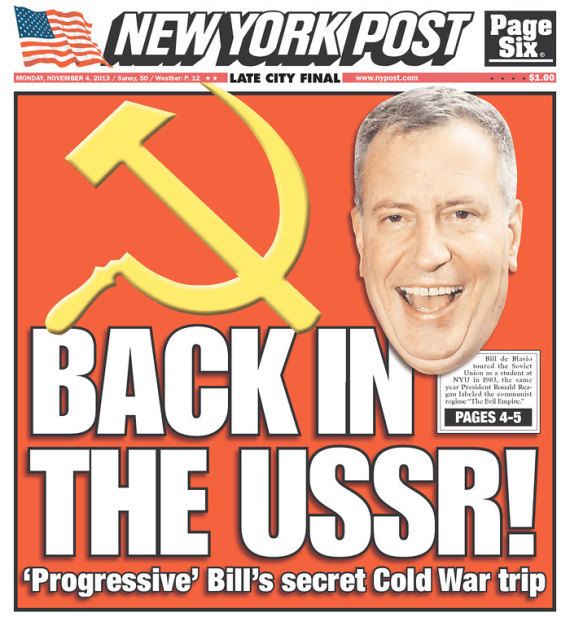
Political labels like “Marxist” “Fascist,” “Communist,” and “Socialist” demonstrate how labels can be manipulated to distort meaning. Yet we don’t need to confine our views of these things to history, as there are emerging examples of such labels in action right now.

Fascism
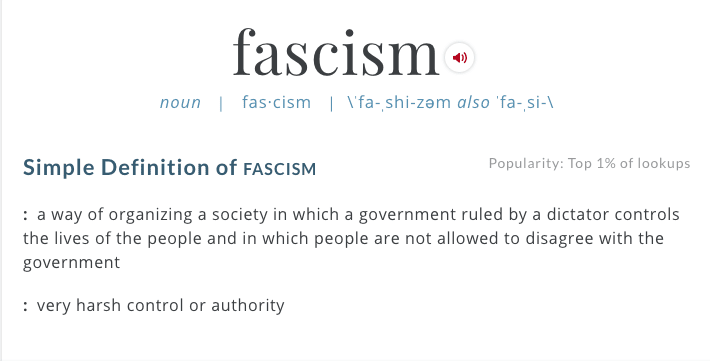
Italy’s Benito Mussolini is credited with bringing the word fascism into popular usage. He coined the term in 1919 to describe his political movement (from the Italian “fascio,” which means group and refers to a kind of militant brotherhood). Although there may be different definitions of fascism and people may debate its qualifying characteristics (some people refer to it as a political philosophy – one that relies on a on a “strong-man” type leader to promote the philosophy – or theory of mass movements, while others define it in terms of specific political actions).
Recently, we have seen a resurgence of the word “fascist” circulating in American politics. What does it mean? Where does it come from? Is it a simple label or does the proverbial “shoe fit” in some instances?
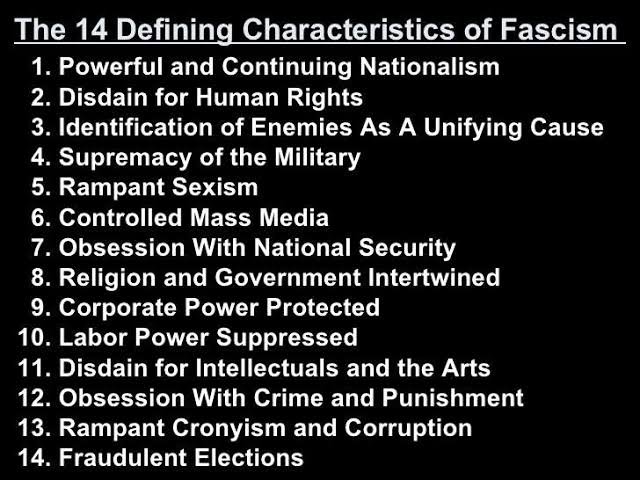
Whatever the case, most people agree that fascism is authoritarian, which often also exhibits a fascination with racial purity, promoting nationalism at all costs.
Are all Fascists Nazis?
Not exactly. Whereas all Nazis were fascists, it is not always the case that all fascists are Nazis. An example of a modern day fascist is Hungary’s Victor Orban. We know this because he tells us.
Oh, and for what it’s worth, there is no such thing as a “semi-fascist.” We can take the gloves off and say the “F” word, as it increasingly has become the case that there are many “out and proud” fascists and Nazis walking around our cities and towns.
Neo-Nazis in Ohio, 2025
What is a Social Democracy?
The closest nations have come to achieving a utopia for their citizens, in terms of the social organization of civic life, exists in social-Democratic states (i.e. Finland, Norway, Denmark) whereby these states have a record of recognizing, through the implementation of social policy, the social rights of their citizens. These programs and polices are, nonetheless, prioritized within the framework of capitalism; hence capitalism is to some degree humanized. However, they are not “socialists” in the classic way that people who are fond of labels want us to think of them.
By way of contrast, the U.S. stands as the paradigmatic example of an an advanced industrialized state with the weakest social democratic values; it’s economy is based on unrestrained capitalism, which tends to mean “freedom” for companies, but not always people. This peculiar mix of freedom is what people in the U.S. are always banging on about.
Far from being a welfare state (and I’m not taking about people on welfare or receiving welfare services), the U.S. offers its citizens the least return on their tax dollars in the form of social services investment (i.e. healthcare, education, recreation), when compared to other developed industrialized countries (OECD countries). This is because the U.S. prioritizes investment in the economy over investment in people. Superficially, in terms of policy, this looks like stimulus for corporations (tax cuts & subsidies) combined with robust military spending. The amazing part of all this is how they have managed to convince a large segment of the middle earning population (who don’t equally benefit) to pay for/support, and even “cheer” for this system.

Free Markets & Freedom
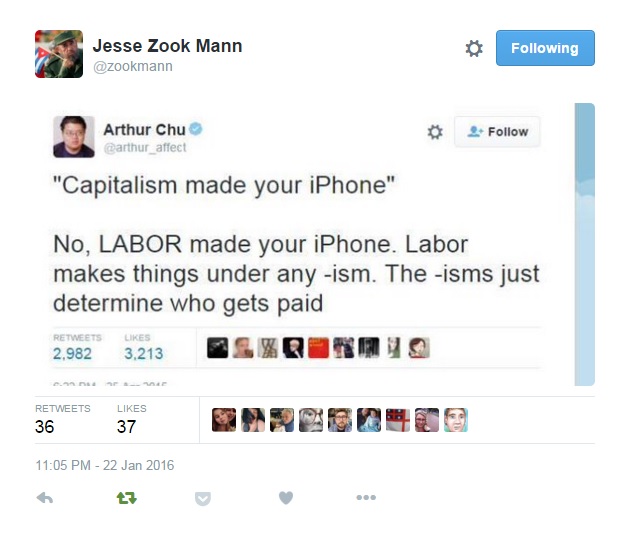
Take for example claims made about “free markets” or even “freedom.” There’s no such thing as “free” markets. Simply put, “the market” is fundamentally a political and social construct – it’s not something that exists in a pure form in nature. For as a political matter, governments everywhere impose all kinds of rules and regulations on “the free market,” beginning with the protections of private property (encoded in law and enforced by the police). They regularly enter into negotiations and dialog with representatives from industry to actively shape markets in ways that benefit national interests. This kind of activity is normal and varies across countries and states. As for the results of this approach, the financial rewards predictably line up to serve the interests of people with wealth and power.
Politics as “Team Sports”
Given the degree to which critical thinking is often stymied in our culture, when we combine this inability to think with the “sportsification” of politics, the results aren’t good.
People love to announce their personal “beliefs” in a loud and proud way as this relates to contemporary issues and social problems, yet they often don’t have even a rudimentary ability to advance an argument based on facts and evidence. Emotion rules. Shouting down their adversaries is how they have been taught to score points and “win” arguments.
Beliefs in many instances are based on an incoherent political ideology (their chosen team), which they tend to inherit from their families and close circles of friends.
Poor People are the Enemy
Regardless of what ideology you subscribe to, far too many people have become convinced (or conned) that the biggest social problem is the lazy poor people. Can’t afford a house? It’s because you didn’t work hard enough. Sadly, poor people themselves are not immune from getting caught up in this thinking, given how they have been indoctrinated to believe that poverty is their fault (and not structural) because they made bad decisions and/or lacked an appropriate work ethic. Really? Go tell that to the home health aid that’s taking care of your grandma in addition to the the nurse, the teacher (who must buy their own school supplies), and the guy hauling your garbage everyday that they can’t get ahead in this world because they’re simply not working hard enough.
And let’s not forget “Schrodinger’s immigrant.” The term perfectly illustrates the paradox of twisted logic that relies on immigrant stereotypes. This particular expression has been used to call attention to the contradictions bound up in anti-immigrant discourse, as the term describes immigrants as people who are simultaneously “stealing our jobs” and “laying around” stealing public benefits.
The Power of Labels
Put another way, its easy to mobilize an audience of people using labels with an extra dash of emotional manipulation tossed in. Powerful media narratives chock full of labels call upon people to summon their own ignorance to join in what amounts to uninformed “uncivil” discourse. These narratives teach them to focus their criticism inward (self blame) when times are tough (you need to work harder) rather than suggest they direct their attention outward and up the social ladder at their corporate Masters, whom they further imagine are sitting around all day trying to think up ways to create jobs for them.
Regionally and locally, we can see this play out among Appalachian people, steelworkers, and other labor groups who have been exploited and taken advantage of for years. Public lands were virtually given away free to coal barons and steel magnates, who extracted the resources (natural and human) for their sole profit, which they delivered in product form (coal and steel) for the rest of the country. In return for the wages and benefits their unions had to constantly fight for, they were forced to labor in unsafe and contaminated working conditions. The products of those industries fouled the air and the water to such an extent that the residual contamination still exists today. This continues to harm regional populations, who have some of the highest cancer rates in the country.
And yet many of these people continue to act as full-throated apologists for the wealthy people and industries that did great harm to them (and their ancestors) even as they employed them. They continue to vote in solidarity with the people who exploit them. Why? Because the people who benefit from this social arrangement are skilled in using labels and making appeals to their emotions (FEAR), despite almost never delivering to them the promise of a better life.
Right wing extremist ideologies give people something far more tangible than policy results: they provide rank ordered social hierarchies that declare who is on top (typically white men) and who is on the bottom (the “DEI” crew – immigrants, LGBTQ, non-whites, women, and everyone else). They, likewise, give people the false hope that “life will get better if you work harder” (even as they move the goal posts for success). It’s a suckers bet and people continue to fall for it.
The Middling Middle
By way of contrast, moderate/centrist ideologies have tended to follow the technocrat playbook: instead of emotion, they appeal to a different kind of logic; one that privileges evidence and the rather boring granular details of social policy. The problem with this logic is that when they try to explain their reasoning to the public, they (the public) are often too tired and/or not interested enough to educate themselves on the facts of a given matter. Facts are boring. They are not sensational. Not sexy.
Emotion-based reasoning, grounded in fear and anger, is far more satisfying and is thus easier to sell to the public. Consequently, even as political moderates have delivered incremental (slow) change, they are almost always perceived as failing to deliver the goods (even as moderates have lacked the majority power within government to fully advance their agenda and deliver more impactful results, due to being blocked by the opposition party).
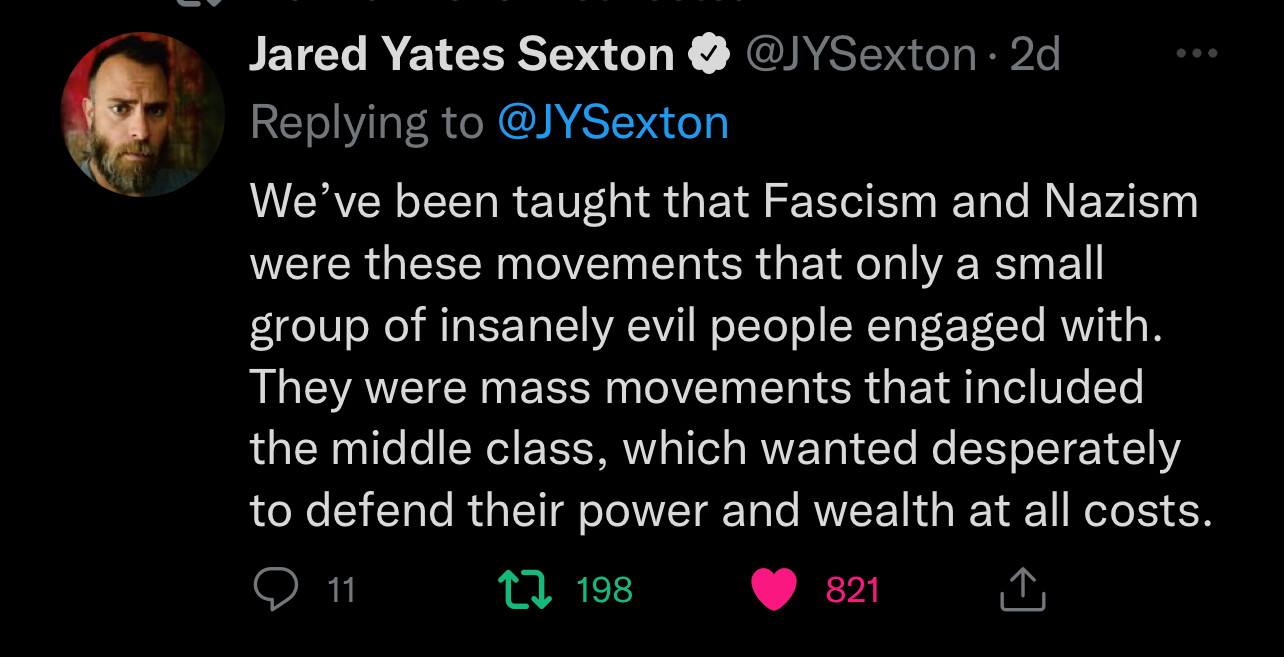
Another powerful psycho-social dynamic that is operating here is that scared middle class people, are frantically left looking over their shoulder at the dreaded “poors,” as they try desperately to stay ahead of them by consolidating their class advantage/position, so not lose ground. Simply put, the people stuck in the middle are often highly fearful of becoming poor themselves.
To soothe their fear, we often see them (the middle class) embracing symbolic gestures and performing rationally calculated acts of solidarity with people they perceive to be their financial betters, who are situated far above them on the social class ladder. In this instance, they are enacting what psychologists and call aspirational social identities; that is, they hope that by lending support to their financial and social betters, and by engaging in gratuitous praise of wealth and power, they might insulate themselves from sliding back down the class ladder. Put another way, they’re playing a deceptive game of “fake it until you make it.”
Now you might say, “well, what’s wrong with aspiring to acquire money and to live a comfortable life?” The answer to this is, in and of itself, absolutely nothing.
Where the problem lies is in the incessant need to “punch down” on poor people as a way to psychically separate yourself, if only so you can feel better about the fact that you’re forced to work in an economic system that’s rigged against you and just about everyone except those born into extreme wealth and privilege.
Why are people like this? Does working three jobs to make ends meet cause them to be so tired they can’t manage the effort to question the organization of the system? Is it any wonder that people have become seething rage monsters, whose anger can only be soothed by a 6 pack of White Claws and trips to the firing range to shoot their AR-15s? Have they taken so many drugs and eaten so much junk food to manage their pain that it clouds their thinking? Why have people come to accept this rigged state of affairs as normal? And why, when given the opportunity to vote, do they tend to often vote against their own best interest?
Labels & Elections
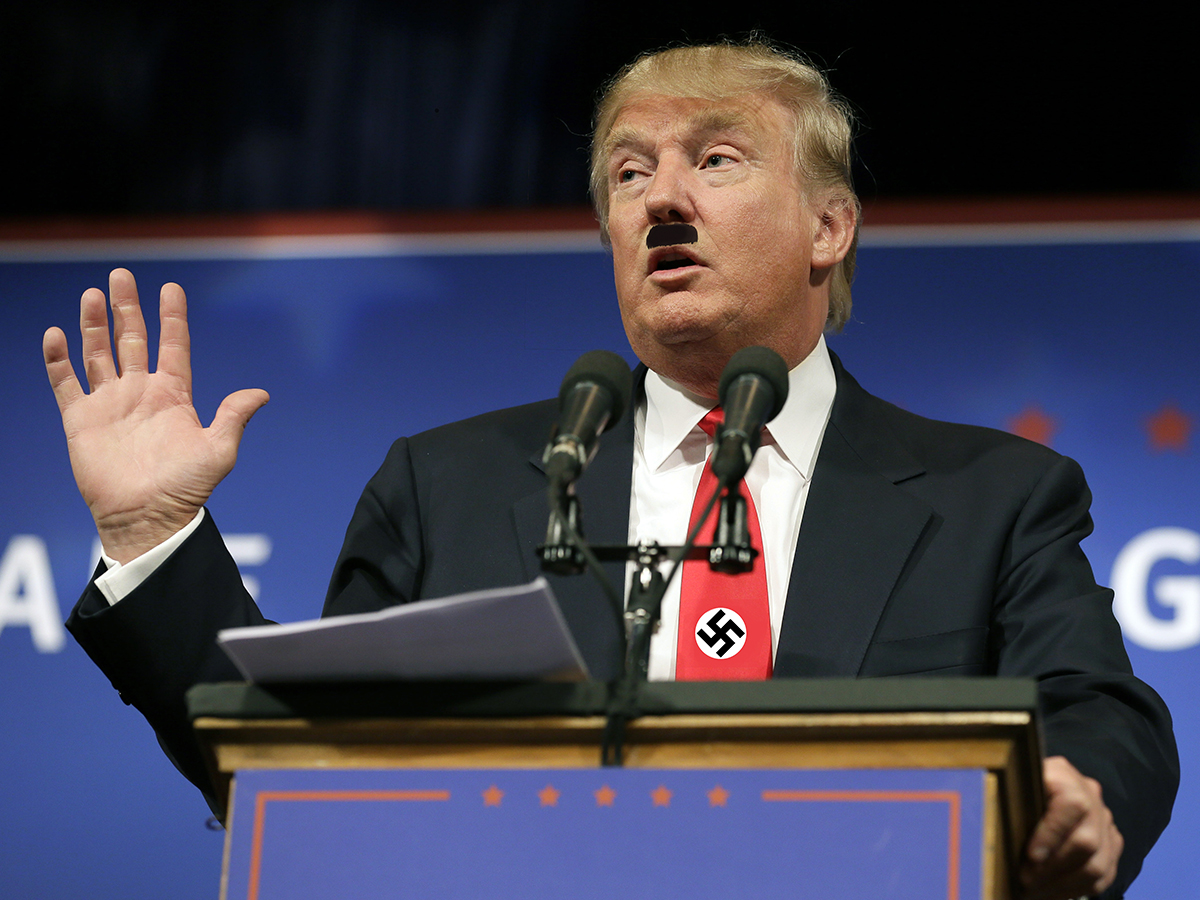
Every time election seasons roll around, you will hear people letting loose with labels and insults. Senator Bernie Sanders was regularly savaged by candidates like Donald Trump and even some Democrats for the seeming crime of being a Socialist.
Alternatively, proponents of unregulated capitalism are argued to be inherently fascist. Many people are saying Donald Trump is a Fascist. And they may be right. We should maybe believe people when they tell you who they are.
Ultimately, the effect of label-slinging is that it shuts down substantive debate about actual social policies and it does nothing to interrogate the nuances of argument. What prevails instead (and this is socially applauded) is gamesmanship and name-calling. Because it’s entertaining. This is not an accident.
Focus groups have found that voters are more responsive to emotion-based appeals than they are reason and logic. Consequently, appeals to labels aren’t going away any time soon because they effectively reach people, even as they remain poisonous to informed debate on important issues.
What’s the Difference Between Socialism, Marxism, Democratic Socialism, and Communism?
Political Scientist Jeffrey Isaac explains in an interview as follows:
“in the most general terms, ‘socialism’ is the idea that the productive wealth of society—factories, offices, large-scale service firms, etc.– should not be owned, controlled, and deployed for the benefit of a small class of people, but should be owned, controlled, and deployed for the benefit of the society as a whole. The basic rationale for such “socialization” of productive wealth is simple: the knowledge, techniques, and relations of production that produce wealth are all social. In the story of Robinson Crusoe an individual works more or less from scratch (with his “man Friday!”) on “virgin” nature. But in reality, all wealth is social. Particular individuals may innovate. They may even deserve special rewards for their innovations. But most members of “the one percent” are not innovators of this kind. Further, even those that are innovators did not grow up in the wild and innovate through their own efforts alone. They matured in a society with an educational system and a knowledge base and an infrastructure and a division of labor, and their innovations involved a complex network of others.
The idea of socialism is the idea that because all innovation and all production is “social” in this way, the production process ought to be organized in a way that ensures some democratic social control and some broad social welfare.
Socialism is a very old idea, and it can be traced back to Plato, the early Christians, Sir Thomas More, and many important modern writers who wrote before Karl Marx was even born. Marx and Engels were socialists who claimed that their socialism was “scientific.”
Marxism is a complex subject. Suffice to say that the founder of Soviet Communism—Lenin—was a Marxist, but so too were founders of German social democracy and advocates of a parliamentary road to socialism, such as Eduard Bernstein and Karl Kautsky. More importantly, while most Marxists have been socialists, and some even democratic socialists, most socialists are not Marxists at all. Some examples include Albert Einstein, George Orwell, Bertrand Russell, W.E.B. Dubois, and perhaps even Martin Luther King, Jr.
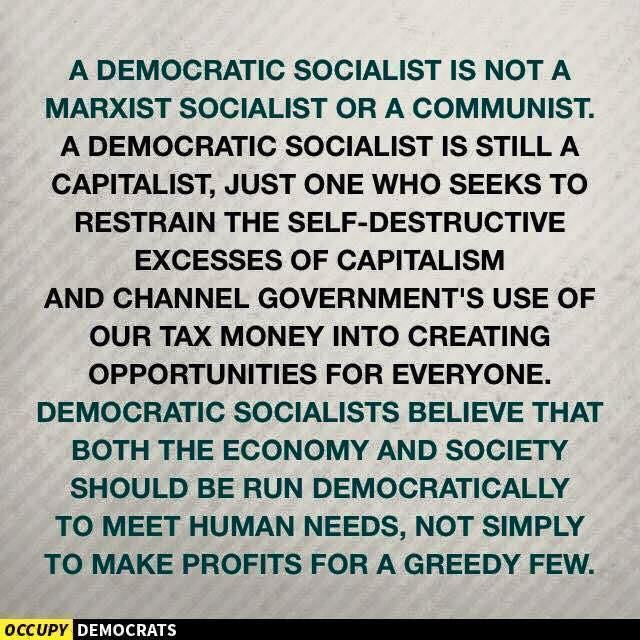
Democratic socialism is a variant of socialism that emphasizes the importance of democracy in two ways: a socialist society ought to be run on a democratic basis and not as a dictatorship—as Lenin and his Soviet and Chinese followers believed—and it ought to be achieved by working through the institutions of a liberal, representative democracy, mobilizing citizens and voters, winning elections, and legislating social reform.

In the 20th century U.S. a number of important figures were democratic socialists, most notably Eugene V. Debs, Norman Thomas, and Michael Harrington, whose book Socialism is but one example of a good book on the topic. Harrington was the founder of Democratic Socialists of America, a group that strongly backs Bernie Sanders. This group does NOT believe in state control of all economic assets. It believes in the use of a democratic state to institute egalitarian social reforms and a more “progressive” system of taxation and to steer social investments in more public ways (think public transportation as opposed to publicly-subsidized, privately-owned sports mega-stadiums).
Sanders has had some ties to this group—which has always seen itself as “the left-wing of the Democratic party—and the things he supports are the kinds of things this group has long supported, and also the kinds of things that European social democrats—in Germany, the UK, France, and Scandinavia—have long supported.
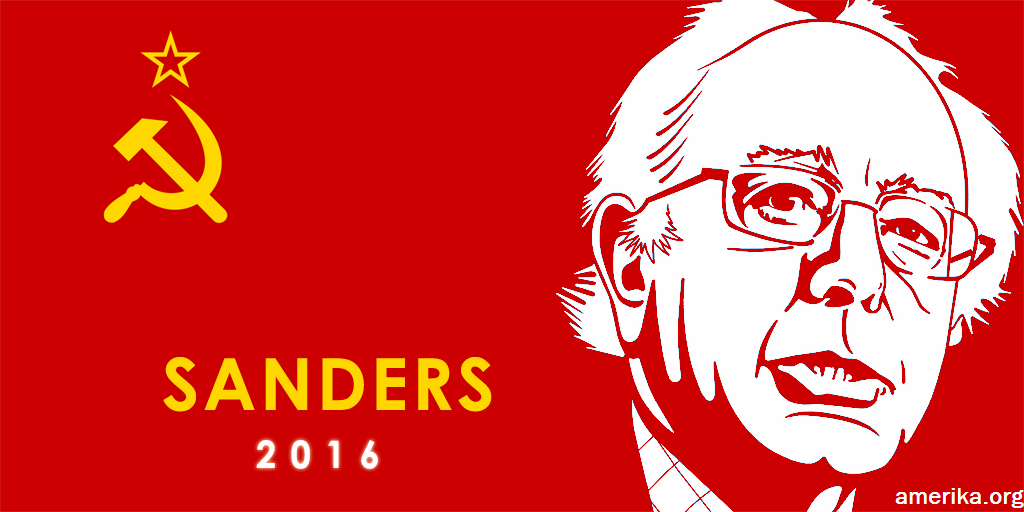
People like Donald Trump are red-baiting when they call Bernie Sanders a ‘Communist,’ even though this vision of socialism is democratic and historically it is anti-Communist.
If the broad mass of Americans were more historically informed, they would know that self-styled socialists have played an important role in U.S. history, that most of the leaders of the early trade and industrial union movement were socialists, that important New Deal figures were socialists, that one of the most important leaders of the U.S. civil rights movement—Bayard Rustin—was a socialist, and that a socialist—Michael Harrington—is widely credited with having inspired LBJ’s “Great Society” programs through his book on poverty, “The Other America.”
Indeed, the so-called “neoconservative” movement in the U.S. was founded by former socialists, many of whom had earlier been not just simple socialists, but Communist Trotskyists. These people turned hard to the right. Others like Harrington and Irving Howe, the founder of Dissent magazine, and also Sanders, continued to be active in the struggle to democratically achieve democratic socialism.”
But Isn’t There a Strain of Democratic Socialism That Advocates for State Control of the Economy?
Issac continues: “This is a complicated question. The simple answer is no. One of the defining features of modern democratic socialism is an opposition to the widespread “collectivization” of the economy as was practiced by the Soviets. Some European democratic socialist parties have supported public enterprise and some forms of nationalization of certain industries—but so have non-socialists in Europe. (Indeed, one need look no further than the enormous bailout of U.S. banks in 2008 to see that it is not only socialists who advocate for government socialization—they simply advocate socializing the losses of big business, but not the gains.) But none support the wholesale collectivization of the economy. Sanders, for example, supports a “mixed economy,” as any of his statements and/or position papers makes clear.
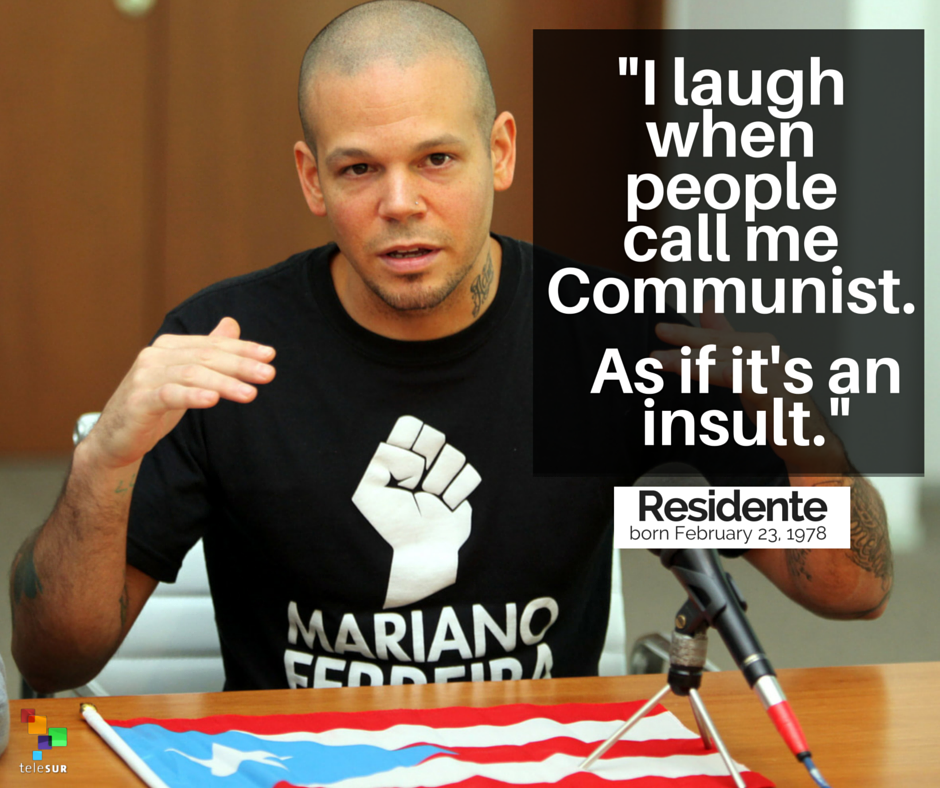
Puerto Rican rapper Residente! Residente, real name Rene Perez Joglar, is one of the founders of the alternative rap group Calle 13. Not only is he the recipient of numerous Grammy awards, he is also an out and proud self-declared socialist (as it turns out, his father was a member of the Puerto Rican Socialist Party who traveled to Cuba and Nicaragua during the Sandinista Revolution).
How is what Sanders wants the same/different from what modern European social democrats want/have? Or from modern Russia? Or China?
It is very similar to what European social democrats have long advocated and enacted, as he himself has stated repeatedly. It is also much less ambitious than the most ambitious social democratic party platforms. For reasons explained above, it is totally different from the Soviet or Chinese or Cuban or North Korean models.
Sanders does NOT advocate the abolition of private property in the means of production. He does not even advocate massive wealth expropriations. He advocates breaking up banks and more progressive income taxes and the public subsidization of health care and public education (most of these things are quite common in Europe). Further, all of his policy proposals are contributions to the ongoing democratic debate of a democratic society, advanced as proposals to be legislated when and if a democratic majority of citizens can bring such an agenda into office through democratic elections.
Sanders is seeking the freely given electoral support of American citizens. He is not organizing a vanguard revolutionary party intent on seizing power! He is, in other words, a democratic socialist.
Sources
Jeffrey C. Isaac, “Bernie Sanders, Democratic Socialist: A Primer,” by Jeffrey C. Issac. Last accessed Feb 12, 2016.
Discussion Questions
Take a brief moment (after looking up definitions for the terms) and consider the following questions:
Are Marxists the same as Communists?
What are the defining characteristics of a Fascist?
Is it possible to be a Fascist, a Communist, and at the same time a Socialist?
What is a Democratic Socialist?
How is being a Democratic Socialist different from being a Socialist and from being a Communist?
Do you think labels like this contribute to productive political discourse, or do they confuse important issues?

Much needed discussion. Let’s remember that ALL of these expressions “communism,” “capitalism,” “fascism,” etc., mean different things to different people.
That’s a huge problem. The solution is straightforward. BEFORE arguing about which economic and political system is “better,” or about WHAT each system is really about, make it REALLY CLEAR what you mean, or what definition you’re starting out with.
I’ve met hard core Republicans who’ll say: I guess Jesus Christ was a “communist,” meaning: “someone who looks after his neighbour and who believes in sharing what they have, and in looking after the poor, etc., etc…” But, so the argument goes, “that’s not what ‘communists’ are nowadays.”
No matter what you think of “communists,” that’s how any useful discussion of the issue of “isms” should start: What do you MEAN by the “thing” or “ism” you’re talking about. That’s where the discussion has to start. Otherwise arguing about “communism,” “capitalism,” etc is a complete waste of time.
Having said that, there are no “right” or “wrong” definitions, at this stage in the debate. You’re just trying to agree on terms. If you can’t agree on what the key terms mean, the discussion can’t go ahead. But if you CAN agree on at least SOME part of what key terms mean, that’s terrific: you can start a useful discussion on the CONCEPTS that underlie those terms!!!
Marxism is the political ideology based on Karl Marx’s ideas and Communism is the practical implementation of Marxism. The difference between Marxists and Communist is the belief of how society will transform to communism. Marxists believe it will transform from capitalism to socialism and eventually to communism over time. Communists believe the transformation will take place more abruptly, through war or other dramatic means.
A fascist is a far-right, authoritarian ultranationalist in favor of dictatorial power, forcibly silencing the opposition, and ultimate control over society and the economy.
Fascism, Communism, and Socialism all have some similar attributes, but the underlying premise of each separates them greatly. A fascist wants ultimate control over everything with the nation as the primary beneficiary. Private industry exists, but only as long as the they private owners “give unto” the nation. Any private company that does not put is focus on improving the nation is run out, overtaken, or destroyed. A communist wants total government control over all aspects, eliminating private industry and private property completely. They seek to achieve this by force and provide everything that they citizens need. A socialist seeks for the government to run the overall production within the country and provide basic human needs, but citizens can still own property and are rewarded for their work, innovations, and contributions to society.
A democratic socialist is one who focuses on achieving social reforms and redistribution of wealth through democratic processes, and can co-exist alongside a capitalist economy where there is benefit to all human needs and not just the wealthy.
The major difference between democratic socialists and socialists is that democratic socialists believe in change and reform taking place in a democratic way rather than by force. Though they are more similar than either one compared to communists, who seek a fully government run society.
Labeling individuals and ideologies with regard to political discourse only succeeds in separating them into groups based on one or two key factors; ultimately ignoring their similarities and invites one to “pick a side” rather than choosing to improve upon all aspects.
I view all communists as socialists, but socialists are not necessarily communists. People who identify as Marxists will tend to move toward becoming communists, but they do not always become communists. Fascists have similar motives as socialists but I believe being a socialist is the better path as they tend not to employ suppression and acts of violence on the citizens as the fascists do.
Political labels are usually used to distract the masses or cause confusion, so the populace do not focus on important issues that politicians want them to be blind to.
Labels is the method people use to identify and sort out both concepts and people. Because of this method of identification not only used in our daily lives but as well in media, one of the most affected parts in society is the method at which government and political affairs are portrayed. For example, depending on the news reporters or site at which one watches the news report, will determine the amount of coverage a newscast devotes on a political affair. Not only that but political labels also deteriorate the manner politicians or political problems are presented. Labels like Communist, Fascists, Marxists, etc. are associated with a negative point of view. The negative perception of labels confuses people on what each concept means as well as leads people to focus more into the labeling of politicians/affairs rather than the actual issue.
As we touch upon the manner that labels interfere with the display of news it is important to look at the various labels that separate politicians. One of the many labels that are confused with the other are Marxists and communist because as communism derived from the teachings of Karl Marx it is likely that they might mean the same thing. Although people who are Marxists are people who take concepts from Karl Marx works and use it as a guide of interpreting and understanding society in both economic and political aspects. Where as communist, are derived and created with different entities from Marxists. Communist believe on the ideal communist society where everyone has an equal share of goods, therefore completely different from Marxists. Fascists on the other hand are people that are anti-communist and nationalist, that want a mixed economy but want a self-righteous society. Whereas a Socialist want a social and economic measure policies, that include a social ownership and democratic control of production. As we can see these labels are all different because they focus on different ideologies and want different concepts implemented in society, varying from equal share of goods to using both social and economic methods in a society.
“Marxist” “Communist” “Fascist” and “Socialist” are incredibly general terms that tend to even have plenty of subcategories and don’t always refer to a specific ideology. For example there are anarcho-communists, or AnComs, and they are just a certain subset of communists. But of course media outlets don’t actually care about any of this and really only use them to throw at people. How many times has Obama been called a communist when clearly he is not? And of course this mentality of “commies are bad and un-american” just leads to people not actually understanding the terms and just continuing to use them as insults and to attack someone’s credibility. I myself have even been called a “commie” before: In High school one day I didn’t stand for the pledge of allegiance and the teacher kicked me out of the class calling me a “commie.” This is what this kind of political discourse does to people. It reinforces a set of political ideologies as “American” and demonizes anything that falls outside that small spectrum.
I think that the opening quote is simple yet some of the most informative information out there. The newspaper is thought of as this intelligent knowledgeable entity. This might be the case for some news papers but today, money has a lot of influence as to how something is published or whether or not is allowed to be pushed through to publishing. That being said, i believe that the Labels of Marxism, Communism, Fascism, and Socialism are not the same, but they are not to far apart. On paper, each one of these is seen as a positive addition to government. Communism should create equality, Fascism should create modern industrialism, and socialism levels the playing field for workers. But they unfortunately do not do these things to an degree of accuracy, and many of these ideas have come close to destroying democracy as a whole in the 19th and 20th century. I don’t think these labels are productive to government, i think categorizing is wrong but humans naturally separate things into groups no matter what the object or idea is. Instead of focusing on what to call your political party, the name of the party should be what the group stands for an ACTUALLY doing what they said they are going to do. Of course, politics are not that black and white and i have no credibility to making a claim against government parties. If i were in charge of reforming our country or any country for that matter, it would all start by ending business where they are not needed, and adding them where they are. Schools, Healthcare, Prisons, Jails, Country wide food corporations; these are things that need to be overseen by a hands on government and should not be for profit. While infer structure, public safety, and our justice system need new guidance and new budget. In addition to all of that, teachers should be in the class of doctors and surgeons. If an education system was done right, it would not be seen as a place to go to pass time and shape the future into a uniform generation. School should promote creativity and never have to deal with budget cuts, conservative rules, or anything of that matter. This seems like a huge increase to a budget, but that is why we need to stop spending such an unimaginable amount of money. We spend more than a half a trillion dollars on military expenditures. While next in line, China spends that every 4 years, with a country more than 3 times the size. There are clearly places where the money that needs to be spent on education, health, and country-wide reform can be taken from.
All good points, Robert. I think the key here is that the “labels” have been emptied of their content: they convey no clear meaning, rarely contribute substance to an argument, and more often than not are used to shut down thoughtful conversation about important issues like those that you cite, i.e. military spending.
What Mark Twain stated I also agree with it. Many people take what they hear at face value and don’t do their research. What is written in the newspaper is usually what everyone want to hear or what they believe. That does not mean it is the actual truth. Sometimes they may also print the truth but it won’t be every single detail, only bits and pieces of the actual story.
That is true newspaper is a great source to know about what is going around the world. It helps you to keep a connection with the world. As, it is a great source the media shouldn’t misuse it. Nowadays, most of the articles in newspapers are displayed in the way, audience wants it. But because of this, truth and reality is held back and main information is not conveyed. People also accept what they read because they don’t put any effort in researching about the information. They just pass the judgement based on the information given whether it is wrong or right, they don’t care. I was unaware before that these terms Marxist, Fascist, Communist and Socialist exists but after knowing what these terms means I can say that they do exist. But we are unable to see them because we don’t know the meaning of these terms and those who know, they used against us.
Mark Twain went by the quote “if you don’t read the newspaper, you’re uninformed and if you read the newspaper, you’re misinformed.” I agree with this quote because if one is not reading the paper, they are unaware of what is going on in the world not only economically but politically as well. If one reads the paper they are capable of being misinformed due to the fact that the articles have information that may or may not be included to what I would say “spice it up.” Journalist and reporters tend to make a piece in the article seem more good/bad than it actually apperas to be. Though individuals think the news articles are 100% accurate, they must still think outside the box and use their own opinions and knowledge to comprehend and put pieces of an article together. Articles that are twisted can better/worsen a persons point of view and change their whole aspect on things. Marxist, Fascist, Communist and Socialist are still around today even though it seems as if it does not exist. In my opinion, I think people don’t really pay attention to these terms and how the government is running them as a community and/or state as they did years and years ago.
I believe what Mark Twain wrote about the newspaper stating, ” if you don’t read the newspaper you’re uninformed. If you read the newspapers, you’re misinformed,” is clearly true. I feel as if it is his opinion but it is true and something I would say myself because when you don’t read the newspaper, you have no idea what’s going on in your surroundings or in your world today. Even when you do read the newspaper, you are misleaded because words are twisted around and not all the things you read are completely true. Newspapers are a business. Reporters and journalists get paid for what they do. The statement about the poor and the rich on Wall Street isn’t fair. The rich would have more opportunity on Wall Street than the poor. Just previously in my economics class, we discussed how the rich have a better advantage because the riches can pay and make their way through, while the poor work hard and struggle. Those are the individuals that actually work hard for what they want. Marxist, Fascist, Communist, and Socialist. is something I believe still exist today even though it doesn’t really make a visable appearance.