

Traumatic Experience Widespread Among Youth (repost Robert Wood Johnson Foundation)
New national data show that at least 38 percent of children in every state have had at least one Adverse Childhood Experience or ACE, such as the death or incarceration of a parent, witnessing or being a victim of violence, or living with someone who has been suicidal or had a drug or alcohol problem. In 16 states, at least 25 percent of children have had two or more ACEs. Findings come from data in the 2016 National Survey of Children’s Health and an analysis conducted by the Child & Adolescent Health Measurement Initiative (CAHMI) at the Johns Hopkins Bloomberg School of Public Health. The Robert Wood Johnson Foundation (RWJF) has collaborated with and supported the work of CAHMI and is working with CAHMI to release this data.
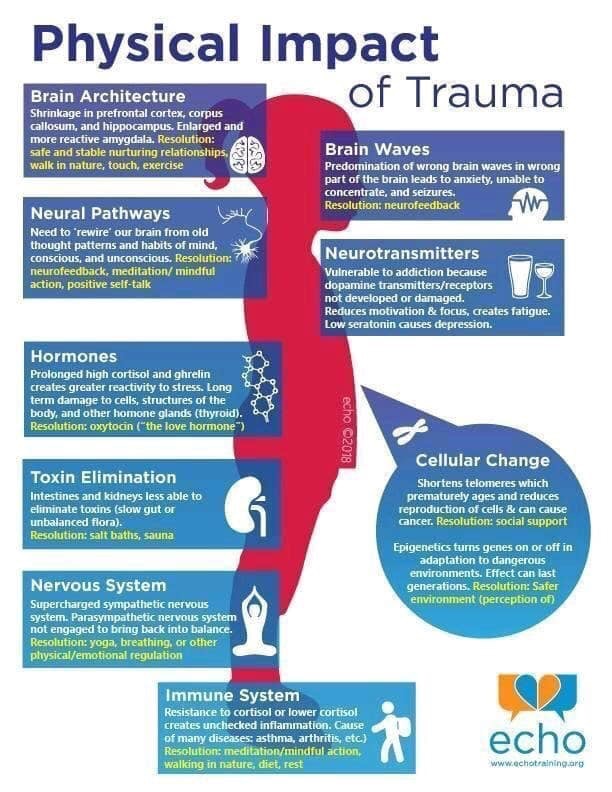
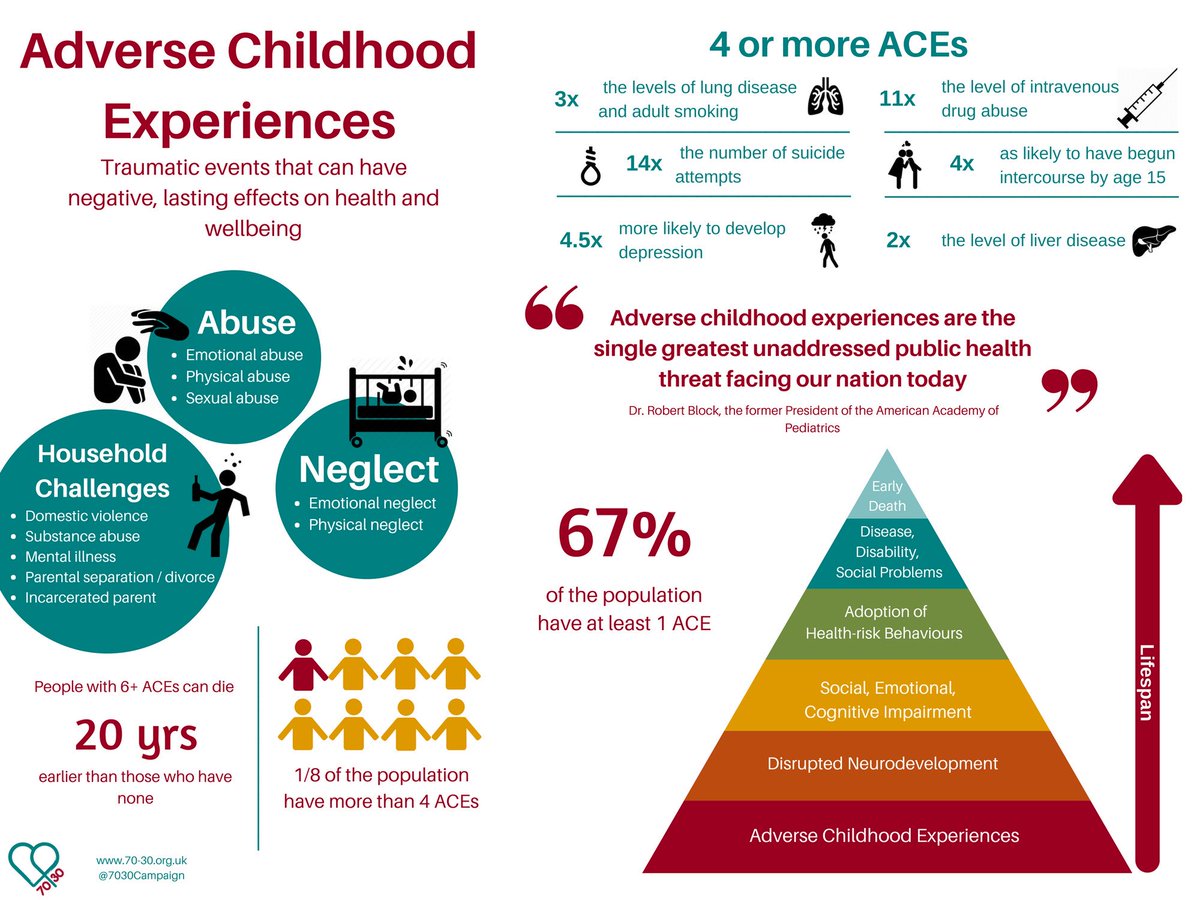
ACEs can have serious, long-term impacts on a child’s health and well-being by contributing to high levels of toxic stress that derail healthy physical, social, emotional, and cognitive development. Research shows that ACEs increase the long-term risk for smoking, alcoholism, depression, heart and liver diseases, and dozens of other illnesses and unhealthy behaviors. The new data show that 33 percent of children with two or more ACEs have a chronic health condition involving a special health care need, compared to 13.6 percent of children without ACEs.
Nationally, more than 46 percent of U.S. youth—34 million children under age 18—have had at least one ACE, and more than 20 percent have had at least two. The new analysis includes state-by-state percentages of children with ACEs, ranging from 38.1 percent in Minnesota to 55.9 percent in Arkansas. The ten states with the highest rates are either in the South or West. The newest national and state data, along with an issue brief and maps, can be found at www.cahmi.org.
“Every child deserves a healthy start. A loving home, a good school, a safe neighborhood—these things are the foundation for a long and happy life, yet too many children don’t have them,” said Richard Besser, President and CEO of the Robert Wood Johnson Foundation. “Too often children experience trauma that can be devastating. But trauma doesn’t have to define a child’s life trajectory. They can be incredibly resilient. With policies that help families raise healthy children and the consistent presence of caring adults in their lives, we can reduce the impact of trauma on children’s health and help them thrive in the face of adversity.”

Key findings from the new data analysis include:
ACEs impact children and families across racial, ethnic, and socioeconomic groups.
- White children are less likely to have ACEs than Hispanic or black children, but they make up the plurality of all children who have had ACEs. Roughly 40 percent of white children have one or more ACEs, compared to 51 percent of Hispanic children and nearly 64 percent of black children. But in part because of demographics, 46 percent of children who have had one or more ACEs are white, whereas 27 percent are Hispanic and 17 percent are black.
- ACEs are more prevalent among children in low-income families—62 percent of children with family incomes under 200 percent of the federal poverty level have had at least one ACEs. But they occur among children at all income levels—26 percent of children in families with incomes higher than 400 percent of the federal poverty level have had one or more ACEs as well.
ACEs impact a child’s social-emotional development and chances of school success.
- Children ages 3 to 5 who have had two or more ACEs are over four times more likely to have trouble calming themselves down, be easily distracted, and have a hard time making and keeping friends.
- More than three out of four children ages 3 to 5 who have been expelled from preschool also had ACEs.
- Children ages 6 to 17 who have had two or more ACEs are twice as likely to be disengaged from school than are peers who have had no ACEs.
Supportive relationships and teaching resilience skills can mitigate the effects of ACEs.
- Children ages 6 to 17 who have had two or more ACEs but learned to stay calm and in control when faced with challenges are over three times more likely to be engaged in school compared to peers who have not learned these skills.
- Children whose parents report “always” having positive communication with their child’s health care providers are over 1.5 times more likely to have family routines and habits that can protect against ACEs, such as eating family meals together, reading to children, limiting screen time, and not using tobacco at home.
“ACEs and other traumatic events don’t just affect an individual child—families, neighborhoods and communities all bear the brunt of these difficult circumstances, which add up over time,” said Christina Bethell, PhD, director of CAHMI. “If a child’s stress and unhealed trauma leads to acting out in class, that disruption is felt by the other children in the room as well as the teacher. These impacts require the healing of trauma at a family, community, and societal level. Practitioners and policymakers should respond to these new data by advancing strategies that can both prevent ACEs in the first place and support families and communities as they learn and heal.”
The Robert Wood Johnson Foundation supports a range of policies to help prevent ACEs from occurring, and help families respond to them, including:
- Policies like paid family leave and home visiting to ensure that parents and caregivers have the time, knowledge, and resources they need to support their children.
- Policies that can improve access to and the quality of child care and early education.
- Policies that can help create healthier communities such as those focused on safe affordable housing, access to healthy foods and community violence prevention.
Last month, CAHMI and AcademyHealth published a special supplement to the journal Academic Pediatrics which collected a wide array of research on ACEs and put forth the first-ever national agenda to address ACEs and promote resilience, healing, and child and family well-being. The agenda emphasized that supportive community policies can help reduce the trauma caused by ACEs.
The National Survey of Children’s Health (NSCH) is funded and directed by the Maternal and Child Health Bureau (MCHB), which develops survey content in collaboration with a national technical expert panel and the U.S. Census Bureau. The NSCH first included questions about ACEs in the 2011/12 survey, but the methods and sample size changed between then and 2016, meaning it is not advisable to directly compare results across years. The NSCH is planned as an annual survey going forward, so data trends can be evaluated.
The ACEs assessed in the survey are:
- Somewhat often/very often hard to get by on income
- Parent/guardian divorced or separated
- Parent/guardian died
- Parent/guardian served time in jail
- Saw or heard violence in the home
- Victim of violence or witness violence in the neighborhood
- Lived with anyone mentally ill, suicidal, or depressed
- Lived with anyone with alcohol or drug problem
- Often treated or judged unfairly due to race/ethnicity
ABOUT THE CHILD AND ADOLESCENT HEALTH MEASUREMENT INITIATIVE
ABOUT THE ROBERT WOOD JOHNSON FOUNDATION
For more than 40 years the Robert Wood Johnson Foundation has worked to improve health and health care. They are working to build a national Culture of Health, enabling everyone in America to live longer, healthier lives. For more information, visit www.rwjf.org. Follow the Foundation on Twitter at www.rwjf.org/twitter or on Facebook at www.rwjf.org/facebook.
Sources
Robert Wood Johnson Foundation, Collection
CDC Violence Prevention and Adverse Childhood Experiences (ACE’s)
Discussion Questions
What do you think about the concept of ACE’s as being effective predictors of health outcomes?
I think the concept of ACE’s being effective predictors of health outcomes is accurate because they focus highly on the root cause of trauma by addressing trauma first, then providing resources of support. ACE’s want to understand why some youth struggle with health or behavioral issues. Instead of using punishment as the only solution, this ensures youth get the help they need while also holding them accountable for their actions. Overall, ACEs are effective because they shift the focus from reacting to behavior to understanding and preventing it.
The idea of Adverse Childhood Experiences (ACEs) is a powerful and helpful predictor of health outcomes because it emphasizes how early trauma, such as abuse, neglect, or dysfunctional households, can have long-term repercussions on both physical and mental health. Because persistent stress affects brain development and the body’s stress response system, research consistently demonstrates that higher ACE scores are associated with increased chances of problems like depression, substance addiction, chronic disease, and even early mortality. However, protective variables such as secure settings, supportive relationships, and availability to resources can shadow the impacts of ACEs. Therefore, the notion works best when it is used to guide prevention and intervention rather than to label individuals.
I think the concept of Adverse Childhood Experiences (ACEs) is really useful for understanding how early experiences affect long-term health and well-being. The data show that children who face multiple ACEs are much more likely to struggle with things like chronic health conditions, mental health challenges, and school engagement. This makes sense because experiencing trauma, neglect, or instability can create high levels of stress that interfere with healthy development, physically, emotionally, and socially.
I also think ACEs are helpful because they give us a way to look at patterns across large groups of kids, rather than just focusing on individual cases. For example, knowing that children with two or more ACEs are more likely to have trouble at school or develop chronic health conditions can help schools, healthcare providers, and communities target support and prevention programs where they’re most needed.
At the same time, ACEs aren’t the whole story. Not every child with high ACEs ends up with poor outcomes, and protective factors like supportive adults, stable routines, and access to mental health resources can make a big difference. So while ACEs are a strong predictor of risk, they should be used to guide interventions rather than label or assume a child’s future. Overall, I think the ACE framework is a powerful tool for both research and policy because it highlights the importance of early childhood experiences and the role of supportive communities in helping kids thrive.
I think ACEs are pretty good predictors of health outcomes because they show how much someone’s childhood can affect them later on. If a kid grows up dealing with things like violence, family problems, or poverty, that stress doesn’t just go away—it can mess with their mental and physical health over time. That’s why people with more ACEs are more likely to struggle with things like depression, illness, or substance use.
At the same time, I don’t think ACEs tell the whole story. Not everyone who goes through trauma ends up having bad outcomes. Some people have support systems or learn ways to cope, which helps them handle what they went through.
So overall, I think ACEs are helpful for understanding risk, but they don’t decide someone’s future.
I think the concept of Adverse Childhood Experiences being effective predictors of health outcomes is important. There are a lot of young individuals who are affected by early trauma. Studies show that ACEs help to identify risk factors and patterns in these young adults. A lot of youth who face shuffles early in life often have challenges into adulthood. There is also a link between higher ACE scores and increased risk of physical and mental health problems. Even though ACEs are good predictors, they aren’t completely perfect since they don’t account for other issues such as protective factors like support systems. People are also capable of change and growth, just because something tragic has happened it doesn’t mean their life can’t be flipped. Having the right group of people around you can make all the difference.
Adverse Childhood Experiences shows how common trauma truly is for many children and how much it can impact their futures. I want to say it’s an effective predictor but honestly I am not sure. Yes all children deserve to start out with a healthy positive life, but for some that is not the case. Depending on the situation, all children will handle trauma differently, so for some it may not be effective at all. Research suggests that ACE can have serious, long term impacts on a child’s health and well being by contributing high levels of toxic stress. It also increases long term use of alcoholism, depression, and heart/liver diseases. But, data also shows that children who have ACEs but are given a good support system early in life at home or school are more likely to have a stable childhood and life. This shows why it is important to have support systems and polices for those in need. Not only would this help with mental health issues, but it would also decrease the amount of juvenile crime stated.
On the concept of Adverse Childhood Experiences (ACEs), I do agree that they are a strong predictor of negative health outcomes at the population level, but should not be a guarantee for negative health down the road. Research shows relationship of a higher ACE score and a greater risk for issues such as mental health disorders, substance abuse, heart disease, and other chronic conditions.While ACE scores are able to highlight trends and public health risks, they fail to incorporate factors like resilience, positive childhood experiences, and social support for some individuals. Overall, ACEs provide lots of insight into health patterns but should not be used alone for risk prediction or clinical decisions.
ACEs are effective predictors of health outcomes because they show a strong connection between early trauma and later issues like mental illness, substance abuse, and chronic disease, especially through a clear pattern where more trauma increases risk. However, they are not perfect predictors because they don’t account for protective factors like supportive relationships, resilience, or access to resources, and they also miss some broader experiences like community violence or discrimination. This means that while ACEs are very useful for identifying general risk and understanding patterns across groups, they cannot fully determine an individual’s future, making them a strong but incomplete tool for predicting health outcomes.
I think the idea of ACE’s being used as a predictor is possible, but to an extent. In the text, it tells us about how ACE’s can have serious and lasting impacts on a child’s health, due to these experiences. It tells us how 33% of children with 2 or more ACE’s have chronic health conditions compared to the 13.6% without. Also linked to it are destructive things like depression, substance abuse, and self-harm. This pattern also applies to adulthood, which can start to tell us how ACE’s could be a reliable indicator of health risk.
Besides physical health, it can also have an impact on things like social and emotional development, which will only add to the distress of trying to form relationships or continue academically. These added obstacles can play into things like social behavior issues, among other things. But ACEs are not a guaranteed cause of things like this, as many other factors contribute to them. It says that “nationally, more than 46 percent of U.S. youth, 34 million children under age 18, have had at least one ACE, and more than 20 percent have had at least two.” And the ten states with the highest rates are either in the South or the West, showing how location also plays a role. Traumatic experiences can affect everyone, not just children; while they might be more easily affected, the issues can also be a barrier for adults. Overall, I think it’s a possibility, but not to be heavily relied on; it can be used as a tool for explanation and improvement.
The concept of Adverse Childhood experiences being a health predictor affects the direct pathway to crime by things like substance abuse, addiction, chronic stress, etc. More than 46 percent of the ACE criteria are under the age of 18 and have dealt with a negligent parent, incarcerated parent, or living with someone who is suicidal. ACE is prevalent among low-income families and this leads to trauma that never heals from a young age. I believe that trauma does shape a person, but every child should have a loving home and an early start at social and emotional success. Trauma responses in youth are direct links to why they act out in school and 90% of them have delinquent behavior. The Robert Wood Foundation supports polices like paid family leave, quality child care, and safe affordable housing to ensure that the chances of youth being involved with ACE and the justice system is being prevented.
I think the concept of ACEs is an effective predictor of health outcomes. ACEs touch on important aspects of children’s lives and how things may result for them. When it comes to young children’s social lives at school along with their emotional development, it states that from ages 3-5 children with multiple ACEs are more likely to have trouble calming down, focusing, and have a hard time making friends or keeping them. With the same age range, more than three out of four children who have been expelled from preschool also had ACEs. A child’s stress and trauma could lead them to act out in class, and this is felt by the other kids in the class and the teacher. This is why it is important for the disruptive children to learn how to calm down, have positive communication, and have healthy family routines. If these things are not learned or practiced, children aged 6 to 17 who have had two or more ACEs are twice as likely to be disengaged from school compared to their peers with no ACEs. If this trauma is left untreated, it can lead to delinquent behavior. Studies show that youth in the justice system are more likely to have a history of trauma. This can all be avoided if they are able to receive help at a young age.
I think ACEs are a strong predictor of health outcomes, and I can relate to that on a personal level. Growing up, I dealt with some childhood trauma, especially because my parents were frequent drug users and were constantly fighting before they got divorced. Even though I feel like I’ve moved on from a lot of it, it still had a lasting impact on me, especially in how I view relationships and handle certain situations.
Because of that, I can see how early experiences don’t just affect physical health, but also mental and emotional development. The environment you grow up in can shape things like trust, communication, and what you see as normal behavior in relationships. For example, if someone grows up around a lot of conflict or instability, they might carry those expectations or reactions into their own relationships later in life, even if they don’t realize it right away.
At the same time, I don’t think ACEs determine everything about a person’s future. People are capable of growing, learning, and changing over time. Having supportive people in your life or becoming more aware of how your past affects you can make a big difference.
I think ACEs are a helpful way to predict health outcomes because the post shows how common they are and how much they can affect someone long-term. Kids who experience multiple ACEs are more likely to have problems like depression, substance use, or even heart disease later in life. The idea of “toxic stress” really explains why these experiences matter, it can hurt physical, emotional, and brain development. The more ACEs someone has, the bigger the chance of health problems, which makes them good predictors overall. But ACEs aren’t a guarantee of bad outcomes. The post points out that having supportive adults and safe environments can help kids be resilient and do well despite trauma. So, ACEs are useful for identifying risk, but they’re just one part of the picture since support and resilience can make a big difference.
Adverse Childhood Experience (ACE): Robert Wood Johnson Foundation (RWJF)
The Robert Wood Johnson Foundation (RWJF) conducted research to analyze the impact that Adverse Childhood Experience (ACE) has on children’s health. Research found that ACEs can have long-term impacts on children’s health by increasing stress levels. High levels of stress in children negatively impact their development, such as physical, emotional, and cognitive. These developmental impacts increase the likelihood of alcoholism, heart disease, smoking, or depression. The RWJF supports policies that prevent ACEs from happening and help families’ responses. When a child is taught coping mechanisms to process and work through ACEs, they are less likely to experience long-term health issues. When a child learns how to cope, they won’t feel the need to rely on drugs and alcohol, which decreases their chances for long-term health issues. Children who experience ACEs that do not learn how to cope are more likely to have long-term health issues; this would be a more effective predictor of health outcomes. Overall, ACEs may be able to predict a portion of health outcomes, but they cannot be the only indicator. However, it is very important to ensure that children and families are given the tools to overcome ACEs so they can heal.
The concept of Adverse Childhood Experiences (ACEs), explained by organizations such as the Robert Wood Johnson Foundation and the Centers for Disease Control and Prevention. They explain the importance on how childhood experiences can affect long-term health. ACEs include traumatic events like abuse, neglect, and growing up in environments with instability, such as substance abuse or violence. Studies have consistently found that individuals with higher ACE scores are more likely to develop health problems later in life, including chronic illnesses, mental health disorders, and substance use issues. Because of this strong connection between the test scores and the heath problems later in life, ACEs are considered useful predictors of health outcomes. This allows professionals to find people who may be at greater risk and create early intervention strategies to improve their well-being. This focus on prevention can lead to better health outcomes overall. On the other hand, ACEs do not determine a person’s future. Many individuals with high ACE scores can lead healthy lives, especially when they have strong support systems, access to healthcare, and positive coping skills. ACEs are important for understanding risk while also keeping the importance of a supportive environment in mind. These supportive and reinforced environments shape positives of having a long-term healthy outcome
I think that the concept of ACEs being effective predictors of health outcomes is staggering, but it is also very plausible given the different factors that contribute to an environment in which a child lives. Trauma has statistically contributed to the risks of juveniles continuing problematic cycles in adulthood and having long-term problems that are often intertwined with health (or lack thereof), addiction, abuse, substance use, and trouble socially. This also contributes to systemic issues like trouble finding housing and stability, or trouble getting psychological help. In a way, though, I feel it is a good indicator of what to look for when it comes to analysing why someone might exhibit certain behaviours.
Adverse Childhood Experiences show how common trauma is for many children and how much it can shape their future. A high number of young people deal with at least one ACE and that is worrying because these experiences can affect mental health behavior and development. Children who grow up in unstable homes due to money problems family conflict or violence often face challenges that follow them into adulthood. But ACEs do not decide a child’s future. With strong support good education and helpful community resources many children can grow heal and overcome these hardships. This shows why early support programs and policies are important because they can lower the chances of problems like juvenile crime and long term health issues.
The concept of ACE’s being effective predictors of health outcomes is important for not only youth but also adults. They should be taken into great consideration because traumatic events are not experiences that are just forgotten about. Even if someone tries to suppress their memories and feelings, they never go away. Suppressing your feelings and memories can have ever lasting impacts on your body. One of those impacts is a weakened immune system. If someone were to go to the doctors for a weakened immune system, they might receive medication or treatment to try to strengthen it. However, that medicine or treatment will only go so far because the weakened immune system is not because of natural causes. Therefore, the medicine or treatment is not the full answer because there is more to the reason that it is weakened. However, if the doctors were to ask about ACE’s and realize that there is something much deeper to the problem, that person could then receive treatment for their suppressed emotions and feelings that were a result of their ACE’s. They might even find new ways to cope with their feelings and improve their health in not just their immune system, but their whole body overall.
I believe that when a child goes through such a hard time in their childhood with no help or support, it can really have an impact on how they go through life. Support is one thing that I think people do not have enough of, and that is a very important determinant of how they go through life. Having to witness the death of a family member can be very hard, especially a parent. I do think that ACE is not always the reason for how kids have mental health issues and a troubled childhood, though. There are many other reasons, like bullying, neglect, and low self-esteem. I do think that ACE can predict some of the children, but not all. Some kids take what they learn and see as a child and never want that to be around them anymore, so they choose a different path. It is hard without the support to overcome that, but I know it is possible. I have a friend whose dad was a big drug dealer, and her mom was a drug user. Her mom overdosed in front of her when she was young and lived, but 3 months ago, she just died of an overdose, and her father has been in and out of prison her whole life due to drugs. She now works at a large company, has a dog, and is doing well for herself. She did not take what she saw as a kid and let it affect how she grew up, but instead never wanted to be around that.
I think the concept of ACEs being effective predictors for health outcomes is very concerning, especially considering how common it is for people to have Adverse Childhood Experiences. Many of the ACEs listed are things that are often normalized by Americans, or experiences that we’ve been desensitized to. According to Shaheen & Gordon Attorneys at Law (2025), roughly 50% of children will experience the divorce/separation of their parents. The World Health Organization (2026) states, “Nearly 1 in 7 people in the world live with a mental disorder”. The National Center for Drug Abuse Statistics (NCDAS) states that as of 2025, 24.9% of people over the age of 12 have used illegal drugs or misused their prescriptions. Many of the ACEs listed are widespread issues across the nation, making it very easy for many of our country’s children to meet these detrimental criteria. I can identify myself as having met at least three of these criteria. Juvenile delinquency is among the least of our concerns; as trauma takes hold of more and more of the American population, I wouldn’t be surprised if the lifespan for the average American is eventually lowered.
I enjoyed reading this article about ACE or Adverse Childhood Experience, and ACE is traumatic events that are witnessed by children. For example, if the child witnesses the death of a parent, if they were the victim of violence, and many other things that can be traumatic to a child. I thought that it touched on a serious topic that has a severe impact on children and families everywhere. As the years go on the trauma that the child experienced could drastically impact their health in the future, mentally and physically. That’s why I believe that ACE can be effective when predicting health outcomes. Children can be easily influenced and many of the children who live in poor areas with a high crime rate learn or see crimes or certain violence that can influence the way they live their life. Traumatic events that a child has to endure or see could really mess them up in the future, and ACE could be a factor to determine how they turn out in the future. In the data it says that 33% of children who have 2 or more ACE’s have a chronic health condition compared to 13.6 % of children with no ACE’s. But just because they experience traumatic events when they were young does not mean they will all turn out bad in the future. Overall, I believe that ACE could help predict health outcomes but it will not always be accurate.
I believe the concept of ACE’s is an effective predictor of health outcomes among the youth in our society. The studies show that kids who go through neglect, abuse, or poverty are more likely to have mental and physical health issues later in life. ACE is an important tool for predicting future issues. This is important because it allows people to know in advance before it happens. But we have to make sure that the information we are given is accurate. When children experience trauma from a parent’s death or being taken away, it will stay in their minds forever. This can lead to anxiety for the child, and it can also lead to brain issues. I think this relates to juveniles a lot and helps explain some of the things they do. Most juveniles have a traumatic childhood, which can lead to them committing crimes. But not every child who has an ACE commits crimes; this is due to many juveniles going to therapy or having family and friends to talk to.
I think ACEs can be useful, but they shouldn’t be treated like a perfect formula for predicting someone’s future. They do a pretty good job showing how early stress can affect a person’s body and mind, and it makes sense that kids who go through a lot of trauma might face more health problems later on. The science behind toxic stress is strong, so ACEs can definitely help us understand risk. On the other hand, I don’t think ACEs should be the whole story. A number can’t show everything about a person’s life, and it doesn’t show the support or good relationships someone might have. Two people with the same ACE history can end up with completely different outcomes. So, in my point of view, ACEs are a good starter for it, but they work best when they’re combined with a bigger picture of someone’s environment and their support system.
I believe that using ACEs to predict potential future health measures for children is an interesting concept. At first I was against this because although trauma and things that fall into the ACE category are very serious, it was hard for me to think that trauma can contribute to health affects. However, after reading the article and beginning to understand that there is a correlation and that this data can be useful in certain predictions. I think that any kind of predictions when it comes to health are important because it can give an advanced notice to help prevent things, but I do think that information we are predicting needs to be accurate, which I think that this information can be used and trusted based off the information presented.
Reading about ACE made me realize that many people with childhood trauma come from this. It makes me wonder what their lives would be if there was no traumatic event like a parent being killed or taken away from them. These types of situations would stick to the memory of the child forever and will replay in their mind for the rest of their lives. When these traumatic events stay in your memory forever, it impacts the brain, leading to anxiety. It also affects everywhere in your body that lead to things like cancer and neurological issues. Which is where crimes can happen. A lot of people tend to have one experience but there are kids who have multiple different experiences. Ace has different effects all throughout the nation. They have different effects with racial, ethnic and socioeconomic groups. These issues also lead to trouble in school where students tend to either drop out of school or lead into expulsion from school. The rate for these issues are four times higher for children who have had more than one ACE over students with even just one ACE. These relate to juveniles because most juveniles have a traumatic childhood. ACE is the biggest thing with childhood trauma because it is an event of possibly losing a family member and it impacts the brain mentally. Now, not all children who have had ACE throughout their childhood, is not always leading to crime. Especially today where the access to therapy is much higher, in hopes that it helps people through traumatic situations and issues with anxiety.
The article explains that adverse Childhood Experiences(ACEs) could predict health outcomes because they show how trauma experienced early in life can affect a person later on in life. The research shows youth who goes through things in life such as abuse, family problems, and neglect are more likely to having psychical and mental health issues later in life. ACEs is useful in this situation for understanding risks and identifying who might need the extra support for later in life. ACEs is not the only factor but support from family, schools, and communities can reduce these effects. ACEs can be a helpful predictors but they don’t predict a full outcome of a persons future.
ACE’s can definitely be effective for predicting health outcomes of youth. I think it is more important to use the ACE’s endured by a child as a chance for intervention. A lot of these children who endure ACE’s may live in poverty, drug-infested homes, under abusive parents or siblings, etc., the possibilities are unfortunately endless. As mentioned before, these experiences tend to have a negative effect on the health of the child. This may be physical harm, suicidal tendencies, drug abuse, increased anger, acting out in school, etc. These effects that stem from the ACE’s are not immediate, thats why I believe that if an experience arises, legal intervention for not only the child but for the family is necessary. If success is not possible or restricted in the child’s current living situation, intervention could give them a fresh start and break away from the trauma. Exposure to new environments can help remove traumatic experiences from the back of their mind.
I definitely believe that the concept of ACE’s is an effective predictor of health outcomes among the youth in our society. This will show people trying to understand why the mental health crisis among youth is so bad, because many people are stressed and anxious about what has happened to friends or family members in the past that it is hard to look past in the future. Many people may have had friends or family who have been imprisoned or have been killed (by another person or from suicide). I’m sure there are many correlations between friends that have committed suicide and young people that have been depressed or have had other mental problems. It also doesn’t surprise me that 64 percent of black children have one or more ACE’s either. Black children may have the hardest time of them all as black people are some of the most imprisoned people in America and I’m sure that the black youth have had a family member or friend imprisoned for something or another. That would take a mental toll on anyone, but it is especially hard to recover from something like this, especially if you are in a group that is often discriminated against.
I think the concept of Adverse Childhood Experiences (ACEs) is a useful way to understand how early life experiences can influence long-term health outcomes. Research conducted by organizations such as the Child & Adolescent Health Measurement Initiative (CAHMI) and The Robert Wood Johnson Foundation (RWJF) shows that people who experience higher levels of childhood adversity like abuse, neglect, or growing up in a household with substance abuse or violence are statistically more likely to develop physical and mental health problems later in life. Because of this research, I think ACEs can be effective predictors of health outcomes at a broader population level.
At the same time, I do not think ACE scores should be treated as a guarantee that someone will experience negative health outcomes. In my opinion, people are affected by many different factors throughout their lives, including supportive relationships, access to resources, and positive community environments. These protective factors can help reduce or even prevent the long-term effects of childhood adversity.
Overall, I think ACEs are a valuable framework for identifying potential health risks and understanding patterns in public health. However, I believe they should be used alongside other social and environmental factors to get a more complete picture of a person’s health and life experiences.
After reading about ACEs, I believe they play a big role in how an individual’s early life experiences can affect their health and behavior later in life. Studies show that kids who go through things like abuse, neglect, or poverty are more likely to have health and mental health problems as adults.
This was not really surprising me because growing up in McKeesport you see and hear a lot of things that kids should not have to experience. For example, hearing firearms go off, seeing illegal activities on the streets. Parents calling their children to come home when the streetlights come on because it is not safe at night. Growing up in environments like that can make those experiences seem more normal. ACEs show how early life can affect adulthood, but I also believe support systems make a huge difference. If a child has support and resources it can help overcome those experiences, which shows that ACEs do not decide on what someone’s future will look like.
I believe ACEs are effective predictors of health outcomes because they highlight a powerful and evidence-based link between early life experiences and adult well-being. They have transformed how healthcare providers, educators, and policymakers think about prevention and intervention. However, ACEs should be viewed as indicators of risk, not destiny. When combined with an understanding of resilience and protective factors, the ACE framework becomes not just a predictor of problems, but a guide for building healthier futures. ACEs are effective predictors is their connection to stress biology. Chronic stress in childhood can disrupt the development of the brain and immune system. Prolonged exposure to stress hormones such as cortisol can affect emotional regulation, decision-making, and even inflammation levels in the body. Over time, these biological changes can increase vulnerability to illness. ACE research helps explain how social and emotional experiences “get under the skin” and influence physical health decades later.
Reading about ACEs made me pause. Childhood trauma is more common than most people realize. Losing a parent. Seeing violence. Living with someone who struggles with addiction. These experiences leave marks that last long after childhood ends. The article shows that Black children face these challenges at higher rates. That made me think about the kids I grew up around. I even thought about my own family. How different experiences shaped us. How some of the struggles we faced were quiet, almost invisible. ACEs also stack up. The more a child experiences, the bigger the chance of problems later, health, school and emotions. I remember people I knew growing up who went through multiple hardships. Some struggled in school. Some struggled with their health. ACEs don’t tell the full story. They don’t decide a life. But they show patterns. They show who might need support. At the same time, resilience matters. Not every child with ACEs ends up struggling. A caring adult. A safe space. Learning to handle challenges. That can change a path. I thought about the people who helped me. How one person or one small moment can make a difference. ACEs matter, but they don’t define a child. Overall, ACEs give us a lens to see early risks. They show where help can change everything. It makes me wonder. How many kids could thrive if someone stepped in at the right time?
I believe that ACE plays a major role in the future of children but there are many other factors that do to. Studies have shown that kids that come from poverty and have faced trauma are more likely to lash out and partake in criminal activity. Other things such as the environment, friends, family, and movies/video games play huge factors in developing a child also. ACE kids have gone through things at a young age that most people have not and this is why they need more attention then regular kids. ACE kids also could change their path with school success supportive relationships. We need to come up with more solutions to help the ACE kids so that we could decrease the juveniles that are being detained.
I believe that ACE plays a big roll when it comes to children and how they will carry out the rest of their lives. In my opinion this concept is great because it covers a lot of ground when it comes to issues that children are going through such as home problems, school problems, and even neighborhood problems. This concept could be fantastic for mental health for kids that have suffered multiple ACE, even if its one all kids should have a chance at being great. Sometimes due to their past experiences there is like a wall that they can not break through because lack of encouragement or even scared to fail and disappoint. In cases where the child has been through an ACE incident sometimes they do believe they are not capable of doing somethings. I believe this can be a leep into helping kids have a healthier mind and be able to accomplish many things that they were already able to accomplish but the push and support that they get plays a huge roll.
I’ve never heard of aces before, so this was a new concept to me although i’ve heard of child predictors like these. My thoughts come to that incarceration of a parent or a death does effect a child and the out come in circumstantial events. I’m not sure that only that can effect the out come of behavior in a child. I think other eternal forces help too, like the back lash of their parents being incarcerated or death.
I was not familiar with the term Adverse Childhood Experiences (ACE) until taking this class and reading this article. However, I knew that such experiences caused trouble for children throughout their lives. For example, living with parents that later got divorced could absolutely make maintaining a healthy romantic relationship very difficult later in life. The child could just assume that nothing will work out romantic,y for them because it could not even work for their parents that they assumed loved each other and would spend the rest of their lives together. No child expects to go through something that traumatizes them in their life,cespecially in their early life. While it is possible for them to bounce back and not be affected long term, it is hard to expect a child to be able to do that without help. Adverse Childhood Experiences are current,y at a very high percentage for all races. It is true that they are more likely to occur in low income households, which means they most likely do not have the funds to provide their child(ren) with therapy or something like that after such an event. This is why it is so much harder for them to bounce back. If the event had something to do with drugs or alcohol, society and potentially the family, will just assume the child is heading down the same path. That is just how people think. They will not go out of their way to help children that come from such a household, because they assume it is their destiny to end up the exact same way. That will not break the cycle, it will only make it worse and more intense. When an ACE occurs, the child is not capable of knowing that it will impact their future, so how are they expected to help themselves? I personally know many children that have been through traumatic events. I have realized it is important to be there for them, encourage them to do good things for themselves, and steer them towards the right path in life if they do not have anyone to do it for them. Every child deserves a fair chance at a fulfilling life, some children just need extra help catching up because of an event that was totally out of their control.
In this article, it talks a lot about Adverse Childhood Experience (ACE). I have not heard about ACE until I read this article. The statistics in this article are really interesting. In the beginning it states that “in 16 states, at least 25 percent of children have had two or more ACEs.” It is sad to hear these stats and think what some of these children have gone through. It is crazy to read about how having two or more ACEs have negatively affect the child’s life. The impact on the child just doesn’t affect them, but also the people around the child.
This is my first time hearing the acronym ACE which is adverse childhood experience, but i did have a very small knowledge of the idea behind what an ACE was. One thing I did not know before reading this article is what technically can be defined as an ACE, some things were obvious to me like violence or a death, but this article helped clarify a little bit more about what can be considered an ACE such as living with someone who was suicidal. This article showed statistics of childhood development in schools and how ACEs affected kids’ performances in schools, some of which where pretty shocking to me, but I was shocked that a lot of these statistics described two or more ACEs, when going into this article I assumed that just having one ACE depending on what it was would be enough to get a child disengaged in school. There probably was research done on children with just one ACE but that information does not appear to be in this article.
The Adverse Childhood Experience , also known as ACE is something that was not familiar to me before reading the article. Something that caught my eye that there is a high percentage of juveniles that have experience in ACE. The article talks about ACE and how an event doesn’t only affect a child but also their families. A juvenile that suffers from ACE usually is quiet and keeps to themselves. The child may also deal with problems of acting out and getting into unhealthy habits such as drugs or alcohol. kids that suffer from this are more likely to not be able to maintain relationships with friends. There needs to be more research done on juveniles that have had ACE events. If we can reduce the side effects of ACE this may also decrease the number of juveniles placed in jail and or the number of juveniles being locked up.
I have never heard of the ACE (Adverse Childhood Experience) program until I have read this article. We all the time hear about adults with issues but never really hear or take a deep look into issues in the children’s minds. I think it all starts with the families these children are raised in. Unfortunately there is not much we can do as a whole but I think if these statistics would hit the households with young children growing up they may be hit with reality and could possibly change the way parents raise their children. I think more education or more resources need to be put out to help these children with ACE.
this wasn’t something that surprised me, i say this because i grew up in a apart of Philadelphia were almost every kid in my neighborhood had been exposed to multiple ace’s. i remember growing up and going outside to play and hearing gun shots, seeing drug dealers, and people stealing. i grew up thinking that was just everyday life, just because i seen it happen so often. i was surprised about how having ace’s can impact a child so much. i never really stopped to think about until i read this and started to think about how some of the things can apply to me at times.
ACE was something unfamiliar to me until reading this posting. Depending on what ACE actions a child has experienced can determine how badly they would be affected. I personally have not been affected negatively by some of the things I have experienced throughout my childhood but it is very different for everyone. Multiple times I have been an ACE victim but fortunately I have the will power to not remember those things and when I do, I let them go immediately. The variety of ACE’s range widely and sadly many many children experience some kind of ACE throughout their child hood. To be exact 38% of children in every state have at least one. Sadly, I don’t believe there is a solution to this problem other than counseling for those kids who want to open up to someone, but some of these experiences can be very personal, making one not want to speak upon it leading to stress, emotional and mental illnesses, bad behavior etc.
I have never heard of Adverse Childhood Experience (ACE) until after reading Youth and Trauma. It is terrible that there is such a large percentage of juveniles that have experienced ACE. The side effects are pretty scary after reading some of them. I myself can be considered an ACE victim when I was younger, but I do not have any health problems from it, at least not that I know of. It is a very scary situation to be in, but I had my brother by my side growing up so we went through it together. Hopefully they come with with ways as to dealing with the side effects to help reduce the number of juveniles from being harmed or have unhealthy behaviors.
When I first read about the statistics of the ACE, I thought the number was seemingly high. As I continued I didn’t think that it would be so different for the race of the children. I think that it is an important fact that should be recognized. As it relates to criminal justice and its system, I think it is important for the Juvenile justice system to take into account that there is a high rate of children that have experienced at least 1 childhood trauma and even the high number that have experienced more than 1. If one of the children are raised in a 1 parent home, and that parent becomes seriously ill, it can be extremely difficult for them to overcome the trauma.
Adverse Childhood Experience (ACE) is something I have never heard of. Sadly, children experiencing a traumatic experience is not too shocking. Specifically, I think children with parents that are financially not stable are more prone to it. Because if the child’s parents are not doing well financially, that can possibly lead to arguments between the parents, less success for the child to get his education, and other things. I think the key is to educate and help children who have been impacted by something traumatic in their lives. By assisting and educating them, they can get impacted in a more positive way and look at their lives more differently.
I am shocked by the face there are 38% of children in the 50 states that have suffered through atleast one ACE experience. That is such a high number when it comes to the children that will grow into adults to lead the future generation. Experiencing an ACE takes a physical, mental, and sociological toll on the child. ACE’s are predictors of health outcomes. It goes on to have an impact in every aspect of their lives, and usually not in positive ways. If we could figure out ways to help children more positively deal with ACE’s, I feel as if the juvenile deliquency rate would go down. As I have mentioned before in past discussions, many juveniles caught in the system feel some type of anger and strong emotion from hard experiences, ACE’s, in their lives and have no other way to deal with that build up emotion and frustration other than to commit crimes.
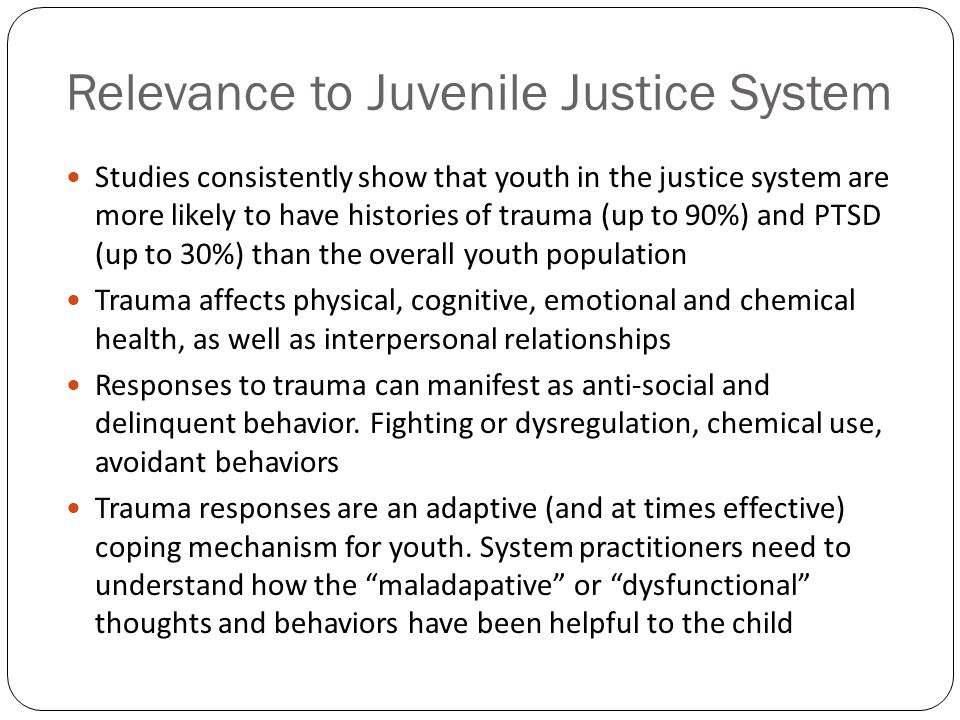
Witnessing or being a victim of violence is an example of an Adverse Childhood Experience. This can be troubling for children because traumatic events can disrupt their mental development. For instance, children ages 3 to 5 who have had two or more ACEs are four times more likely to have difficulty calming themselves down and focusing. These impacts require the healing of trauma at a family, community, and societal level. Overall, ACE’s increase the long-term risk for smoking, alcoholism, depression and unhealthy behaviors such as not being interactive. By studying the research, policy makers should consider early education in order for the children to develop their social skills. As a result, this could potentially be beneficial for children.
I never knew what ACE’s was about until now. It’s crazy to see the number of statistics that the ACE reported from the surveys they take. It’s just sad to see the statistical number of how many kids that are affected but this and the other thing is that some of them have a long-term of it because of the things they have been exposed to when they were young. One of the things that the article talked about that caught my eye was more than 46 percent of U.S. youth 34 million children under age 18 and then more than 20% experience it twice. Also from reading the article it just doesn’t affect the child because it starts with the family and that’s when it starts to hit the child more and more when a family isn’t doing so well. I feel like more people should be more informed about this because this issue just keeps increasing over time. Like me, i didn’t know what this is so many other people probably wouldn’t know as well that’s why I feel like more information about this because it all starts in the household.
I don’t agree that ACEs are a good predictor of heath problems on their own. The data shows that children who have ACEs but have a good support system at home or at school are more likely to have a stable childhood and perform well in school. ACEs by their nature are traumatic and traumatic experiences can cause even fully developed adults to change their behavior in unpredictable ways, the strain it would cause on a child whose mind is still developing is unimaginable. However, the data shows that clearly not all children who experience one or more ACEs in their life do not have problems with their peers, in school, or with the law.
This was not surprising that a lot of children encounter an ACE at some point and then end up having some problem. A lot of family members are also effected and not just the child when something like this happens. I know people talk about PTSD and that is a good predictor of mental health and criminality, but I didn’t think that something like ACE would be such a good predictor in children. In the article, it mentions that an ACE experience does not have to define their lives forever, but I can not completely agree with that. If a poor family does not have the means to seek help for the child, then the child is already at a disadvantage. It will probably turn out negatively for that child and that is really sad. Some kids don’t get a shot to make things better.
I think it’s kind of sad that 38% of children in all 50 states have had at least one ACE. When the parent exposes the child to some form of violence, drug or some type of social/psychological problem the weight comes down on the child. I’m not at all surprised these kids have high levels of stress and that it halts the development process. There is most defendant a pattern when looking at the statistics. The statistics seem to be the same for a lot of social issues. For example; whites are less likely than other groups, likely to occur among low-income families etc. However it does occur across all levels of race, ethnicity and socioeconomic groups. I just wonder where we can break the cycle of a parent exposing their children to harm. I think we need to echo and educate the causes and risks to society in hopes that someday children won’t be experiencing these problems
The overall concept of ACEs being effective predictors of health outcomes is an interesting and advancing topic. Many of the children in the juvenile justice system have come from rough atmospheres and traumatic experiences and this ACE data helps prove that. As far as connecting health to experiences, this is personally the first study that I have heard of for children. The first group that comes mind to when PTSD is mentioned would be soldiers returning from war, and it is pretty surprising that many kids can also develop similar diagnoses resulting from trauma. This research shows just how wide spread ACEs are. The article mentions that over 46% of children have had at least one ACE. Perhaps more resources will be allocated in the future for assisting children dealing with ACEs or helping families prevent situations that cause them.
I think the concept of Adverse Childhood experience being a predictor in a child’s mental health because some of the ACE’s are losing parents, parents serving time in jail, or any other traumatic event that could happen to them in their youth years. I think if adolescents have any issues in their adult years and they had anything of the traumatic events happen to them then it could have been because of ACEs. Some youth cannot avoid certain events happening to them so I think all youth should go through some programs that helps them overcome all of the ACEs so they know different diversions to go into instead of the crime route. from the survey that was conducted one of the results was that kids also get treated unfairly because of their race and the ethnicity, I think no matter what race the child is since they are already going through hard times then they should have to deal with being treated differently and should be treated with the same respect. I also think things need to change with the ACE issues so each youth and their families can have success and great relationships after being through so much.
I had no idea that there was such a large amount of juveniles encountered ACE’s and how strong and negative the impacts of those events were. I encourage policies that help the adults in the specified areas and demographics, because adults are the root of the traumatic events that happen to the juveniles. Also policies that help the juveniles that experience these events because I feel like it is very difficult to prevent all of the ACE’s from happening, so the juveniles it does happen to need help so they don’t stray down the path of unhealthy and poor lifestyles.
This article, Yourh Trama, talks about Adverse Childhood Experience (ACE) and how an event just doesn’t affect a child itself, but the family and everyone else as a whole. A child who may have suffer from ACE tends to keep to their self, as they do not like to be social with others. In result of this, the child may deal with their problem by acting out, or depending on drugs or alcohol. If we can find a way to reduce the chance of ACE from happening maybe there would be as many juvenile
I think that it is fascinating – albeit disconcerting – that ACE’s are being found in our youth. So often we hear about veterans returning from war with PTSD, and though not exactly the same thing, it is a very similar injury and can certainly inhibit the lives of those affected. Should this information find its way across America’s households, there would definitely be an impact of the behavior of families, especially when children are present. It’s often discounted of what people as children witness affects them later in life, and the unfortunate fact is that it can affect these people a great deal. Certainly more information and education should be spread to the American public to be more aware of this really serious issue in our society and our households.
I think this article makes an important point in talking about ACE’s in connection to juvenile crime and the impact that they have on childhood development. The article also talk about initiative that are aiming to help in the mental health aspect but I feel as if that is missing a large part of the point in all of this. The reasons that some of these ACE’s can become co dramatic is because they often hinder the opportunities that the children could have, these experiences often lead to family struggle and the missing out on chances for things like focus on education, community involvement, ect. A larger focus of intervention should be focused on the community in order to truly have an effect on the issue. Things such as free community involvement or supervised events for children who wouldn’t otherwise have those opportunists because of situations caused by their ACE’s would be more beneficial to them in that it gives them a chance to learn and grow past their traumatic experiences. Its not to say that the mental health aspect is not important when it comes to treatment and aiding the problem, because it is, but even with treatment a situation caused by ones ACE could still keep them from advancing and it would make them more likely to commit a crime or become a delinquent anyway. There are a lot of ways to look at this issue and a lot of room to develop on the study of it.
I am not sure about the concept of ACE’s being effective predictors of health outcomes. It is true that every child deserves a healthy start, but it they live in poverty, or their mother or father is absent in their life they are already are not given a fair shot at a healthy start. Every child deals with situations different. ACE’s might be effective predictors of health outcomes for some children but others it might not be effective at all. The article states that children experience trauma and that it doesn’t have to define a child’s life trajectory, but as a mentioned before if they are poor how are they able to receive the help they need, or if their parents are absence from their life than it’s not easy for them to receive help or even say that they need help. There can be policies that help families raise healthy children but if they don’t reach out and get the help then it’s useless the child will still suffer from trauma. This article also makes a valid point when it states that neighborhoods and communities can affect an individual child also. If they have a loving family but live in a bad community that could give a child ACE. Things like the Robert Wood Johnson Foundation that help ACE from occurring in these children are great, but they cost money, and they are not everywhere.
In this article it talks about ACE, ACE means adverse childhood experience. We need to try and eliminate this problem of ACE as children who have experienced one or even more are more likely to suffer from long-term risk like smoking, alcoholism, depression, heart and liver diseases, and dozens of other illnesses. These are not the only things they can suffer from as they can become more non-sociable. They are more likely not able to keep relationships with friends, more likely to act out and be violent as well. ACE isn’t picky either as it takes all races into play and destroys childhoods. With all of that being said we need to do some research on what helps kids who have had ACE events happen to them. If we can find a way to reduce these side effects from ACE this could also help us have less juveniles killed or placed in jail.
This article talks about ACE or Adverse Childhood Experience. ACEs and other traumatic events don’t just affect an individual child; families, neighborhoods and communities all bear difficult circumstances, which add up over time. This can Include the death or incarceration of a parent, witnessing or being a victim of violence, or living with someone who has been suicidal or had a drug or alcohol problem. It is said within the findings that ACE’s impact children and families across racial, ethnic, and socioeconomic groups, a child’s social-emotional development and chances of school success and supportive relationships and teaching resilience skills can mitigate the effects of ACE”s.