
The Problem
Youth violence encompasses a range of experiences and behaviors. Gang activity, bullying, sexual assault, physical violence, family violence, gendered violence, and gun violence are all examples of the different kinds of violence to which youth may risk exposure.
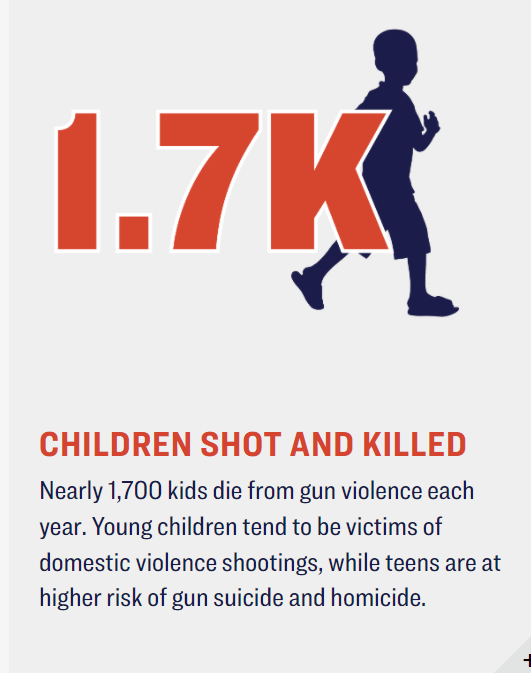
When it comes to guns, the climate in the United States is unlike that of any other developed nation in the world. Here we find that a combination of widespread gun ownership in addition to weak gun safety laws (and a political climate that makes it impossible to even discuss the issue) all combines to create a uniquely dangerous environment for American children. Globally, 91% of children killed with guns in high-income countries are killed in the US. Every year, over 8,000 minors are killed or seriously injured by firearms in the US.
Are School Shootings a Public Health Crisis?
The idea that we might treat the topic of school shootings and gun violence in general as a public health crisis is not so far-fetched when we consider how gun-related violence shares many striking similarities to public health epidemics such as cholera in Haiti or HIV/AIDS in the United States.
In this instance, there are discernible social patterns of transmission in the United States that go beyond aggregate factors such as race, age, gender, and income. On an individual level, social networks — the people the individuals hang out with — may predict a given person’s likelihood of being shot and killed (i.e. social learning theories, routine activities theory).
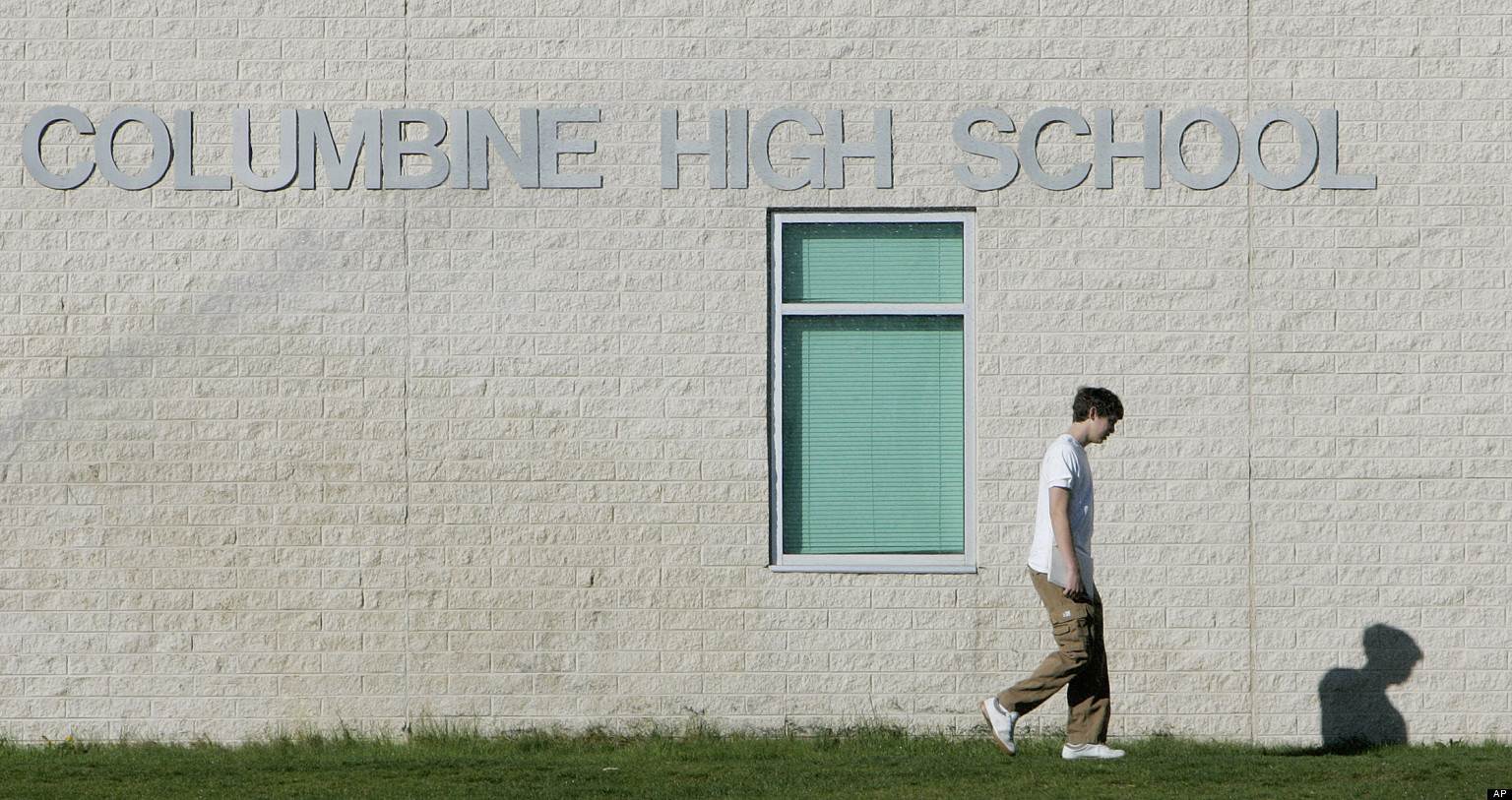
Since Columbine, more than 221,000 K-12 students have experienced a shooting at their school. Most American schoolchildren today have been alive for at least six of the 10 deadliest mass shootings in American history, including the December 2012 mass murder at Sandy Hook Elementary that resulted in the death of 20 first-graders and six adults. Unsurprisingly, a majority of high school students report feeling concerned about a mass shooting in their own school or community (Giffords, 2019). For more on this see statistics and charts published by Giffords.org.
Guns are the leading cause of death for children under 18 in the United States.
In a study published in March 2017 in the American Journal of Public Health, Andrew V. Papachristos and Christopher Wildeman applied the science of social networks to study patterns of gun homicide in Chicago. The idea here was fairly simple: treat gun homicide like a blood-borne pathogen; something transmitted from person to person through specific risky behaviors.
Unfortunately, gun violence is not simply an airborne pathogen: You don’t catch a bullet like you catch a cold (Papachristos and Wildeman, 2017). Nevertheless, there is much that we might learn from this research and its approach to the study of gun violence.
Noteworthy is how the researchers found, using research methods of social network analysis, that more than 40 percent of all gun homicides in their study occurred within a network of 3,100 people, roughly 4 percent of the community’s population.
Put another way, the mere fact of being among the 4 percent of a defined social network increased a person’s odds of being killed by a gun by 900 percent!
These numbers demonstrate how gun violence can spread like HIV infection: You’re more likely to “catch” the disease if you engage in risky behaviors with someone who might be infected. And it’s not just people’s friends who affect their likelihood of getting shot, but also their friends’ friends. This is similar to the transmission of HIV: Your current partner’s past sexual partners affect your exposure, even if you don’t know them.
In the case of gun homicide, seemingly random victims end up “in the wrong place at the wrong time” by indirect exposure, such as getting a ride from a friend’s cousin or by going to the party of a friend’s friend. In these cases, gun victimization is tragic but not random.
Understanding the socially networked nature of gun violence has important implications for how it can be addressed. Prevention efforts can be directed toward those individuals and communities most susceptible to the infection.
The solution is not broad sweeping public policies and policing practices, such as New York’s “stop and frisk” (which justified the targeting of blacks and Latinos on the basis of hunting for weapons) or even mass arrests.
A more data-driven, effective way to solve the problem involves taking the opposite approach: employing highly targeted efforts to reach specific people in specific places, akin to providing clean needles to drug users to prevent the spread of HIV.
By studying gun violence like we study disease, it is possible that we might improve our chances of predicting which people are most at risk of having a gun and/or being shot.
This is an example of how using data to inform policing practice (a scalpel and not a shotgun blast approach) can help officials to respond better, smarter, and more fairly.
Youth, Firearms & School Shootings: What Are the Odds?
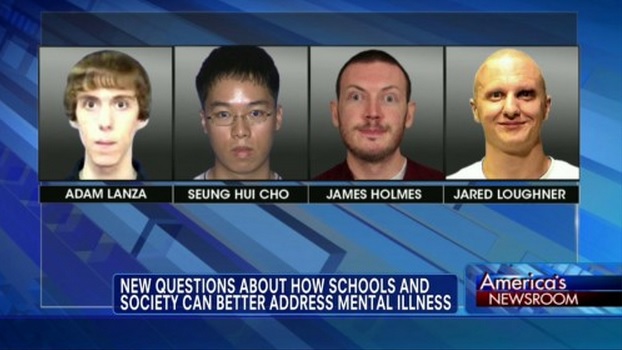
Researchers, not to mention the public, are all interested in knowing if it is possible to predict who is more likely to pull the trigger and/or die at the hands of a gun. To answer this, we begin to get a sense of some of the patterns that distinguish shootings in cases like Sandy Hook Elementary School, Virgina Tech, and Columbine High School, all of which shared young shooters and young victims in common.
Why Is It Always a White Guy?
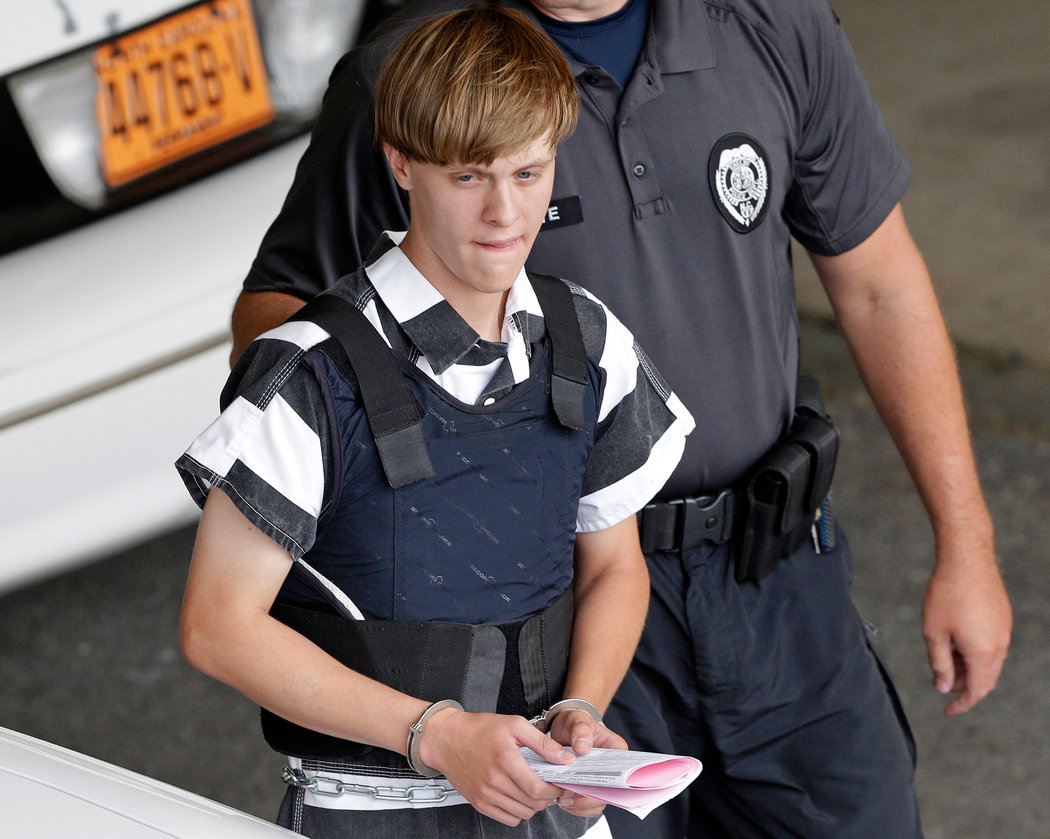
While the high-profile mass shootings all share youth in common, as sociologist Michael Kimmel points out, they all share race and gender in common too. The paradox that researchers seek to unwind looks like this:
- the vast majority of white men do not engage in high-profile/mass & school shootings;
- yet the vast majority of these types of shooters are white men. [for more on this, check out Kimmel’s book “Angry White Men,” 2017].
This is why researchers will often advocate for an intersectional theoretical approach to study gun crime and its victims. They look at how, for example, race, class, and gender are deeply intertwined and produce different outcomes in different social contexts.
Careful, “You’ll Shoot Your Eye Out Kid”
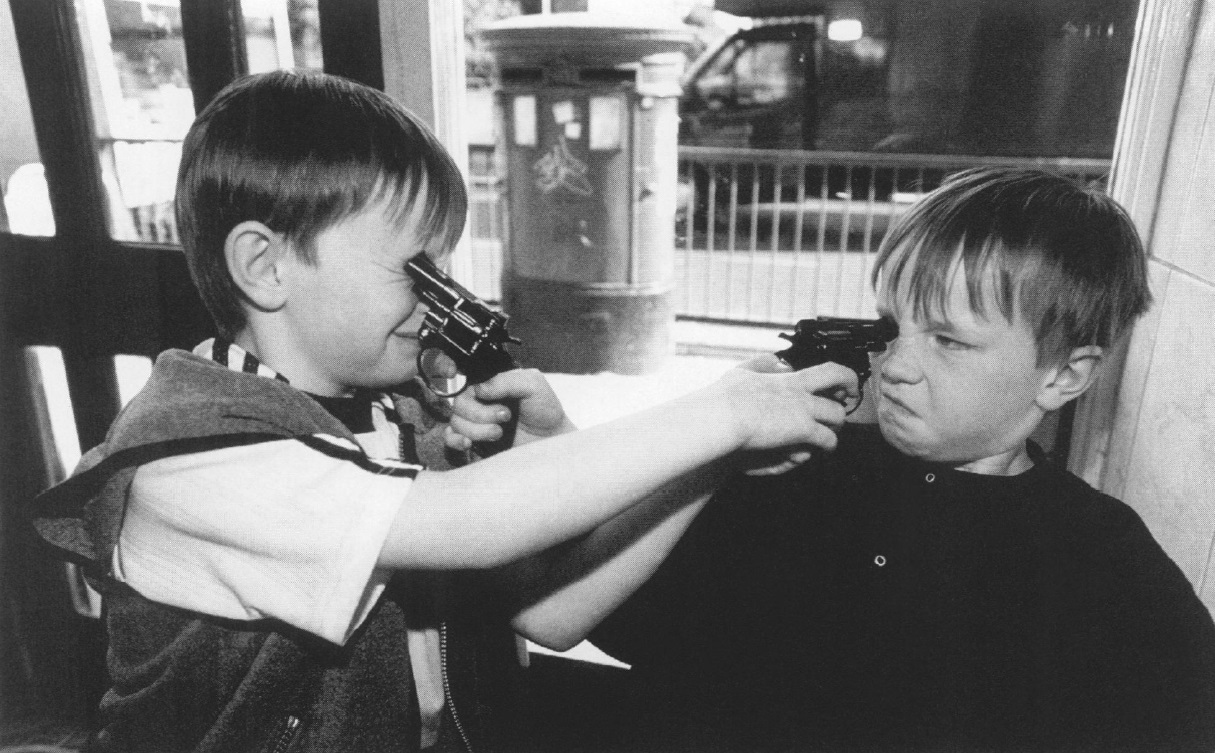
This is the famous admonition offered by Santa Claus to Ralphie in the holiday favorite movie “A Christmas Story.” As it turns out, Ralphie was not alone in burning desire to obtain and use a firearm. Consequently, the United States, tragically, is the undisputed leader when it comes to violent toddlers.
In 2015, toddlers were responsible for more shootings and shooting deaths, than terrorists. Since the beginning of 2015, there were 52 toddler involved shooting incidents in the US. According to the Washington Post:
“In 2015 so far, at least 13 toddlers have inadvertently killed themselves with firearms, 18 more injured themselves, 10 injured other people, and two killed other people.”
When that article was published in Oct 2015, there had only been 43 toddler shooting incidents. Since then, toddler shootings have continued, with an average of one toddler involved shooting a week. These stats are just for toddlers though and could very well be inaccurate (as in, there might be more), as incidents involving children and guns often don’t get reported.
Children shot accidentally — usually by other children — are collateral casualties of the easy accessibility of guns in America. Their deaths all the more devastating because they were preventable. Adults, who claim to be “law abiding gun owners,” who know how to secure their weapons,” are only law abiding until they’re not. The results speak for themselves.
The United States has the most deadly toddlers in the world
Unintentional shootings are just one of the many ways that guns kill, injure, and traumatize thousands of American children every year. Firearm suicide, domestic violence, community violence, and mass shootings pose a significantly higher risk to kids in the United States than kids in other high-income countries.
As was demonstrated in the film “Bulletproof,” some children live in neighborhoods where shootings are a daily occurrence. They live in fear of being hit by stray bullets as they walk home from school or sit on their front porches. At home, they are taught to hide under beds or in bathtubs at the sound of gunfire. At school, they learn how to barricade doors and run.
The combined impact of this means that many children can never feel safe – not ever! When children are robbed of any sense of safety and security, this can have a lasting detrimental impact on their lives and wellbeing. Many children exposed to shootings who live in these environments (estimates 40-50%) will develop PTSD.
Policy Proposals – How Can We Fix the Problem?
Former President Obama, in the aftermath of the Newtown, Conn. shooting that claimed 20 innocent little victims, signed an executive order requiring more research on gun violence by the CDC and other federal agencies. Despite this, there has been very little follow-through. Implementation requires full funding from Congress, which remains throttled in many respects, even as it has somewhat improved.
Policy-makers have instead supported legislation that promotes the increased availability of guns to people in the United States. They do this in spite of the fact that increasing gun access is not supported by the preponderance of the research, which shows gun violence and deaths vary proportionally to their availability and controls in a given society.
Additionally, they continue to allocate large portions of what little funding is approved to police and security contractors and people who make surveillance equipment, despite the fact that research demonstrates that support for teachers and counselors is more effective.
Examples of Policy Proposals:
- Increase/Promote Gun Ownership
- Control Gun Ownership/Regulate Firearms
- More/Less Guns in Schools
- More/Less Cops in Schools
- Increase mental health treatment/prevent access to firearms
- Increased/Decreased Use of “Stop & Frisk”
Lobbyists for the National Rifle Association (NRA) have spent considerable time and money to discourage legislators from making laws that would mandate the collection and sharing of information related to guns and gun violence. This has had the effect of keeping the public in the dark about facts that are important to understand.
The gun lobby in the United States (the business arm that promotes gun sales thru the funding of politicians who support the same) has used the under-counting of gun accidents involving juveniles to oppose reasonable policies that could help prevent deaths and injuries caused by the careless handling and storage of firearms.
To counteract calls for increased control over weapons, they question the public’s fear of youth-involved gun violence by pointing to statistics that show children are more likely to die in falls or by drowning than from the accidental discharge of a firearm (see The New York Times’ report, which challenged the NRA argument of opposing laws to safely store guns and accompanying efforts to resist developing technology to make weapons childproof).
Sources
“Counting the Young Victims of Firearm Violence,” by the Editorial Board of the Washington Post
“I Just Lost My Fourth Student This Year to Gun Violence. I Want to Make Sure He’s the Last, ” by Tammatha Woodhouse as Told to Kerry Shaw, April 7, 2017
“In the South Bronx, Lives Marred and Erased by Firearms,” by James McKinley Jr. and Ashley Southall and Al Baker
“The Most Dangerous Neighborhoods; the Most Inexperienced Cops,” by Andrew Fan
Angry White Men: Masculinity at the End of an Era, by Michael Kimmel, 2017.
“Why a Rising Number of Criminals are Using Facebook Live to Film Their Acts,” by Olivia Solon
Network Exposure and Homicide Victimization in an African American Community, by Andrew Papachristos and Christopher Wildeman, 2017.
Class, state, and crime: On the theory and practice of criminal justice., by Richard Quinney (2d ed.) (New York: Longman, 1980).
The New Criminology: For a Social Theory of Deviance, by Ian Taylor, Paul Walton, and Jock Young (New York: Harper and Row, 1974).
Critical Criminology, by Ian Taylor, Paul Walton, and Jock Young (Routledge and Kegan Paul, 1975).
Discussion Questions
What do you think about Kimmel’s model in terms of its ability to predict gun violence and school shootings? Do you think this model could potentially help identify schools at risk (though perhaps not outright predict) mass shootings and school violence?
Who owns most of the guns in the united states and what explains the patterns, particularly as this applies to youth access to firearms?
How might we use an “intersectional” framework to call attention to social problems associated with gun violence ( a framework that takes into account interpenetrating social factors like race, social class, and gender)?
What do you think about treating gun violence like a public health crisis?
Specifically white men who live in rural areas and associate their beliefs with conservative ideology often own more guns than anyone else in the United States. They often hold a strong belief to the second amendment of the right to bear arms. This is a major issue in the United States and has been for years as their children or other family members gain easy access to using those guns. As the article mentions, 91% of children are killed with guns.
The patterns of this issue becomes an epidemic similar to a disease that’s treatable, but it becomes too political to talk about so everyone keeps getting affected by this. We need to treat gun violence as if it were a public health crisis because every year school shootings increase and children have to wear bulletproof backpacks just to receive an education. A majority of white adult men claim to be law abiding citizens and it’s not a problem they’re worried about because for two reasons, they “lock their guns up” and because it simply hasn’t affected their family’s life but it will. At some point their children and their children’s children will be affected by this disease.
I’ve always worried about being in the wrong place at the wrong time or even when I was in middle school, I feared the chances of a school shooter entering the building. It’s upsetting because there are things that can be done to solve some of these problems related to guns, but people who live with a strong conservative mindset are too stubborn to think for other people especially the youth in the United States. It should not be political. If you’re someone that is for pro-life ideas than you should be demanding policymakers to control gun ownership.
In my opinion, I feel like social media doesn’t help the problem of gun violence because many of the school shooters or shooters in general will make posts online before they commit the crime and it goes unseen. I’ve also seen many minors post guns on social media or holding guns with their family members during hunting seasons. A few years ago a politician actually posted his family’s annual holiday card and they were all holding large guns including minors. Social media glamorizes guns and that’s very dangerous for anyone who consumes half their day on it.
youth violence is not random, but is influenced by social groups, the environment, and access to guns. it points out that a small number of people within certain social networks are responsible for a large amount of gun violence, showing that violence often spreads through connections rather than happening by chance. it also compares gun violence to a public health issue, suggesting that it should be addressed with research-based prevention strategies rather than just punishment.
effects of violence on young people, including fear, trauma, and long-term mental health problems such as anxiety or PTSD. It also emphasizes that understanding patterns of violence can help communities and schools develop more effective prevention programs. One weakness of the article is that while it discusses causes and patterns in detail, some of the solutions it suggests are general and could be stronger if it included specific examples of programs that worked.
showing that youth violence is a complex social issue shaped by many factors, and that preventing it requires targeted strategies based on research. It reminds readers that addressing violence is not just about punishment, but about understanding and changing the environment and social networks that contribute to it.
Gun violence, especially school shootings, is a huge issue in the U.S. today, and it’s something that affects many young people. To really tackle this problem, we need to look at it from different angles, including social issues, public health, and policy. Michael Kimmel’s model helps explain why young white men are more likely to be involved in mass shootings. While it doesn’t exactly predict who will commit a shooting, it shows how certain pressures around gender and identity can lead to violent behavior. Understanding these pressures can help us target interventions for those at risk before things escalate.
In the U.S., a small group of gun owners hold most of the firearms, which makes it easier for young people to get their hands on guns, whether they’re legally or illegally obtained. This is especially true in rural areas where gun ownership is more common. If we start addressing who owns the guns and where they’re kept, we might be able to reduce youth access to firearms.
Looking at gun violence through an intersectional lens is really important too. This means considering factors like race, gender, and class when trying to understand why certain groups are more affected by gun violence. For example, communities of color often face more violence because of systemic inequalities, and young men, especially white men, are overrepresented in mass shootings. By understanding these different factors, we can create better policies to tackle the root causes of violence in different communities.
One way to address gun violence is to treat it like a public health crisis. This might sound strange, but just like we address diseases like cholera or HIV, we can look at how gun violence spreads through social networks. By targeting the areas or people most at risk, we could prevent violence before it happens. Moving the focus to prevention and community education instead of just relying on criminal justice could make a real difference.
For many people, worrying about gun violence is a daily reality, especially if they live in high-risk areas. But if we could identify social patterns that show where violence is more likely to happen, like risky networks or unsafe environments, people could make smarter decisions about where they live or who they hang out with. This would help reduce the chance of becoming a victim.
Social media also plays a big role in youth violence. On one hand, it can spread conflicts and harmful ideas or even show violence happening in real-time. But on the other hand, it can be used to raise awareness, support victims, and even start movements against violence. How we use social media matters. It can either make things worse or help bring about positive change.
Gun violence is a complicated issue, and to solve it, we need to address it from multiple angles, including cultural, social, and policy-based. By understanding how social networks, gun access, and media influence youth violence, we can take steps to fix the problem. It’s time to work together to create safer environments for young people and reduce the impact of gun violence in our communities.
I believe gun violence should be treated as a public health crisis since it is one of the leading causes of death and affects people of all ages, races, and genders. Because it impacts such a wide range of people, it meets the definition of a public health issue. One major concern is how easily firearms can be accessed. In many cases, there are minimal requirements to purchase a gun, and sometimes individuals can obtain one with very few restrictions. Also, guns are not always stored properly, which can allow children or others to access them and use them in unsafe ways. The combination of easy access and high rates of death makes gun violence a serious issue that the public needs to be more aware of. If it were treated as a public health crisis, there would likely be more education and awareness about safe gun ownership. This could include teaching people how to properly store firearms and how to handle them responsibly, especially around children. Just like with other public health crises, increased awareness often leads people to take precautions to protect themselves and others. In this case, recognizing gun violence as a public health issue could encourage safer practices and help reduce preventable injuries and deaths.
I feel that Kimmel’s model is not that accurate at preventing school shootings. Many mass shooting are not planned by an individual. Many people in many places of white descent often are familiar and carry firearms. Gun violence is something that should be like a public health issue if people are mentally unstable to this point and still receiving firearms and causing harm to people while that shouldn’t be happening. When it’s a juvenile involved in a shooting, I believe the parents should be held liable for allowing their kid to have a firearm. The bad situation lies where if anyone of age wanted to commit a crime they would go out and do so with the freedom we have in this country to purchase firearms. Luckily a lot of these things are being looked at more thoroughly and are being handled more properly. These things will still continue to happen but hopefully violence can at least come to a minimal.
In the terms of the ability to predict gun violence and who will be the next shooter, Kimmel’s model is beneficial to us. Why are school shooters always white men? The model helped us identify that school shooters often turn out to be those who were bullied, isolated, and have troubles with their masculine side. Now while the model cannot help us predict or prevent the next shooting, it can help point out risky behaviors and environments. Most gun owners in the U.S are older men and women, which makes it accessible to their children if not properly locked up. In 2015, toddlers were responsible for more shootings and shooting deaths than terrorists. Since then, toddler shootings have continued with an average of on shooting per week. Both of those statistics were crazy to hear about. Another one that caught my attention was that the leading cause of deaths for kids under the age of 18 are guns. I do think that treating gun violence like a public health matter would be effective. It would put more focus into prevention, the risk factors, and long term solutions rather than rehabilitation.
The model helps explain school shootings by highlighting factors like masculinity, grievance, and social marginalization, but it cannot reliably predict who will commit violence. Instead, it can help identify broader school risk factors such as bullying or isolation and guide prevention efforts. In the United States, most guns are owned by a relatively small group of adults and youth often access firearms through family members or unsecured weapons in the home, which helps explain patterns of youth involvement. Using an intersectional framework draws attention to how overlapping factors like race, class, and gender shape exposure to gun violence and unequal access to resources. Treating gun violence as a public health issue is effective because it emphasizes prevention, risk reduction, and solutions rather than punishment alone. Ithink it should be treated as a crisis and many people do worry about victimization so providing information about safer environments and behaviors can help reduce risk. Finally, social media can both worsen youth violence by escalating conflicts and glorifying incidents, and help address it by spreading awareness, identifying warning signs, and connecting individuals to support systems.
I think that his model could potentially help identify schools at risk, but I also do not think that there is ever truly a sign beforehand. There is a lot of kids who get bullied due to many reasons, and they do not decide to bring guns into school. But then, on the other hand, some kids do get bullied and decide to bring guns into schools. I really don’t think that we could be able to fully identify who and where it could happen unless there are extreme signs beforehand
Most guns in the United States are owned by adults, with a significant portion held by a relatively small percentage of the population. Patterns of gun ownership often reflect factors like age, gender, political views, and geographic location. For youth access, firearms typically come from family members or acquaintances who legally own them. This can be due to a lack of secure storage, insufficient parental supervision, or theft.
Social media can also play a role by exposing young people to gun culture and potentially facilitating illegal sales. I think that using an intersectional framework to address gun violence means recognizing how different social factors like race, class, and gender overlap to create unique experiences of violence. For example, young black men in low-income neighborhoods may face higher risks due to a combination of systematic racism, economic inequality, and limited access to resources. Similarly, women and marginalized communities might experience gun violence in the context of domestic abuse, shaped by gender inequalities and social norms.
I think that if we were to treat gun violence like a public health crisis, we would need to use strategies like data collection, research, and community-based prevention programs to reduce injuries and deaths. It’s an approach focused on understanding and addressing the root causes to create a safer environment. If we did those things, then I think that we could have a great understanding of why people do the things that they do, but on the other hand, people are so unpredictable at times, and even with the research, I think it would be hard to pinpoint when and where something is going to happen.
I am naturally a very worried person, so I always worry about being kidnapped, being shot, or something happening to me in public. I do not really think that if somebody gave me information about how I could make decisions, it would help me. Even though I know it’s very rare, I don’t think that if someone gave me information about those things, it would help me at all.
Social media can make youth violence worse by spreading conflicts online, leading to real-world confrontations, and by normalizing violence through the sharing of aggressive content. But on the other hand, it can also help by raising awareness of the issues, providing platforms for support and intervention, and enabling quick communication during emergencies. The only crimes that I have ever seen on social media were videos on TikTok of the police body camera footage.
I think that Kimmel’s model helps explain some common patterns behind school shootings, like isolation and pressure around masculinity, but it can’t really predict who will commit violence. I’d say it’s more useful for spotting warning signs than making exact predictions. Schools could use it to notice risky environments, even if it’s not perfect.
Most of the guns in the United States are owned by adult men in rural or suburban areas. A lot of times, kids will usually get access through family members, especially if the guns aren’t stored safely. So adult habits play a big role in youth access.
An intersectional view shows that gun violence is shaped by overlapping factors such as things like race, class, and gender. For example, younger men in poorer areas may have to deal with both economic stress and pressure to act tough. Looking at all these factors together gives a clearer picture.
I think treating gun violence like a public health crisis makes sense because it focuses on prevention instead of just punishment. It encourages looking at root causes and ways to stop violence before it happens which could be a lot more progressive.
I personally don’t worry often about being a victim to gun violence. I honestly think I wouldn’t be able to do much with any advice people give me to improve my chances of avoiding victimization because I feel like I already avoid it.
Social media can make things worse by spreading drama or encouraging violence, but it can also help by raising awareness or providing evidence. It really kinda goes both ways. I feel like everyone has witnessed a crime on social media whether they’ve realized it or not
I believe gun violence should be treated like a public health crisis because it is one. Gun violence affects the public’s physical, mental and emotional health just like any other viral disease; the public is scared of being a part of the outbreak, scared of their loved ones falling victim to it, and doing almost everything in their power to protect themselves from it. The only difference would be that people who want to ward off the perils of viral infection wouldn’t actively seek it. Many of the people who are afraid to become victims to gun violence fight fire with fire (or should I say firepower with more firepower). They buy guns to protect themselves from other people with guns, so that in the worst case scenario they could be the one to draw first. However, this logic only makes streets more dangerous, because more guns create more and more risk. Having a gun in the house puts families at a higher risk of child suicide, a higher risk of homicide in domestic violence cases, and an overall risk of homicide/injury for anyone in the household unlucky enough to misuse it. If there were little to no guns on the street, there’d be way less to fear, way less homicides, and obviously way less gun violence.
The model helps connect patterns with school shootings by identifying common traits with shooters. Most gun owners are older men and women, which gives children in the house access to firearms in their own homes. Youth access and actions are not just shaped by their own thoughts but rather by their parents. I think gun violence should be treated like a public health crisis because there would be more steps to help eliminate it and more attention on the problem. It also focuses on prevention rather than punishment and reduces politicization by framing it as a health outcome. Personally, I do sometimes due to the rise in gun violence today. I have also had a close call before with gun violence, so that also helps keep that fear in me. I think that if the information I was given would help me stay out of the line of gun violence, I would definitely like that, but at the same time, I don’t want to live in fear every day. Social media amplifies conflicts when it comes to gun violence but also serves a purpose of evidence and early detection.
Treating gun violence as a public health issue basically means looking at it as something we can prevent, not just punish after it happens. Like how we respond to different health epidemics, the focus is on identifying risk factors. In this case, identifying things like trauma, poverty, and exposure to violence early could help prevent gun violence. While there is a lot of research that shows that limited access to guns is favored by the majority, change won’t happen until policymakers are willing to see the data and make a change to support it. That being said, it’s not a perfect solution, because repeat offenders or illegal gun access need to be addressed. However, policies for change will work best when combined with community investment and targeted policing.
Gun violence should absolutely be treated as a public health crisis, especially since guns are now the leading cause of death for children under 18 in the United States. This is not just about a few tragic incidents here and there, but a widespread problem that affects thousands of young people every year and creates a constant sense of fear for families and communities. Implementing stronger gun laws such as waiting periods, mental health screenings, and mandatory safety classes are common-sense measures that could prevent many of these deaths and keep children safer. Anyone who identifies as pro-life should be supporting these kinds of laws, because protecting children from preventable harm should be a priority for everyone, regardless of political stance. It seems contradictory to focus on protecting unborn children while not supporting policies that could save the lives of kids who are already living, and it is time to treat this issue with the seriousness it deserves.
Yes, I do worry about being a victim of gun violence. It’s really scary to think that something as simple as a road rage incident or being in the wrong place at the wrong time could have deadly consequences. I would definitely want information that could help me make smarter choices about where I go, who I’m around, and what situations I put myself in so I can reduce my chances of being harmed. Having that kind of knowledge would make me feel a little more in control and safer in my everyday life.
Kimmel’s model is helpful because it shows that school shootings aren’t random—they’re often linked to factors like bullying, isolation, and pressures around masculinity. While it can’t predict specific events, it can help identify at-risk school environments and encourage early intervention. In the U.S., most guns are owned by adults, especially white men, and many youths access firearms through family members. This makes safe storage practices a key factor in preventing youth violence. An intersectional approach helps us see how race, class, and gender overlap in shaping experiences with gun violence. It also highlights how different types of violence receive unequal attention, which can affect how society responds. Treating gun violence as a public health issue is effective because it focuses on prevention, risk factors, and long-term solutions rather than just punishment. I think some concern about gun violence is reasonable, and having practical safety information could be helpful as long as it doesn’t create unnecessary fear. Social media can worsen violence by spreading conflict and threats, but it can also help by raising awareness and allowing people to report concerns.
I think Kimmel’s model is more helpful when dealing with continuous behavior but not predicting behaviors such as gun violence and school shootings. This model is centered upon masculinity, peer pressure, and this helps others understand why young men are presumed to be the target audience or more violent. Some people who fit in this category may not be violent at all, which is why the model is not good with predicting who is going to be a suspect of gun violence or a school shooting. However, the model does help with understanding possible risks based on past incidents rather than a tool for identifying suspects who will offend in the future. I do think Kimmel’s model could potentially help identify schools at risk of mass shootings or violence by looking at different aspects like less support from teachers, students bullying other students, or mental health not being a priority. Based on what I have learned so far adults typically male own most of the guns in the United States. Most of these adults have children and keep a firearm in their home to protect their family from potential danger. Knowing that there are firearms under the same roof as children, this can explain the patterns of youth having access to firearms. We might use an intersectional framework to call attention to social problems associated with gun violence by seeing how young men feel pressure to keep up with masculine standards, how poverty exposes people to high-risk situations, and how race shapes policing and public opinions or actions. I think treating gun violence like a public health crisis would make a lot of sense because it would focus more on the prevention of gun violence. It would also educate the youth by providing them with community programs. Lastly doing this shifts the focus of gun violence from finding people to blame to keeping people safe. Although I have never witnessed a crime on social media or personally do not worry about being a victim of gun violence there are many people out there that have to deal with these issues. Social media might exacerbate the problem of youth violence by escalating arguments quicker, making violent acts or offenders seem normalized, and spreading inaccurate information. Social media can also help the problem of youth violence by raising awareness, listing resources, and creating a space where people can report threats or concerning behavior.
Social media influences the problem of youth violence in many ways, the most notable being within the music industry. There’s constantly a new artist putting out music, and while they might not be directly promoting things like gang involvement, murder, weapons, etc. If the listener likes them enough, they will seek to become like them; it could be copying their clothing/ hairstyle, but most commonly it’s followed by copying their actions or developing a similar feeling of aggression towards a variety of things, which will only continue to get worse unless interrupted. While it is not a fear of mine to be a victim of gun violence, it used to be. Growing up, I lived in a horrible part of McKeesport, where it was more common to see someone shot or some type of violence than it was to see the ice cream truck. Being mixed into the slew of school shootings, it was a constant fear when I was younger. Gun violence is easily a public health crisis; it is a disease among many adults and even creeping more so into our youth, which is all a personal decision to not only obtain a gun but also what one does with it. It has gotten beyond control and only continues to get worse. While we could try to put limitations on things like buying guns there will always be someone that finds a new way around it, and we can only go so far before society starts their argument about rights, from this point maybe more active policing or things along that line but that can also result in where we were with an overflood of police in schools. As for media, we could always raise the censorship levels but that also would only go so far.
What do you think about Kimmel’s model in terms of its ability to predict gun violence and school shootings? Do you think this model could potentially help identify schools at risk (though perhaps not outright predict) mass shootings and school violence?
I think that Kimmel’s model could be used loosely to predict gun violence and what groups to examine in terms of patterns of suspects, but I think that the model could only work as a guide to make predictions as to identify schools and juveniles at risks in terms of communities, background, and patterns.
Who owns most of the guns in the United states and what explains the patterns, particularly as this applies to youth access to firearms?
The white population owns the most guns in the United States, specifically white men. This explains the patterns that apply to youth access to firearms because most violent shootings in America are perpetuated by youth with families that have access to firearms.
How might we use an “intersectional” framework to call attention to social problems associated with gun violence ( a framework that takes into account interpenetrating social factors like race, social class, and gender)?
We can use an intersectional framework to call attention to social problems associated with gun violence because if we examine groups in cases of race, social class, and gender, along with patterns within those groups and how they apply to societal issues within those groups.
What do you think about treating gun violence like a public health crisis?
Do you personally worry about being a victim of gun violence? If so, would you like it if someone gave you information that could help you make decisions about changing the places, people, and things you do to improve your personal chances of avoiding victimization?
I think that treating gun violence like a public health crisis is a good way of examining the issue, since it does work like an airborne pathogen in some ways. If you know someone who owns a gun, you are putting yourself at risk, and that person might also know someone who has a gun. Owning a gun increases the risk of gun violence and gun safety comes into question. I do not personally worry about being a victim of gun violence, but that was a fear of mine growing up because gun violence within my community was at an all-time high, putting children and adults both at risk.
How might social media exacerbate or help with the problem of youth violence? Have you ever witnessed a crime on social media?
Social media exacerbates the problem of youth violence. Social media has made youth violence a very normal thing, and the idea that youth violence is a part of growing up or a rite of passage is becoming sensationalised on the internet. I have witnessed many crimes on social media while scrolling on TikTok, which is strange to see now because growing up, seeing a crime was very rare, and the media was very filtered.
I think treating gun violence like a public health crisis might be extremely beneficial for our society. We constantly hear about school shootings in the news, but there are also so many of them that not only do we not hear about them all, but we also cannot keep track of them all. We only really keep track of the ones with the highest amount of losses and injuries. It is almost normalized in our society to hear about a school shooting, talk about it for a day or two, and then move on with our lives to the next big thing. If we treat STD’s like they are the end of the world, then gun violence should be treated the same way because so many people die from the use of guns. There are countless advertisements about what you should do when you think you might have an STD, but we do not have advertisements for gun safety. We should have more systems implemented into our daily lives to teach adults and children what can happen when a gun is not used safely or when they are not safely secured. If we bring more attention to the issue and treat it like a public health crisis, maybe mortality rates as a result of gun violence will go down. Even if they go down slightly, it will be one step closer to getting a decline in mortality rates by gun violence instead of there being no decline at all.
Kimmel’s model helps show patterns in school shootings by identifying common traits among shooters, like age, race, and gender. It can not predict exact events but could help schools see where risks are higher and focus on prevention. Most guns in the U.S. are owned by adults, and youth often access them because firearms are not always stored safely or securely at home. Using an intersectional framework helps us understand how race, social class, and gender overlap to affect who is more likely to be involved in gun violence, either as a victim or a shooter. Treating gun violence like a public health issue makes sense because it spreads through social networks, and targeting prevention efforts could save lives. Knowing risk factors would help me stay safe, but social media can make youth violence worse by spreading threats, but it can also help by sharing safety tips or reporting crimes.
1 youth violence, encompass a range of experience and behaviors. Gang activity, bullying, sexual assault, physical violence, family violence, gender, violence, and gun violence, are all examples of different kinds of violence to which the youth may risk exposure. Guns are leading causes of death for children under 18 in the United States unfortunately, gun violence is not simply an airborne pathogen you don’t catch a bullet like you catch a cold nevertheless, there is much that we may learn from this research and its approach to the study of gun violence noteworthy is how researchers found method of social network analyst that more than 40% of all gun homicides in their study occurred within a network of 3100 people roughly 4% of the communities population put another way the mere fact of being among the 4% of a defined social network increased a persons odds of being killed by a gun 900%!
2 most people who use guns in the United States are older Caucasian some youth are brought up learning to hunt their fathers might be cops or they just grew up in an environment, where guns were always around
3 guns have become more socially acceptable and soon there will be laws past that allow many people to carry firearms in public places
4 gun violence is something that should be treated like a public health problem or they are being used in killings, and it is easy to obtain a firearm and many are not afraid to use them
5 me I’m not I don’t personally fear being a victim of gun violence. To be honest there are 1 million more things that could happen to me throughout my day the possibility, gun violence is slim
6 I believe social media is the main problem with people rappers and actors portraying thugs with weapons and tattoos in my opinion and tattoos are OK but the excessive drugs and weapons. In my opinion I feel social media influence are not doing it the right way and they glorify the wrong thingsOgm5088
Kimmel’s model helps explain the underlying causes of gun violence and/or school shootings. Kimmels model emphasizes on the ideals of masculinity, isolation, and built-up resentment. Although it is more effective at explaining behaviors than predicting it. Many individuals may share these traits but never act violently, which limits the model’s ability to identify specific offenders. This model can still be useful in recognizing environments where multiple risk factors exist, allowing schools to intervene early. In the United States, gun ownership is concentrated among a smaller group of people, mostly adult men, with many owning multiple firearms. Youth often gain access to guns through family members, especially when the firearms are not securely or safely put away. This highlights how access is less about legal purchase and more about the environment and supervision. Using the intersectional framework allows us to see how race, class, and gender overlap to shape experiences with gun violence. For example, young men in disadvantaged communities may face higher risks due to inequality and social pressures, while public responses may differ based on identity. Viewing gun violence as a public health issue shifts the focus to prevention, encouraging education with firearm safety, and community support. Social media can both worsen conflicts but also spread awareness and provide opportunities to prevent gun violence.
I believe that Kimmel’s model is insightful but also so vague to the point that we would be unable to predict anything without more information. The only connection we could get and apply to predict future mass shootings is to try to use this information to reduce teh people the government keeps tabs on. We all know that the government has ways of monitoring certain things, especially on phones and technology. Therefore, we could hypothetically narrow the monitoring to focus more on white men given the information from Kimmel.
White men are the leading owners of guns in America. This plays into the patterns because of Kimmel’s data which shows this profile is the leading cause of mass shootings in America. This also plays into effect because of the youth factor. In the article it talks about how the youth in America has increased numbers in accidental shootings and due to the fact that there are more white men in America than any other race, it leads to the conclusion that there are more white children in America that could have more access to their father’s firearm.
I believe we can use an intersectional framework approach to draw multiple conclusions and study those individually. If we look at situations that involve mass shootings then we look at the different connections of races, genders, and groups of people that are leading to the incidents and it can lead to more accurate profiling of situations rather than looking at people as a whole. Intersectional framework allows us to look at different variables and see how the other variables change based on each other.
I disagree with treating gun violence as a public health crisis. I do think gun violence is a problem, but I do not believe it should fall into that category because at the end of the day it is somewhat controllable. Public health crisis to me is like a virus or something that we are unable to actual control and with guns we can. I think that it also matters because of the fact that they are legal. You cannot call something a crisis if the cause is legal. Certain parts of it could be a crisis, it would be one thing to call it “children accessing their parent’s firearms crisis” but just saying “gun violence is a crisis” seems unfair given the fact that you can legally go buy a firearm right now.
I can fortunately say that I am not currently living in fear of gun violence. I do not live in an area described in the article where people fear walking home or being out on their porch. However, if I was in a situation where gun violence was a constant worry, I do believe that having information about who is likely to cause gun violence in certain situation would be helpful to allow me to know who to avoid in what situations.
I believe that social media is extremely dangerous and can do both, help or exacerbate gun violence. I have watched crime (not gun violence) be posted on social media and I think that it common because people sometimes commit crimes for attention, and having platforms like social media to get that attention for doing obscure things such as committing crimes is dangerous because it could cause people to do them.
Kimmel’s model isn’t ideal for predicting violence, but it can be used to identify the conditions in which gun violence and school shootings are more prone to happening. Schools may hold high-risk factors such as hierarchical masculinity, high social exclusions, weak adult-student relationships, and violence-prone masculinity. Having faculty and staff of schools understand the impact of these social and environmental factors on the possible gun violence and school shootings may help prevent them.
White Americans own the most guns in the US, in particular, white men. The statistic I found was the gun ownership in the US, about 120.5 firearms per 100 residents. Youth access to guns comes from unsecure guns in homes, family members/peers, thefts, and illegal markets. The pattern is that youth that are exposed to violence are more likely to carry guns, whether that be for self defense or for there street status. With relation to school shootings, the majority of perpetrators are white males. The pattern for their access to firearms comes from young exposure to them, unsecure firearms in the home, and being given to them by family members/peers.
An intersectional framework helps us see gun violence not as a single‑cause problem, but as the product of overlapping systems of inequality (race, class, gender, and more) working together to shape who is most at risk, how violence occurs, and which communities bear the heaviest burdens. With respect to gun violence, this framework does not focus primarily on who is affected but instead why certain groups are disproportionately affected.
I do not think we can treat gun violence as a public health issue because gun ownership is a right we are given and it is protected by the Second Amendment. I think the only was we can combat gun violence is properly educating the public on gun handling etiquette and proper storage. We will always have the right to own guns, there just needs to be more strict regulation of guns sales so guns do not get into the hands of the wrong individuals.
I do not worry about becoming a victim of gun violence because I am not scared of it. I am soon to be entering the field of law enforcement and I am fully prepared to be exposed to gun violence. It does not phase me and, in that position, I can do nothing to lower my chances of exposure and reduce the likelihood of victimization.
Social media is the worst thing that keeps youth criminal behavior alive. I have seen this first hand with kids from my home town trying to act hard online for intimidation factor and to make it look like they can carry weight. I come from the second poorest county in PA and crime rates are significantly high among youth. Social media platforms are used by youth to portray themselves the way they want to be viewed. I am constantly exposed to youth criminal behavior on social media and sometimes its people I know.
Youth violence is one of the main problems when it comes to juvenile delinquencies. Whether it is something like gang violence or being exposed to something like gang violence, can often become a problem for the child’s mind. Many exposures of violence to children unfortunately happen in our own schools. There have been a ton of school shootings in history, and those shootings often expose things to children. Being exposed to bodies lying in the hallway while students are trying to make a run for their lives is a very traumatizing situation. Gun violence often spreads like viruses because they are both risky and they both can be dangerous seeing another individual either with a virus or engaging in gun violence. Not only if the child is being exposed to gun violence it can be spread. If they see a gun in plain sight just sitting anywhere in their home or out in public, they can get kids who do not know the damage a gun can do to play with it thinking it is a toy. It is very dangerous and kids can end up shooting and killing themselves or others. Many of those deaths would have to be ruled unintentional. Parents should be responsible for situations like that because why would they have a gun just sitting out in plain sight for any child to just grab. And why would they not be around their child in a situation like this. Children should be supervised almost all the time.
Kimmel’s model does make sense because it does show that gun violence isn’t random. It comes from patterns with connections which as social, isolation, and even access to weapons. I personally don’t think it could predict a school shooting but it could help with identifying which schools or groups thats a higher risk so someone can step in before anything happens in support. In the U.S. the guns is typical owned by older men, the youth usually gain access to them through their family or the guns being left unsecured at home. Using a framework helps us determine that gun violence isn’t just from one thing, but multiple which is why some communities is effected more then others. I think treating gun violence that way is a good thing because it helps focus on prevention and intervention rather then just punishment. I personally don’t worry about being a victim of gun violence. Social media can make it worse by spreading it around everywhere and to some they may see it was glorifying it but at the same time it can also raise awareness for it.
Gun violence has been a growing problem in the United States, especially in schools. It seems like everyone has a firearm in their homes nowadays, and whether that is for a hunting purpose or a self defense purpose. Having firearms in your home is not just for show they each have a purpose. The problem comes when children and people who are not mentally stable get their hands on these weapons. Personally I do worry a tad about gun violence mainly because the career I am going into is dangerous and some people may have weapons that put my life at risk. Eventually I would also like to have a family, and if someone gave me information about changing the people, places, and things I do to avoid victimization then I would be very grateful. I think social media can be both good and bad for our youth. On one hand social media can teach them valuable skills, but on the other hand it can also show them bad things and the horrors that happen in the world. But I have seen a multitude of crimes on social media whether that is on instagram, Tik Tok, or twitter (X). But there are some really bad things that I have seen on social media and that could have a large impact on the youth today. But I would call the gun violence in the United States a public health crisis because it is at the point where gun violence is way too frequent and is ruining the lives of a lot of people.
Kimmel’s model helps explain the ongoing pattern behind school shootings, even though they are unsure when it will happen next and who will do it. Many shooters share the same traits such as being young males who feel as they don’t fit in or bullied. Some of the factors like bullying, peer pressure, and masculinity can play a huge part in violent behavior. The model cannot point out individuals, but it could help schools act and help recognize where the risk factors are coming from and how to prevent things from happening.
Most men in the U.S own guns and youth may gain access to guns if they are in the home and have easy access. The article says that accidental shootings often happen because guns are easily accessible and not stored safely away from the youth. Using an intersectional framework helps us understand that class, gender, and race can all play a part in gun violence patterns. Treating this issue as mental health crisis could help by focusing on preventing the issue and targeting communities who are most at risk.
I do not constantly worry about becoming a victim of gun violence. Yes, it could be scary but growing up in McKeesport you become used to hearing about gun violence and other incidents. It can happen to anyone you could simply be in the wrong place at the wrong time. Gun violence happens everywhere; it is not limited to one specific place. I choose not to live in fear because doing so would take away from meaningful moments in life.
I believe that American families own the majority of guns, and they own them for hunting or family safety. A majority of school shootings are committed by white people. The pattern is explained by the fact that a majority of school shootings occur in homes where guns are present. In America, it is easy for anyone to acquire a gun at any age, and I think treating it like a public crisis is a good idea. I think parents should be held more accountable for their precautions regarding gun handling. I think having an average of one toddler involved in shooting a week is insane, and they need to report these incidents more often. Many people suffer from gun violence, whether it is them being in a neighborhood that gets shot up or having a school shooting. This can affect people’s mental and physical health.
I genuinely believe that after reading this website post, we may need to start treating gun violence like a public health crisis. There are so many school shootings that happen in America every year, it is almost hard to track them all which is really sad to say. The most jarring information that I saw in this post was about the toddlers and how toddlers were responsible for more shootings and shooting deaths than terrorists in 2015. That is incredibly sad and disturbing that toddlers, who can’t even speak, had been involved in more shootings than terrorists whose primary objective is to cause harm to other people and societies. Gun owners need to be more aware of who has access to the guns that they own just like how people are made aware of public health crises that are happening in the country on the news on the daily. The fact that more research and findings aren’t being presented about a very serious topic in gun violence is concerning since that is causing a lot more deaths than a public health crisis currently is. The more gun owners and non gun owners are aware of what is possible with the weaponry in their house or around the country, the more likely they will take extra measures to secure their weapons so that their children won’t get themselves hurt or so that they won’t hurt others around them.
An intersectional framework recognizes that people don’t experience gun violence in a single, uniform way, their race, class, gender, and other identities shape both their exposure to it and how society responds.For example, a Black man in a low-income urban neighborhood faces a very different risk profile than a white woman in a suburban home. The first is far more likely to be a victim of street-level gun homicide, yet policy conversations often center the second, particularly after high-profile mass shootings. This selective attention reflects whose lives get treated as a national emergency and whose lives get treated as background noise.Gender adds another layer. Men, especially men of color, account for the overwhelming majority of gun homicide victims, while women are disproportionately killed by intimate partners using firearms. These are distinct crises requiring distinct solutions.Class shapes access to safety too, wealthy communities can afford private security, well-funded police, and relocation. Poor communities often have none of those options.An intersectional approach pushes back against one-size-fits-all gun policy by asking: who is being harmed, how, and why? It demands that we look at the structural conditions (poverty, segregation, domestic inequality) that make certain people far more vulnerable. Without that lens, we risk designing solutions that protect some lives while quietly ignoring others.
Social media can shape youth violence in more than one way. It can add risk, and it can also reduce it. Both can happen at the same time. What matters is how people use these platforms, and what the platforms choose to show. First, conflict can grow fast online. On apps like Instagram or TikTok, a small disagreement can turn public in seconds. A comment becomes a post. A post draws in friends. Then more people join. Tension builds. What starts small can spill into real-world fights. Next, exposure to violent content can change how youth think. On platforms like Facebook, people often come across clips of fights, threats, and police shootings. I have seen police shootings on social media myself. Seeing this over and over can make it feel routine. The first reaction fades. Over time, violence may not feel as shocking as it should. That shift matters. It can shape how youth read risk and respond to conflict. In addition, social pressure plays a role. Many young people use social media to gain attention and status. Likes, shares, and comments can carry weight. Identity can tie to that feedback. When status feels threatened, reactions can escalate. Not always, but often enough to matter. The platform becomes part of the social environment where conflict plays out. At the same time, social media can help prevent harm. Warning signs sometimes appear before something happens. A post. A message. A pattern of behavior. Friends, schools, or platforms may notice. They can respond or report. That creates a window to step in. Small actions at the right time can change outcomes. Social media can also connect youth to support. Resources for mental health, peer groups, and crisis help spread through platforms like TikTok and Instagram. For someone who feels alone, that access can matter. It offers ways to cope that do not involve violence. Overall, social media reflects the world around it. It doesn’t act on its own. It magnifies what is already there. Frequent exposure to violent content, including police shootings, can make serious events feel normal. That can dull reactions over time. Still, the same platforms can also surface risks early and connect people to help. The impact depends on patterns, networks, and how people engage with what they see.
Kimmel’s model’s predictive power is limited because such events are rare, complex, and influenced by many unpredictable variables. Rather than forecasting specific incidents, the model is better suited for identifying broader risk environments. Schools showing clusters of warning signs, such as bullying, isolation, or threats, might benefit from targeted interventions. Used carefully, the model could support prevention efforts, but it should complement, not replace, comprehensive mental health resources and community-based safety strategies and proactive collaboration among educators. Most guns in the United States are owned by a relatively small share of households, with ownership concentrated among adult men, rural residents, and people in the South. Cultural factors, perceptions of safety, political beliefs, and traditions like hunting help explain these patterns. Youth access to firearms is usually indirect, occurring through unsecured guns in the home. Safe storage practices, parental attitudes, and state laws strongly influence whether young people can access firearms and how often that access leads to harm. An intersectional framework highlights how gun violence is shaped by overlapping inequalities. It reveals how marginalized communities, especially those affected by racism, poverty, and gender norms, experience higher exposure to violence and fewer resources for prevention or recovery. For example, young men of color may face systemic disadvantage and over-policing, while women experience intimate partner gun violence differently. By examining these interconnected factors, intersectionality shifts focus from individual blame to structural conditions, encouraging more equitable, targeted, and effective policy responses. Treating gun violence as a public health crisis can be a practical and effective approach. Public health frameworks focus on prevention, data collection, and addressing root causes, like poverty, limited access to mental health care, and community instability, rather than only punishment after harm occurs. This approach has worked for issues like car safety and smoking reduction. It also encourages evidence-based policies, community programs, and education campaigns aimed at reducing risk factors. However, some people worry it could overlook legal or constitutional debates. Overall, it shifts the focus toward prevention and saving lives. Social media can both worsen and help address youth violence, depending on how it’s used. On the negative side, platforms can spread conflicts quickly, turning small disagreements into public arguments that escalate into real-life fights. Posts that glorify violence or seek attention can encourage risky behavior, while peer pressure and cyberbullying can intensify emotions and lead to harmful actions. On the positive side, social media can raise awareness, share resources, and connect young people to support systems. Campaigns promoting kindness, conflict resolution, and mental health can reduce violence. It also allows communities and authorities to quickly share information and intervene when threats appear.
I think this article does a really good job showing that youth violence isn’t just random or based on “bad kids,” but is actually connected to bigger social factors like environment, peer groups, and access to weapons. One thing that stood out to me was the idea that violence can spread through social networks. That made a lot of sense because the people you surround yourself with can really influence your behavior, especially when you’re young and still figuring things out.
The article also highlights how the U.S. has a much bigger issue with gun violence compared to other countries, especially when it comes to youth. That part was honestly pretty eye-opening and concerning, because it shows that this isn’t just an individual problem—it’s also a larger societal issue.
Another important point is how violence is often concentrated in certain communities. This suggests that things like poverty, lack of resources, and limited opportunities play a big role. It’s not just about personal choices, but also about the situations people are placed in.
Overall, I think the article makes it clear that focusing only on punishment isn’t enough. If anything, it can make things worse. Instead, there should be more focus on prevention, like improving communities, creating opportunities, and helping youth build better support systems. It really shows that if we want to reduce youth violence, we have to address the root causes, not just the behavior.
I believe it is widely known that American families own the majority of guns. Most people who own weapons do so for their family’s safety or for hunting purposes. This pattern is explained by the fact that the majority of school shootings and suicides occur in homes where guns are present. We should also understand that the majority of school shootings and suicides are committed by white people. It simply demonstrates that having access to guns in a home increases the likelihood of these incidents occurring. When a child grows up in a home with firearms, they are likely to be aware of their presence or to have been taught how to shoot them for hunting purposes. According to statistics, there are numerous incidents in which children are able to obtain a firearm. Events such as accidentally shooting someone else, shooting themselves, or taking advantage of removing it out of a home. The statistics of a child dying accidently at the hands of a firearm are very high, and I believe it is critical to establish more safety regulations in households with guns. Gun owners need to take more precautions by keeping firearms securely locked up and out of reach of children’s hands. It only takes a single incident for everything to go terribly wrong, and families must understand this before their child becomes a statistic.
The United States is notorious for allowing people to have ownership of their own weapons. These weapons are mostly stored in houses, but for the most part, they are stored in safely. In the United States, gun ownership is increasing and spreading throughout almost like a virus. There is one population in the United States that owns guns, and that is White Males who live in rural/suburban areas. One factor that can determine why white males are owning more weapons is because of power. If someone is in possession of a firearm, most of the time they are going to feel like they have dominance over another person or race. Now with these white male ownership of weapons comes with the unsafe access to firearms. A person might think from who? But in reality, it’s the kids of the family who owns the firearms. School Shootings are primarily activated and done by white kids. This is because of how easy it is to take one from the parents if the weapon is not put away safely. The more families that own guns, the more likely that a child/teenager will have access to the weapon.
Social media can play a role in the problem of youth violence. It sometimes creates for bad influences to have an impact on a kid’s life or their violent behavior. There is so much negativity and violence on social media now. It is constantly showing graphic content which can desensitize individuals. On the other hand, social media can also help with the problem of youth violence by raising awareness at the same time. Thus, providing support networks for potential violent offenders. While also promoting positive messages and through excellent role models. It can be powerful tool used to manipulate, or a power tool to help educate and empower. Personally, I think most people have seen someone commit a crime on social media. For example, my friend ordered a door dash, and it never came. Later that same day he saw a person posting a video of them eating his expensive Red Lobster order to the internet. And there was nothing he could do but get the guy banned off of Door dash. It is important however to recognize the potential for harmful content and make sure that’s not the road we go down.
Personally I believe that the kinds of guns that are made available to the general public should be more restrictive. Especially because the gun laws we have in place are somewhat outdated. Guns have evolved since the time the US Constitution was written and nowadays a gun can be emptied and reloaded in a matter of seconds, unlike the antique firearm that needed to be reloaded after every shot. Firearms have become hundreds of times deadlier than ever. It is not surprising that it is always a “white guy” who is behind a mass shooting given that almost 40% of the white population owns a gun. However, parents should be held accountable for not taking proper precautions about their gun handling habits, especially if they have toddlers in the house. It is a misconception to think that the US has the most deadly toddlers in the world, instead it should say that the US has the most negligent parents in the world.
The majority of gun owners in America are white men, and to no surprise because of this the majority of mass shootings is white men, but not a high percent of white men commit these actions. In America it is easy for people of all races and ages to own or have their hands on a gun, so I think making this a public health crisis is a smart idea. Guns are affecting the health of people physically, but also mentally. Many people, depending on where they live or are from, live in fear of being involved in gun violence. The mental aspect is not talked about enough, because the fear and trauma of those who have been through gun violence affects many people. I am lucky enough to not be worried about being involved in gun violence, but many people can not say this which is why it should be looked at as a public health crisis.
Gun violence does not come overnight. As stated in the article, our countries have some of the deadliest toddlers in the world, and guns are the leading cause of death for children under 18 in the United States. Those who are subject to gun violence more times than not are influenced by their peers or typically live in areas where gun violence is common. But who own most of the guns in the United States? The government/our police. Though they use weapons to protect us and go to war with other countries and on our streets, this method is ultimately backfiring on us especially explaining why our countries’ incarceration rates are so brutally high. Every kid playing with toy guns think to wield a gun at some point in their life, so when they finally do have access, they want to be like those who they look up to. This is one of the many reasons why I believe that we should be treating gun violence like a public health crisis. Being that gun violence is one of the leading causes of death, there should be more restrictions on how guns should be used by the typical American or making it harder to buy and own a gun so that it is not as easily attainable by a juvenile. Even educating the public about the dangers of guns and encouraging people who live in hotspots or heavy “gun violence” areas to be mindful and cautious about gun violence in their neighborhoods assists with the deduction of this crime. Growing up in a Philadelphian neighborhood more prone to gun violence, I personally worried about being a victim of gun violence especially during my high school years. I wasn’t the only kid that felt that way either. Unlike elementary school, I attended a high school close to where I lived that was in between a notable university and a notorious neighborhood. In the middle of my senior year, right before the coronavirus outbreak and quarantine began, a sophomore from my high school passed away from being caught in the crossfire on his way home from school. There are a few times a year that I hear gunshots firing outside my house in the middle of the night. Sometimes, as myself being a juvenile living in this neighborhood at the time, I constantly think even to today about what if I was caught in the crossfire, or if I was introduced to guns in an influential way rather than being educated on the negatives. Being that, I am blessed that someone gave me the information that helps me make decisions to avoid victimination, and I believe that offering this to others who need it is one of the solutions to ending gun violence.
I personally believe that Kimmel’s model isn’t all that accurate. Due to most research saying that most shooting are cause by things leading up to the event. Also most mass shooting are not planned prior. Mainly older white men have the most fire arms. Some patterns could be they live out in the suburbs and they hunt a lot of maybe could even be a family tradition. Or they could like to goto the firing range and have also done that. Gun laws are becoming more common and people are being aloud to carry with a permit. I think they will keep passing laws as such. I think treating it like a public health’s issue would be smart and would draw more attention to the problem and lower the crimes associated with guns down. I am not afraid of gun violence crimes can happen to you at anytime. Social media is a big part of gun crime you see big time rappers flexing guns on social media all the time and they are flexing money cars and kids think that’s how you do it is carrying a gun and do the things they talk about in their songs.
I think treating gun violence like a public health crisis is a good idea. Gun violence is one of the leading causes of death. Whether it is a toddler, teenager, or adult, gun violence goes through all ages, races, and sexes. Due to this, if affects all people, which is what a public health crisis does. Firearms are easily accessible to anyone, anywhere. There is minimal requirement sin order to [purchase a gun. In some cases, a person can purchase a gun without any requirements. Then, the guns do not get stored properly, and allows other people to “play” with them. The fact that guns are so easy to come across and cause so many deaths raises concerns that the public need to be aware of. Gun violence should be a public health crisis because maybe then the public would be aware of the concern and take precautions when buying and owning a gun. If the public becomes aware of the situation, the maybe there can be more hands-on learning on how to teach and protect not only yourself and family but the gun. Advising the public about gun violence can encourage them to learn more about guns and how to handle them, especially around children. Just like any other public health crisis, once the public became aware of how serious the situation is, they begin taking all the necessary precautions needed in order to protect themselves and others. In this case, making gun violence a public health crisis will allow the public to become more serious about protecting their guns from children and others and vise verse.
A study by Andrew V. Papachristos and Christopher Wildeman came up with an idea to treat gun homicides like blood-borne pathogens. This is because it is transmitted from person to person through specific risky behaviors. Even though I think that this is an interesting idea, I think that there is a fault with this idea. That fault is that gun violence is not an airborne pathogen like how Papachristos and Wildeman compared it to. Even though throughout treating it like a public health crisis allows there to be information learned about gun violence, the comparison is a bit faulty. I understand how helpful it is to have this comparison though because it helps understand how people end up in situations where there is gun violence. For example, if you are partaking in risky behavior with friends. Going the public health crisis route, a pretty recent event is COVID. With COVID being around, who you hang out with can put you at risk because whoever they have been around and so on can put you at risk. With gun violence, people can end up in the wrong place at a wrong time if, for example, you get a ride from a friend’s friend. According to this study, “victimization is tragic but not random”. By knowing what we have learned from treating gun violence like a public health crisis, we might be able to predict who is at a big risk of having guns or being shot.
Most of the guns that are owned in the United States are owned by older white men that live in a rural area typically in the Southern part of the country. But, now there are many Americans that say they or someone in their household owns a gun. The main reason they own a gun is for protection. A lot of gun owners are brought up in households that had guns. Another reason some people own a gun is for hunting. When a father and son go hunting it gives an adolescent an opportunity to shoot a gun. This makes them comfortable with handling a gun. Many households have more than one gun and usually everyone in the family knows where they are kept. Youth have a greater access to firearms when they are already in their house. There are instances where there is either no locked gun safes or the adolescent knows the code or where the key is kept. Keeping guns locked away, unloaded, and storing the ammunition separately are good steps to keep everyone safe. It is so important each person in the home knows the dangers there are when handling a gun.When an adolescent has access to a gun, there is a risk of unintentional shootings or even suicides. There has been mass shooting in schools, gang violence, and shootings in community parks when guns are available to adolescents. It can not be stressed enough that guns should be locked in a safe and everyone in the household knows how to handle a gun.
I think that it could help but there are so many other flaws that happen in schools so I still would be worried that it wouldn’t be enough. I’m not sure who owns the most guns if I had to guess I would say white men or rednecks own the most guns. That’s usually the population that I see flaunting their guns and they usually are the ones who fight against trying to set better rules when having guns. I would also think people who hunt have a big collection of guns because for some I guess it’s like a sport. I think we should treat gun violence as a public health crisis. Issues that are similar keeps happening and we have to get it under control before there’s outbreaks and casualties everywhere. Honestly no I don’t worry about being a victim of gun violence because I typically don’t put myself in situations where I’m around people who are careless and don’t know how to handle their firearms. My whole family has guns and goes hunting. I would say I am more afraid of being mistreated by police officers than being a victim of gun violence. I am in the works of getting my gun license as well although I don’t think I would be the one to pull it out and use it. I believe that social media makes guns seem less dangerous than what they are. It’s like they mix in fantasy so it appeals to more people mostly guys and young boys. The media makes it seem like to have a gun is to have power which isn’t the knowledge that people should have. I have never seen a crime on social media other than fighting but I remember the story where the guy posted a picture on snapchat after he killed someone he was on there like what he did should be praised. Social media helps with youth violence it allows youth to connect with others who probably have mental health issues and it leads me to think that it allows for copycats because maybe that one person understands so now the idea is put into the brains of youth that are still developing.
Kimmel has a great point on saying that the shooters all have race and gender in common. I think treating gun violence as a mental health crisis is completely ridiculous. When black people commit crimes, it is because of their skin color or because they are violent people and police want to then treat black people as if they are not human. But when white people commit worse crimes and shoot up schools then all of a sudden it is because they have had a bad childhood, or their parents did something to them that caused this, or they have mental issues that cause them to do so. Most firearms that are owned in the United States are owned by white men, not only do these men own them they often have a collection of them. If a black man were to shoot up a school, there is no way they would classify him as mentally ill.
Treating gun violence as a public health crisis is good because it is a public health crisis. The availability of firearms in the United States is unlike anywhere else. If millions of Americans are against regulation of firearms, then there needs to be reform on things such as gun education, and how/where guns are being stored. Toddlers and young kids should never be able to access a firearm. Reading how many toddler related firearm idents there were, was eye opening to say the least. I never thought about toddlers and firearms probably since it should be common sense to secure firearms. If firearms are going to be a common occurrence in a child’s life, then they need to be educated on them. I know from personal experience that firearm education can be a huge factor in reducing accidents. My household has always had at least two guns inside the house. I was taught from an incredibly young age to never touch the guns, or I would be punished. My parents also told me they are not toys and to always assume the gun is loaded, even when it is not. I do not feel as though I would be a victim of gun related violence.
I think that treating gun violence like a public health crisis might sound crazy at first but after analyzing how many shootings occur and the idea that it’s “contagious” considering who you associate with isn’t that far of a reach. After looking into the social network of individuals there is a possibility of predicting how at risk a person is of being shot based on the individuals they choose to hangout with. So in a social aspect it’s kind of like transmitting a disease to other people based off of association. This is mostly proven by the study published in the American Journal of Public Health when treating gun violence like a blood born pathogen. The study concluded that being among the 4 percent of the communities involved in gun homicides increases a persons odds of being killed by a gun by 900 percent. Which really puts into perspective the similarities to treating gun violence to a public health crisis.
Who owns most of the guns in the united states and what explains the patterns, particularly as this applies to youth access to firearms?
Most of the firearms owned in the U.S are by mostly white men. Also, most gun owners don’t just have one firearm but have many. This can include handguns, rifles, assault rifles, etc. Surprisingly enough most of the gun owners are poor but have an artillery’s in their safe if “shit hits the fan.” So, this means that most of the youth shootings come from young white men that have access to their families firearms. Most of them are also well trained on how to use them, clean them, and could also have their family members purchase one for them. This can create a variety of problems for many reasons due to the rise of gun violence, but also youth having access to the internet. The rise in internet use can lead juveniles to join hate groups, hateful political propaganda, and research tactics on how to further violence.
Gun violence is one of the more prominent and highly debated issues that we are seeing in todays society. To make matter worse, this problem is becoming more and more of an issue with the younger generations. We have seen an increase of school shooting occurring with in the past few years. I feel like a little but has to do with the heavy presence of social media. With every incident that we see happen with gun violence, social media plaster these incidents all over their sites making it a more pressing matter than it actually is even for the minor incidents. I feel like the kids who commit these acts are the kids who see this and think to themselves that this is the only way they are going to be heard.
You can study gun violence like a disease because some school shooters do not shoot atone specific race or gender unlike a disease which focuses on some parts of the body (e.g. HIV attacking white blood cells). “Why is it always a white guy?” because it is not ever going to be the black guy because he is not going to be labeled as “mentally ill”. I don’t worry about becoming a victim of gun violence but it still crosses my mind, because of skin color, my gender, and social class. I worry myself about my brother becoming a victim of gun violence again. Gun violence has sadly become normalized in the city of Pittsburgh. It seems like we lose a young black child to gun violence more commonly. These are babies that are becoming a victim of gun violence, and losing their lives because of that. I been losing people I love and care about to gun violence since I was in 10th grade. When something continues to happen repeatedly you become use (numb) to similar situations. It does not hurt any less but it is very normalized in Pittsburgh. The question people tend to ask now is “Who got shot now?” The more sad part about gun violence you do not know who will be the next victim.
I really liked this web post. The fact that the top 4% is at the most risk is scary because I believe I was in that percentage throughout my high school days. There were kids on my football team who owned guns, and some even let me hold them. It is kind of logical to assume that if people are not around guns, they are far less likely to get shot. Even though I have never fired a gun, I could have been involved in a situation when hanging out with my football buddies after practice one day. You really never know. Some of them sold hard drugs too so I did my best to stay away from their areas and I was smart enough to avoid sketchy situations. In areas like the hardened communities of Pittsburgh it is the culture to have weapons at a young age. It can be a status or power play to carry a weapon. Meek Mill (a highly famous rapper) stated “Was we really that dumb? ‘Cause we carry a gun, And every n**** in my neighborhood carryin’ one, ‘Cause we had nightmares of our mamas gotta bury her son.” My biggest question from the article that I have always wondered is…. why is it ALWAYS a white guy?? I would love to know the answer.
I live in North Versailles, and although I am surrounded by communities with firearms problems, I am not personally worried about being a victim of gun violence. Gun violence has become the norm in the area and there are often shootings in McKeesport, not far from the Penn State campus. As far as the effects of the increased risk of gun violence by those who hang out with or friends of friends . . . I know someone that has been a victim of and by gun violence. My friend, and his friend that he knew for years, went for a ride. He never expected any problems from his friend, he never had any reason to. My friend was the driver and his friend was the passenger in the car. They were pulled over by the police for a traffic violation. The policed claimed they could smell weed and had probable cause to search the car and its occupants. The driver was not worried, he did not break any laws and the police search him without problem. When they searched the passenger, they found a loaded gun in his waistband and he took off running. The police immediately pulled their guns and directed it at driver and told him that they will shoot if he moves. Although really shaken up by the situation and what could have happened, my friend was fine after that. It does go to show that if you live in an area with gun violence, the odds of someone carrying a gun are greater, so watch out. It also demonstrates how, in those areas, the risk of gun violence increases with every association you make.
The epidemic of youth violence in today’s society is an example cultural neglect, specifically because the youth is the most vulnerable group of individuals in society who too often get overlooked in reformation strategies. The unfortunate truth is that it seems society has turned a blind eye to this problem, which is seen with the overwhelming cultural acceptance of media and technology. Media, in many of its forms, has become a stage or platform for many users who are mentally unstable and seek to harm others for their own enjoyment. This becomes problematic when the media sensationalizes these mass shootings and other horrible acts of violence which is seen throughout the media, including social media. It puts these killers in the spotlight for a significant period of time which may motivate other unstable people to seek the same spotlight. I personally believe that the tool in which these unstable individuals use is irrelevant (whether it’s a gun, knife, car, truck, or van), the main focus should be on “why” these individuals are committing violent acts and “what” can be done to deter these individuals from committing the act.
First off, what caught my eye initially was the picture of the toddlers pointing the guns at each other as if they are some sort of toy that won’t hurt them. Those are not nerf guns, they are real guns that will kill anyone. In my reflection, i mentioned how easy access to guns was a big reason for this and how it needs to be fixed to prevent further casualties. In the bigger picture, i liked the solutions the article provides. Those being, increase/promote gun ownership, control gun ownership/regulate firearms. I think these are some good points and some good starting points. I also think these kids are not being taught enough about guns from their own parents. Then other people pay the price fro the parents lack of responsibility. When i was a kid we had a lot of guns in the house. I was in a hunting family and i learned at a very young age that i had to know my place in the house and be responsible. When i seen the guns in the house i knew better than to even think about picking up the gun. It was drilled into my head when i was young to treat guns as weapons and weapons that kill and that i am not to touch them unless told to by my dad. I really believe that kids are not raised or taught correctly and they let their kids do whatever they want and then these casualties happen when they can easily be avoided.
Social media is the leading cause of youth violence in my opinion. Youth violence on social media has been a very big problem ever since these social media apps blew up. Many kids use these outlets in order to be anonymous and to bully other kids that they know but these kids being bullied just thinks it’s someone randomly on the web. It is very easy for them to do this because they are behind their computer at home acting as if they aren’t doing anything but in reality they are really messing with these kids mentally. You will see a lot of fights that get blown up on there as well as illegal activity such as selling drugs on these apps. I have also seen fraud happening on the web as well they will try to sell you some supplement that has zero benefits for you but will up charge you in order to make money.
Kimmel’s model in terms of its ability to predict gun violence and school shootings I’m on the fence with. It’s just like saying . the vast majority of black men do not engage in street crimes, yet the vast majority of black men participate in street crimes. I can’t fully agree with that. Treating gun violence like a public health issue is better then doing nothing. It may spread more awareness on gun violence. Especially if we involve more gun safety training for civilians. I personally do not go around think about gun violence. I am aware about gun violence. As a license gun owner I try and keep my weapon out of my sight unless I truly need it. I believe social media is another causing factor of gun violence because the majority of young teens have a social media account. As the research shows us. Teens are influenced by other teens. All it takes is for one crime to be committed on social media then you will see several crime being committed by teens.
I believe that the majority of the mass school shootings are encouraged by the media. The media is responsible for “hyping” drastic events such as mass shootings as it is becoming to be seen as normal in the society we live in. The idea of becoming “notorious” or “famous” stands out to most adolescents simply because some are or have been bullied and weren’t accepted into a certain friend group. According to the article, the majority of white men do not engage in crime, but at the same time, most of the mass shooters are white. I believe that most of the mass shooters are white simply because they are more privileged than those of the opposing races including the children. When applying a social class to the factor, the majority of all guns are owned by wealthy white men with poor storage for their weapons. A friend of mine that I had growing up, his grandad had a room in his house that had nearly every gun you can think of out in the open. Not only did the room not have a lock on the door, but the guns inside the room also didn’t have locks or any kind of safety mechanisms on them. I find stuff like that problematic simply because children can easily come across the weapons out of curiosity. According to the Washington Post, since the beginning of 2015, there were 52 toddlers involved in shooting incidents in the US. all the gun policies in the world will not do anything to stunt statistics unless Pro-Gun owners decide to properly secure their weapons.
This article on youth violence was a very eye-opening read. I was very fortunate to grow up in a nice neighborhood and safe area in Pittsburgh. In my teen years, I did experience a lot of youth violence. The most common things I witnessed were cyber bullying, face to face confrontation, and fist fighting. These types of violence could lead to more serious violence in the future. All of this activity stems back to the kids that you surround yourself with. It is tough to choose who you are friends with in your teen years because you don’t know how your friends will turn out in the future. You could potentially put yourself in serious trouble if you continue to hang around with delinquent teens. Your youth years are all about making an impression on your peers and trying to prove that you are cool enough to be around. These impressions that you make sometimes involve doing things that you are uncomfortable with. Teens tend to break the law to try to impress their friends but that will always get you in some sort o trouble. Teens have to be careful who they surround themselves with because they could get themselves killed if they are in the wrong place at the wrong time. Nobody is safe unless you stay away.
I feel as if social media makes bullying worst. Bullying does nothing but lead to cyber bulling nowadays. In this generation almost about every teen has social media. Cyber bullying has been something going on for a while now. Teens will go on social media picking on another teen, sharing fights, exposing others etc. I honestly believe a lot of teen cyber bully because they are to afraid to bully in person. They know the teen they are bullying on social media is nowhere in there sight so they tend to play tough. Growing up I’ve witness a lot of my friends fighting and there fight went around social media. People share and post the fight so other can comment rude and disrespectful things towards the person in the video. Ive even witness a friend being exposed. Exposed by a male she thought really loved her. Cyber bullying can go a long way and can cause a person to be physically and mentally harmed
School shootings are becoming more and more common everyday. Gun violence sometimes cannot be prevented and we need to learn how to somehow stop gun violence between juveniles. Gun violence is spreading just how AIDS and HIV spreads. When a victim is shot by the youth with the gun, they are sometimes in the wrong place at the wrong time. It is always seen that a white guy is committing gun violence but why is that? According to the article, “The vast majority of white men do not engage in high-profile/school shootings, yet the vast majority of these types of shooters are white men.” I find it startling that white men are the ones committing the gun violence while being less likely to do so. In order to try and understand why this is happening, sociologists are using an intersectional theoretical approach to study crime and its victims. They are looking at how race, class, and gender are deeply intertwined and producing different outcomes in different social contexts. A startling statistic that I found in this article was that in 2015, toddlers were responsible for more shootings and shooting deaths than terrorists. That is a very startling statistic because toddlers are somehow getting access to these guns and committing violence. According to the article, “Children shot accidentally— usually by other children— are collateral casualties of the accessibility of guns in America, their deaths all the more devastating because they are preventable.” Having access to guns is definitely preventable because it all starts with the parents. They need to lock up their guns more securely so we can prevent these things from happening.
The article youth violence takes a very particular approach on gun violence and school shootings. Gun violence can be determined in many ways such as race, age, gender and income. Some other factors include social media and who one associates with. A sociologist named Michael Kimmel explains that these people all share the same race and gender too. Criminologists and sociologists say that a vast majority of these high-profile, school shooters are white men. Following the aftermath in Newtown Connecticut, former president Barack Obama signed an executive order requiring more research on gun violence by the Centers for Disease Control and Prevention and other federal agencies. According to the Washington Post, toddlers were more responsible for shootings than terrorists in 2015. Prevention efforts can be focused toward those communities and individuals most prone to the situation. I believe that social networking and news broadcasting play a big role in these shootings. News channels saying things like “This is the deadliest mass shooting in this state and or the United States” is poisoning the minds of those that are mentally ill. If you take a moment to stand in their shoes, they see that comment as a challenge and furthermore, try to break that record and get their name in the headlines as the deadliest mass shooter. It’s rare that you hear a reporter make a case or report about something good that law enforcement does for the community. They are more focus on making the most clickbait story which focuses on drama and things that hit people in the feels the wrong way.
Gun violence spreads rapidly. You are more likely to engage in this behavior if you are involved with people who do so. Everything involved including other people that know the individual is affecting their likelihood of getting shot also. Predicting who is more likely to pull the trigger will help us to know what to look for and get it to stop. Race and gender are common when looking at past gun violence experiences such as school shootings. To prevent these acts happening again policy proposals need to be taken into consideration to change the system.
Social media can make youth violence worse because almost every youth individual is on social media nowadays. Youth violence on social media has been a thing for a while. Several children for instance, will use social media to bully or start fights with another individual. It is so easy for them to do this because they are behind a screen which makes them more confident to say whatever they want. I do not think social media would help the problem of youth violence because not everything on the internet is good but also not everything is bad. I have witnessed crime on social media a lot. I know you can buy illegal things off the internet. You also will see individuals posting videos of fights that go in or out of school. And like I stated before, online threats and cyberbullying was a big thing when I was growing up. I have even seen hacking and fraud on social media before. A lot of times you may see someone hacking someones social media account and acting like they are the person they hacked or getting into someone elses account and posting inappropriate things on someones account.
The first thing that cannot agree with is comparing a BB gun that Ralphie wanted to a real gun! Many kids want BB, airsoft, and or paintball guns when they are young. Are we going to start protesting NERF guns or water guns next too? I honestly believe that you cannot predict a shooting unless you are a counter terrorism agent investigating it. Violence is going to happen and non matter what we do, criminals who want to commit a crime will find a way. Children on the other hand must be taught what is right and what is wrong. White Americans own more guns than African Americans. This idea of gun violence being a public health crisis is, to me, inaccurate. Yes, HIV and aids gets spread around easily, but shootings are often targeted crimes. Guns are becoming popular because everyone is talking about them More people want guns because soon, people are going to, if not already, are going to try and ban them. You don’t see people out looking for AIDS or HIV. Myself, I do not worry about being a victim of gun violence. IF I did, I would not step outside my house. I never grew up around guns, yet I own one and planning to buy another within a month. There are people that own guns who I do not trust with one, but they never pointed it at me, nor gave me a reason to worry about them harming me.
Social Media-
I feel like social media is the root of most of violence with youth. Technology was up and coming as I grew up I went from a flip phones and a huge bulky desktop with a myspace and an AIM to a smartphone that does everything with a facebook and a snapchat. Their are so many ways of getting information and talking now its crazy. Their are so many ways to commit crime straight through a computer and phones its almost inevitable to not see something or someone promoting youth violence. I know I see so many videos of kids fighting in and out of school settings. Whats worse than that? Seeing videos of grown adults fighting in streets and stores, they wonder why some of the youth resorts to violence, these are some of the role models. And all the time I see posts with kids holding guns in their profiles on facebook or snap chatting guns and drugs. Its hard to avoid witnessing any crimes on social media. People started posting homicides on facebook live, hoomicides, rapes, shootings, drug deals gone wrong, drugs in general on social media. Can anyone scroll down their timeline and not see a crime being commited .
I would say legally, white Caucasians own most of the guns in the United States. I personally worry about being a victim of gun violence when I am walking through specific places and/or late in the afternoon or night. I would never want to put myself in the situation where there is someone holding a gun straight at me when I have no idea why and/or not carrying one on myself. And just by saying that, that shows to people that if one person carries a gun, another would want to and another would want to and so on and so on. One day I went to a zoo with some friends and one of the girls took their gun in with them. I asked her why, she definitely doesn’t need it but she did anyway because she said that anywhere she goes the gun goes as well. I was completely against what she believed in because we were in a zoo, no one was going to hurt anyone and especially with children that just want to see animals. Social media helps and doesn’t help at the same time. Social media, depending on what you have, keeps us informed of what is going on and the effects of what happened with youth violence and things that youths aren’t supposed to do. But on the other hand, when something gets promoted a lot, then youths may want to grab other people’s attention and want to be on social media as well.
1)I feel that Kimmel’s model can not really predict violence and school shootings. Different surveys and tests have been done by different people but one thing that can not be measured is opportunity. Many mass shootings are not planned but because a series of events have occurred it causes them to retaliate. 2)Most people who own guns in the United States are older Caucasians. Some youth are brought up learning to hunt, their father may be cops, or they just grow up in an environment where guns are always around. 3) Guns are becoming more socially acceptable and soon there will be laws passed that allows many people to carry a firearm. 5) Gun violence is something that should be treated like a public health crisis. Guns are becoming more popular and killings are increasing. It is easy to obtain a firearm and many are not afraid to use them. Treating this problem like a public health crisis may help lower crime rates and help us all live in safer communities. 6) No, personally I am not afraid of being a victim of gun violence. Throughout the day there are many crimes you can become victim too but gun violence is the least one I worry about. 7) Social media is part of the problem with the world today. Our youth sees rappers and actors portraying thugs with weapons and tattoos and they want to follow them. In my opinion social media is becoming influential in the wrong way and it’s continuing to get worse.
What do you think about treating gun violence like a public health crisis?
i believe it shouldn’t for the fact that its something that with the right exposure you can be a part of that environment but its a “you should known better” kind of thing. from a young age we have had that implanted in our heads things such as… stay away from these types of people, stay out of trouble, don’t do drugs and so on. Even if not heard from parents, someone that cared in your life told you that at least once. Looking at social media, the news even mutual conversations. You see whats going on the question is why do you want to be part of that crowed? For some its they are neglected in school or even worst at home but they are neglected and thats where the issue begins for them. Most of the time the only people that pay attention to them while they are neglected is the bad influences.Once this happens you begin to adapt to their culture and way of being and living but I wouldn’t say it can be treated as a health issue. the reason I say this its because its a mater of culture your around a group of people for a period of time and their habits and way of being rub off on you, sometimes more then others but that does happen. Another reason is they are trying to fit in to a crowed and get dragged into that and once again this is a “you should of known better” because you see what violence leads to and that leads to the question why would you want to associate with people that can bring that type of harm to you? The last reason I believe can fit in here is they actually have mental issues and they are not being attended to. In my eyes that should fall on the parents to some degree. reason for me saying this is because, they are the ones that usually know difference in character and attitude and they just blow it off and choose to ignore it. Nobody is perfect but with situations such as these you could never be to sure.