
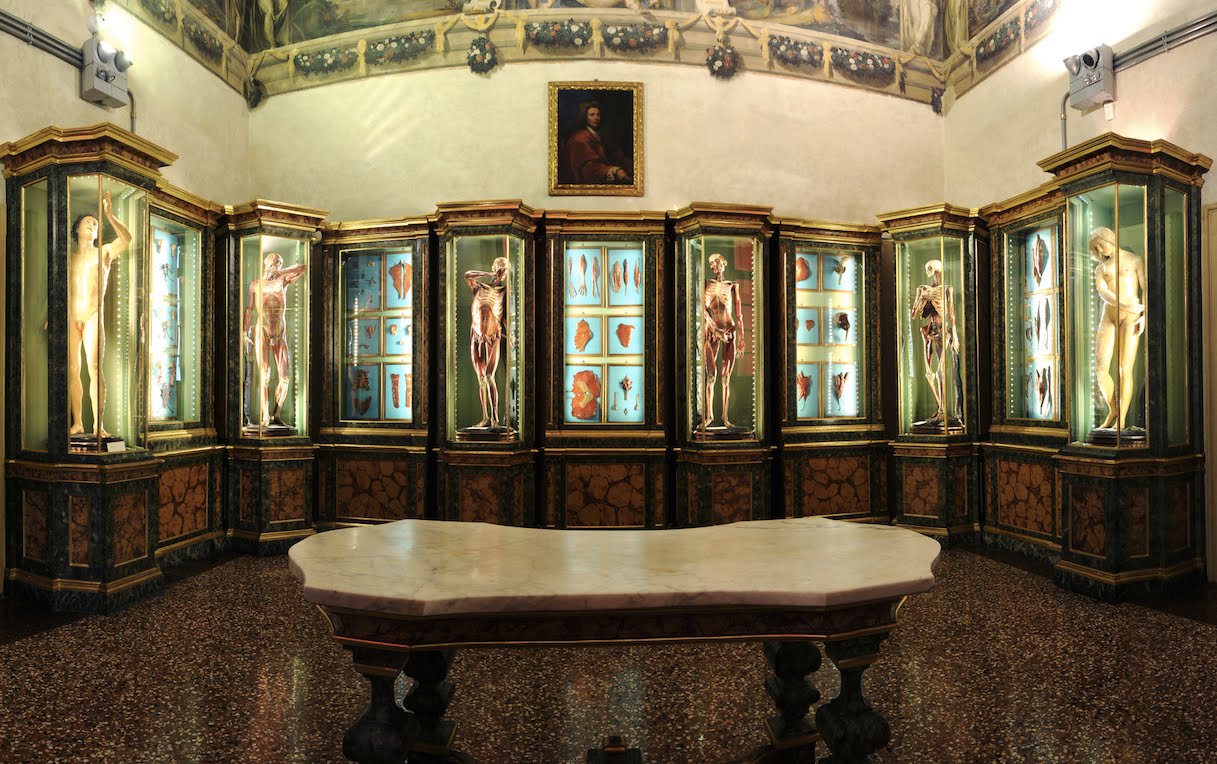
Criminal Anthropology
The discipline of anthropology shares a history with criminology. As we learned in the last section from Lombroso, there was a well-established school of thought that believed we might learn something about criminals by studying their physical and mental characteristics.
Modern criminology has its roots in criminological anthropology as well as the study of morbid anatomy in medicine (criminals were often dissected to teach medical students and doctors). This fact establishes the interdisciplinary orientation of criminology, as well as its subsequent development. The emergence of criminology as an independent science is further related to the anthropological school of criminal law. Criminology branched off from criminal law, the development of which can be discovered in the valuable works of the representatives of this school. These works include works of Ch. Lombrozo (Russian author) “Crime” and “Criminal anthropology,” “Anarchists” by E. Ferri, “Criminal Sociology,” and “Criminology” by R.Garofalo (Konarbayeva and Kazachstan).
Since its inception, criminological anthropology has been subject to wide-ranging criticism, the essence of which was that the criminological anthropology put too much emphasis on heredity, atavism, and the anthropometric data of the criminal, which it hypothesized was the cause of committing crimes. Advocates of criminological anthropology have been cited for the limitations of these theories and their focus on what are alleged to be “pseudoscientific” ideas that aim to explain criminal behavior by a single reason (like Lombroso’s theory of the” born criminal”). Theories of criminological atavism were followed by theories that attributed criminality to moral degeneration and epilepsy. These were followed by psychiatric explanations that emphasized mental disability/mental illness.
Not surprisingly, a large body of criticism was addressed to criminological anthropology. This has lasted for more than a century, and despite a new wave of theorizing the “biological” origins of crime, it continues to influence the modern interpretation of the subject as well as the methodology of criminological anthropology.
History
Historically, we might think of criminological anthropology as constituting a specific response to the limitations of the dogmatic classical school, which was not given to take into consideration either the personality of the criminal or social conditions when considering the crime. Consequently, in the second half of the 19th century, it became apparent that the criminal law based on the theories of the classical school (which ignored social and psychological conditions and the reasons for the existence of crime) was not able to restrain the growth of crime. This meant that new approaches were necessary to solve the problem of crime.
There is, nevertheless, an interesting history that develops that we might trace to Italy, where we discover the roots of criminal anthropology in the study of medicine and morbid anatomy. The oldest anatomical theater was built in Padua in 1594 to be used for medicine lessons at the local university. Anatomical theaters were subsequently built at universities and hospitals across Europe. Among the oldest in Italy are the anatomical theaters of the University of Bologna inside the Palazzo dell’Archiginnasio, built in 1637; those of the Universities of Pavia and Ferrara; and of the Ospedale del Ceppo in Pistoia (18th century).
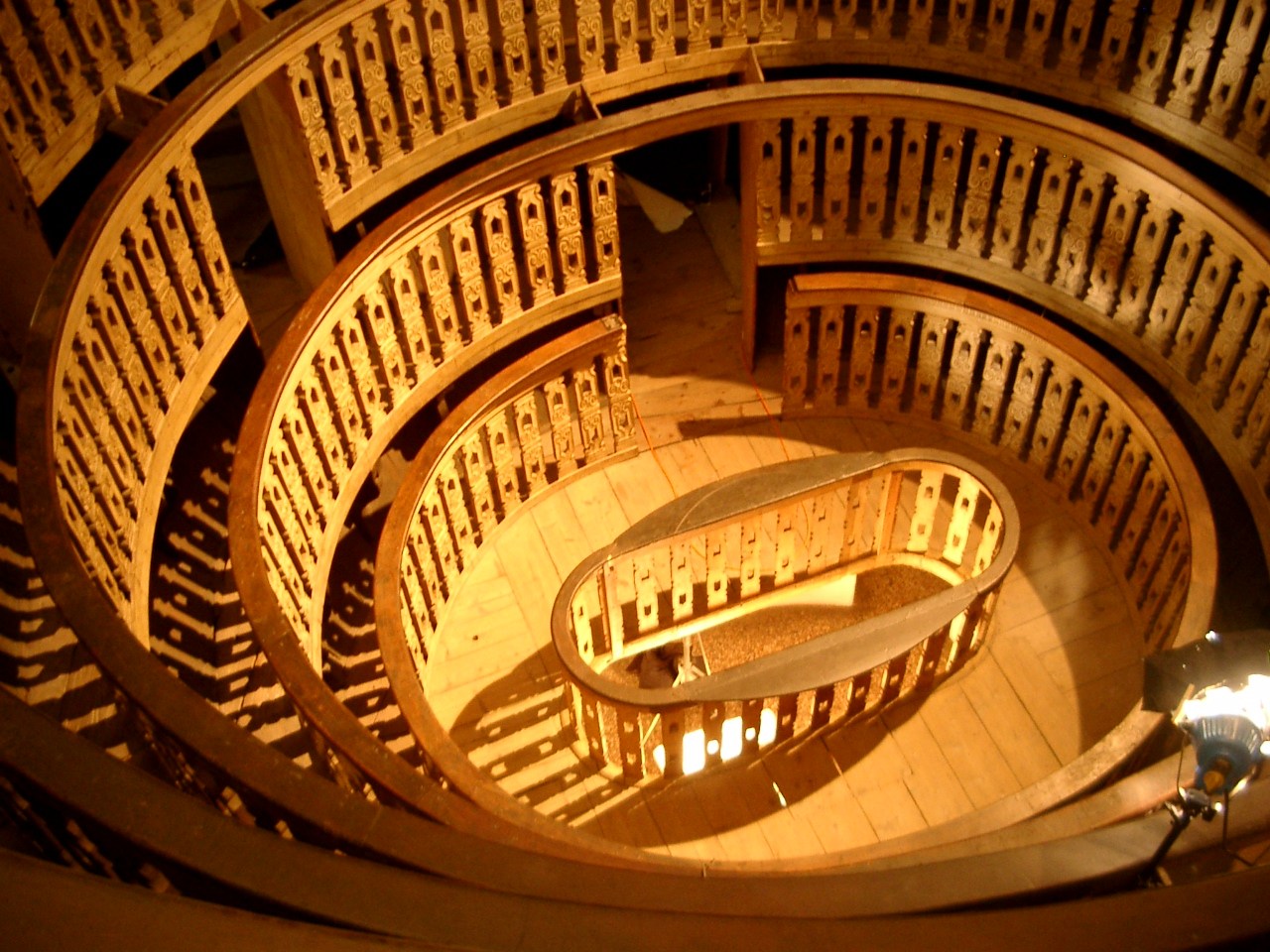
Anatomical Theater, University of Padova, Italy
The Pleasures of Morbidity
The world’s oldest surviving anatomical theater is situated in the Palazzo del Bo at the University of Padua and was built in 1594 by the Italian surgeon and Renaissance anatomist who helped found modern embryology, Girolamo Fabricius Acquapendente. Here, the elliptical-shaped theater has six tiers carved from walnut and can accommodate up to 300 spectators. The seating was arranged so that each student could have an uncompromised view of the dissecting table (Lillie and Donati). Still visible is the inscription, Hic locus est ubi mors gaudet succurrere vitae (This is a place where the dead are pleased to help the living). Following the last dissection in 1872, the theater has been preserved; even the original table still stands, and now the building houses historic surgical tools and artifacts of medical importance (Lillie and Donati).
And if this is not enough, you will also find here the chair and lectern that belonged to the university’s greatest lecturer, Galileo.
[Should you ever find yourself lucky enough to spend some time in Italy, you can visit the university, which is located at Palazzo del Bo, via VIII Febbraio, 2, Padua – note there are strict hourly sessions devoted to welcoming visitors].
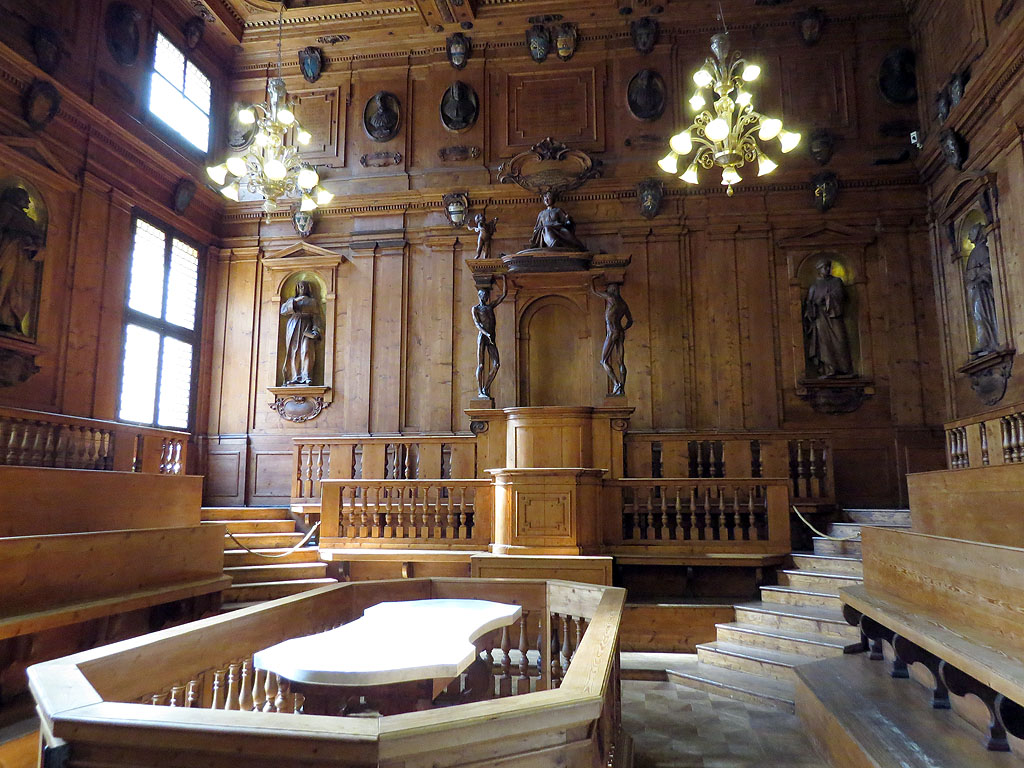
Anatomical Theater, University of Bologna
The University of Bologna houses one of the world’s most beautiful anatomical theaters. Completely carved from spruce, construction of the anatomical theater of Archiginnasio began in 1636 and was completed in 1737, when dissections of human cadavers were performed by candlelight.
Sections of the room are elaborately decorated, and reigning over the room is the carving of a woman being offered a thigh bone by an angel, and carved statues of physicians like Hippocrates, Galenus, etc. stand in niches.
In keeping with tradition when surgeons would consult the stars before performing operations, the ceiling is decorated with astrological symbols in the belief that every part of the body was placed under the guardianship of a zodiac sign. This ornate decoration reflects the understanding of man and his relationship with the cosmos.
Two famous statues of the Spellati, anatomical models displaying the muscles beneath the skin, hold up the canopy above the teacher’s chair and are the work of the well-known artist of anatomical wax displays, Ercole Lelli.
On January 29, 1944, during the Second World War, the theater was almost completely destroyed; after the war ended, the theater was rebuilt using all of the original pieces that were recovered among the rubble of the building.
This theater is also open to the public and is located at the Archiginnasio of Bologna, Piazza Galvani 1.
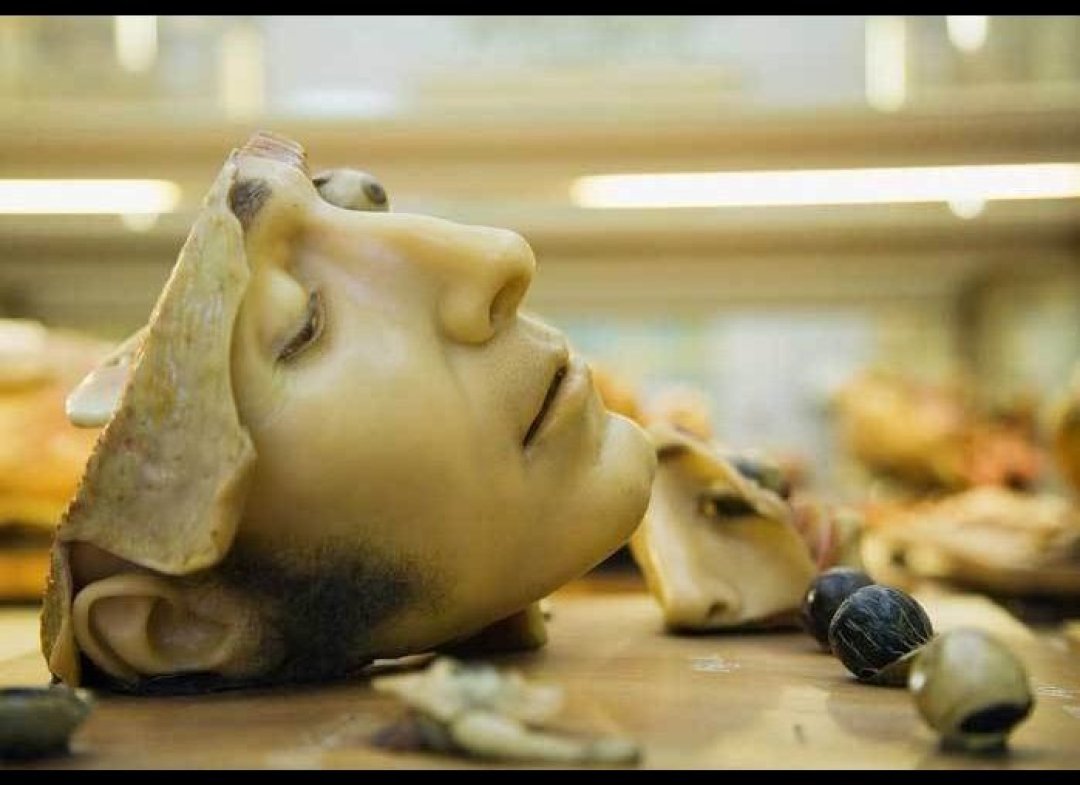
The Mutter Museum in Philadelphia offers a more convenient local opportunity to visit an impressive display of medicine’s efforts to study crime and criminals using medical scientific methods. In addition to offering exhibits that attest to the progress of medicine and the birth of the modern hospital, showcases feature more than 25,000 medical models of infectious diseases, osteological (bone & skeleton) specimens, cysts, tumors, organs, and old surgical instruments, many of which look more like implements of torture than medicine.
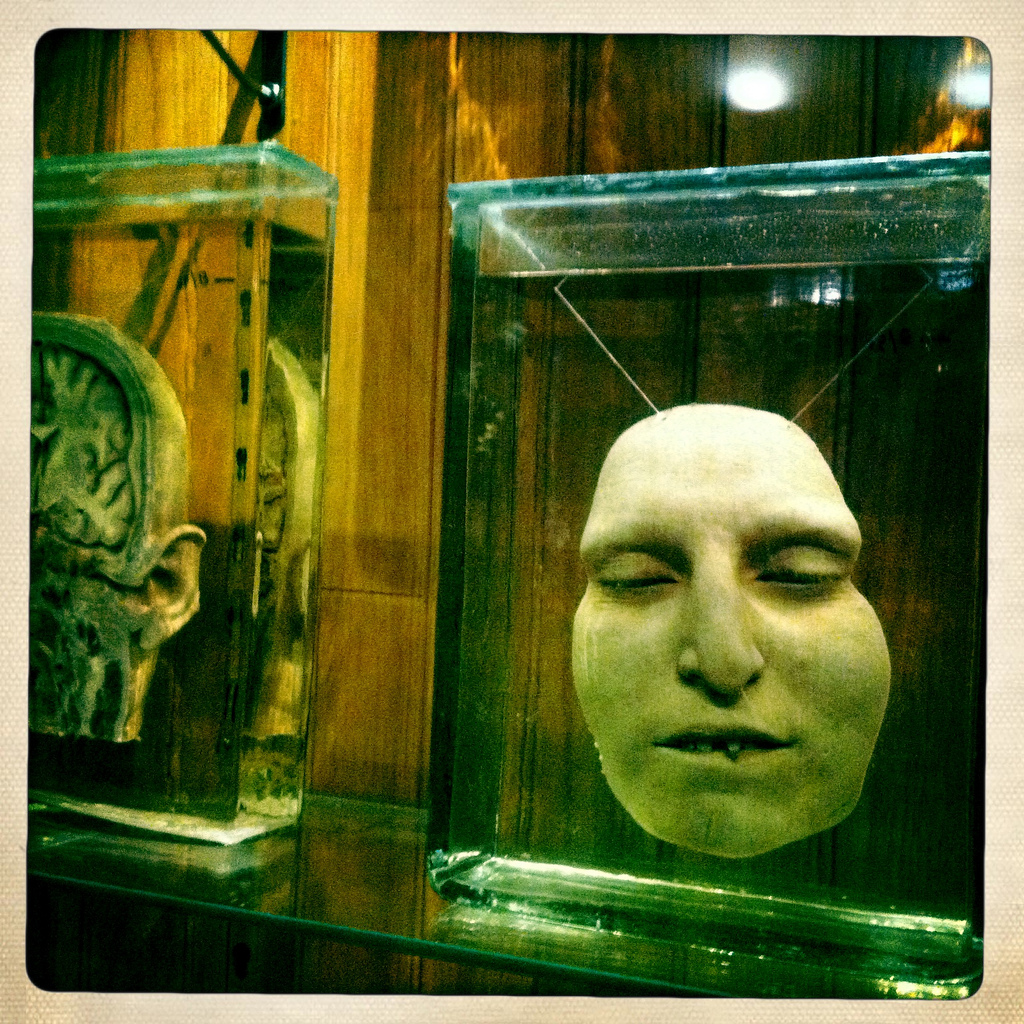
During the time of the 19th century, only criminals’ bodies were permitted to be disseminated and publicly displayed. Since most regular folks didn’t want to associate themselves with that element, it wasn’t fashionable to donate your body to science. Thus, grave robbing was a thing (doctors and scientists bought corpses), as were moulages, or wax sculptures.
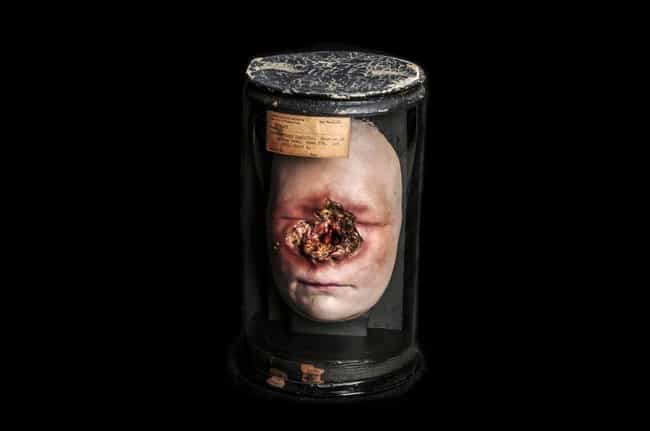
In the above photo, we find a person with late-stage syphilis. How would a doctor treat this patient? The standard course of treatment was to lock the person in a box with mercury fumes, which had a tendency to kill the person before the syphilis did. Yikes!
Sources
“Criminological anthropology during the dynamic integration of scientific knowledge,” by Nurgul Konarbayeva and Astana Kazachstan.
“Italy’s Ancient Medical Schools: Anatomical Theaters,” by Barry Lillie and Silvia Donati.
NOTE: I would like to make plans in the future to take a group of Penn State students to visit the anatomical theaters in Padova and Bologna in addition to the Cesare Lombroso museum in Turin. Other cities to visit would include Venice and Verona. If this sounds interesting to you, drop me a message and stay tuned!!!!!
Reading about criminological anthropology changed the way I think about the history of criminology. I found it interesting that early criminologists like Cesare Lombroso believed criminal behavior could be explained by physical features or inherited traits. At first, I can understand why people in that time may have looked for simple biological explanations for crime, especially when science and medicine were developing quickly. However, I also think these ideas were very dangerous because they unfairly labeled people as criminals based on appearance rather than actions. The idea of the “born criminal” seems unfair and harmful because it ignores social factors like poverty, education, family life, and environment.
I also feel that criminological anthropology shows how easy it is for science to be misused when people rely too heavily on one explanation. Labeling people through heredity or body measurements feels more like judgment than justice. It can also lead to discrimination against certain groups of people. I believe crime is much more complex and cannot be explained by biology alone. Mental health, social inequality, and opportunity all play major roles. Learning this makes me appreciate modern criminology more because it looks at both individual and social causes instead of blaming someone’s appearance or genetics alone.
I thought it was interesting to read how only criminals were allowed to be displayed and typically were the only people being dissected for science. It certainly helps to explain why Lombroso was able to come to the conclusions that he did. There simply was no other cadavers that he was able to study, every single one he had was a criminal so when he came across a feature he thought was abnormal he was able to attribute that to their criminality rather than many of the other genetic reasons we now know. Additionally it helps to display how criminals were treated and that they were not seen as human but rather things that needed to be studied and stopped from allowing them to offend further. Learning about the methods used in the past helps us to understand what we should not do in the future and how our thinking has been wrong and can drastically effect humans.
The article talks about how criminology and medical anthropology are connected. I didnt even know nothing about this until i read it. A lot of people really started to research all of that which is crazy to me. The idea of all of this, is that this article shows us how criminology didn’t start the way we think it did today. Early scientists focused on the human body instead of poverty and environment to explain the crime. They truly believed criminals were born different. The idea came from people like Cesare Lombroso. Early criminology and medical anthropology began around the 1870s-1890s. The biological determinism is the theatre that amazed me the most because it’s the idea that people are born criminals. I was surprised that the scientist actually thought beloved they could really tell if someone was a criminal just by looking at the humans skull or face. It just crazy to me because now a days we know that crime is caused by a varies of things not just biology. It changed a lot in the early 1900s and started late 19th century. I really did not expect criminology to be so connected to medicine and anatomy in the past, because its nothing like this now.
While reading this article, the most interesting part was how individuals with syphilis would be locked in a box with mercury acting as a courtesy to them in hopes of killing them before their disease could. Besides that, it was cool to read about how there was an anatomical theatre built that could hold 300 people, all with a clear view of the operations happening on the table below, alongside the chair that Galileo, such a popular name in history, is preserved. It’s still odd to me that these historical figures believed that criminals could be identified by physical features and their determination on that fact, even after it’d been proven to be inaccurate. I think it’d be really cool to see some of these places in person, especially the Mutter Museum. We still use some of these methods of understanding criminals just in a different light, while the focus may not be on actually dissecting them, the way we imprison, treat, and observe these individuals almost plays along the same lines. Lastly, the way they idolized the stars/ astrological symbols, believing there was a higher guardianship when going about operations, was interesting.
I found this article very interesting. I was amazed at the differences in technology, ethics, and morals from then and now. Scientists used to pray to the stars before dissection in the Anatomical Theater in Bologna, now, that would be unheard of. Criminals were treated in these theatres as such. They were viewed as a mysterious force that had to be studied rather than humans who could have been reformed. I think new technology, along with ethical guidelines, has changed the way we view and understand criminals. I want to visit the museum in Philadelphia and the Anatomical Theatres someday, as I think it would be interesting. Still, at the same time, I can’t imagine being a student observing a dissection in these theatres.
I found this article really interesting. What caught my attention was that criminal brains were dissected and studied back in the day, so students could try to understand what was going on inside a criminal’s brain. This practice was part of criminal anthropology and is connected to Cesare Lombroso’s “born criminal” theory, which I largely disagree with. Criminal behavior is not simply caused by biological factors, and people are not born criminals–so the medical approach used in early criminology has since been viewed as flawed and outdated. The Mutter Museum in Philadelphia shows how these ideas were used in the past, since collections like theirs helped teach and study these kinds of medical approaches to crime.
After reading this article, I am amazed to find out how much detail humans have found out about criminals without using any sort of technology. We can study a person’s physical and mental characteristics that can lead to their criminal behavior. I find it crazy how criminals were dissected after their death and were displayed to the public, as people back then believed there were patterns among every criminal.
I think society can balance curiosity and science, while maintaining respect for human dignity by making sure there are strong ethical boundaries in place about how research is done. Historically, scientists were really focused on learning more about crime, but they didn’t think about consent or treating people with respect, especially criminals. Even though the goal was to gain knowledge, it shouldn’t have come at the cost of basic human rights. Today, we have more guidelines to help prevent that. So, while it’s important to keep learning and advancing science, it should always be done in a way that respects people and doesn’t repeat history. Visiting places like the anatomical theatres would be interesting, but also a little unsettling knowing the story behind them. It would make me think more about how far science has come and how important it is to learn from the past.
It has always amazed me how far that humans have come to study crime and criminals. From believing that different features of a human could determine whether they were a “born criminal” or not to looking at the background of an individual and what process they may have gone through as a human to become a criminal, humans have come a long way to analyze and study the behaviors of people that commit crimes. I find it really interesting that criminals were dissected like animals just to see if there was any irregular parts of their bodies that could explain their criminal behaviors. It is almost like they were test subjects for something bigger in criminological studies. This is especially true for anatomical theaters like the Palazzo del Bo at the University of Padu where there were six tiers which would accommodate up to 300 spectators or students. Each student would be able to see the dissecting table which is something that I could never imagine being part of. Criminals were treated, dissected, and observed in these theaters which in some aspects is what we do in our prison systems. We tend to treat criminals like unknown animals rather than people who could use help to get back on track in life.
Criminological anthropology emphasized atavism, heredity, and the anthropometric data of crime. Criminal behavior can be linked to illness, mental, and physical conditions. At the Anatomical Theater, University of Bologna, surgeons would consult the stars before performing surgery. The ceiling had astrological symbols because they believed each body part was placed under the guardianship of a zodiac sign. There has been a major advancement in technology compared to back then. Technology has changed how doctors do their jobs and how people look at the world. Before technology, people would rely on human contact to find things out. Doctors learn from early medical records of diseases. Doctors now use this to create new cures and obtain new medical research for different diseases. The Palazzo del Bo at the University of Padua was made so that 300 students were able to see the dissecting table with no problem. During the 19th century, people did not want to be associated with the idea that donating your body to science meant you were a criminal. Many people did not want to donate their bodies for science, based on that, and this made grave robbing a thing.
By studying someone’s mental and physical characteristics you can learn about their criminal behavior. Criminology and sociology and anthropology all intercepted. This opened up many different aspects of criminal behavior and how and why it’s caused. Criminological anthropology emphasized heredity, atavism, and anthropometric data of crime. Criminal behavior can also have a connection with mental illnesses. Even with data given people were not able to stop crime from happening. At the Anatomical Theater, University of Bologna surgeons would consult the stars before performing surgery. It is amazing how much time has changed with medical research and performance and how much we rely on technology. Technology has helped change the way of how doctors do their jobs and how people look at the world. With technology we are able to have information on almost anything at the tip of our fingers. Before people relied on human contact and outer space to help them gain information on certain things. Using medicine to study crime helped with the progress with building modern hospitals. With this it helped doctors learn from the early medical records of diseases and things what to do and what not do while practicing medicine. Doctors now have used this information and build off of it making new medical research and cures for different procedures and diseases.
was interested in the fact the researchers all had their own different ways of problem solving through the crimes. Modern criminology has history that goes back to criminals being dissected in front of large medical classes. This is interesting because anatomical theaties were created for medicine lessons in 1594 at an university in Padua. This is interesting because as of today, these tools are still being used in hospitals. Another medical tradition surgeons used during that time period was consulting with the stars, before performing the operations. They viewed all body parts were placed under the guardianship of zodiac signs. Since it wasn’t fasionable to donate your body to science, the 19th consisted of grave robbing.
After reading over this article, it was very interesting to me considering they lacked the technology that we have today. Which leaves them only the ways they know how to catergorize sicknesses and disease. the main idea is that too many people gathered to witness a human dissection which i find very fascinating as well. Pseudoscientific is the idea that aims to explain the criminal behavior. A large amount of criticism came with the criminal anthropology. In later years they never thought that the social aspect and personality types with the person committing crimes. But in the second half of the 19th century they changed it around, so that solving the crime would be a little simple for them. Every student in the lab had a different view on the table that the professor was directing on and they preformed the last one in 1872. This article is very interesting to me because it gives an understanding of the resources used to learn about medicine back then.After reading this article it make see the difference between medicine back then and then now.
I would love to take a trip to the Cesare Lombroso museum in Turin and the anatomical theatres in Pavova and Bologna. During my medical training in the Air Force, I was able to examine cadavers that were previously dissected. They had different cadavers for different lessons to teach us. I was in a room with maybe ten people, imagining a 6 tiered room with 300 spectators carved out of walnut seems amazing. I learned a lot by seeing the actual body parts in person compared to seeing them in a book. The students watching those early dissections must have learned so much and influenced many future advances.
I consider this dive into the more “scientific” and “medical” aspect of criminal studies incredible. The usage of dissection and displays of criminal bodies is bizarre compared to where we started in classical theory. I have had no education on this odd era of criminal dissection and morbid sciences. I feel this era parallels with the victorious feeling of vengeance citizens and officials looked for in justice. The purchasing and display of dead criminals gives me a sense of deterrence and retribution.
It is amazing just how far humans have come in criminal and medical anthropology. For instance, originally, syphilis was treated with mercury and most of the time, killed the patient before syphilis killed them. The roof of the University of Bologna is covered in stars to pay homage to the surgeons who used to consult the stars before surgeries. It is also crazy to think that grave robbing had to be done in order to give doctors a chance to learn on actual bodies. It also amazes me that criminal anthropology started so early. I believed it was a more recent discovery, in regard to the existence of humans. This article was very interesting.
The anatomical theatre of Archiginnasio began construction in 1636 and was not completed until 1737, when dissections of human cadavers were done by candlelight Is very interesting. It’s also very interesting that people were studying criminals that much back then even when the technology didn’t exist.
It is amazing how things were so different back then, I was amazed by how the cadavers of criminals were displayed for students and doctors to learn from them. The fact that criminals were dissected after their death is very interesting. They believed their may be a pattern in every criminal’s body. This article is very interesting because it gives us an understanding of the resources used to learn about medicine back then. Reading this article makes me compare and contrast medicine back then vs present day.
The emergence of criminology as an idependent science is related to the criminal law. Criminology branched off of criminal law which then discovered the valuable works of that school. They thought the reason of committing crimes because it put lots of emphasis on heredity, atavism, and the anthropometric data. Pseudoscientific is the idea that aim to explain criminal behavior. A large amount of criticism came with the criminal anthropology. In later years they never thought that the social aspect and personality types with the person committing crimes. But in the second half of the 19th century they changed it around so they could solve the crime. Anatomical theatres were used for science in Europe to practice medicine.Every student in the lab had a different view on the table that the professor was disecting on and they preformed the last one in 1872.The professors would consult the stars before preforming the disection. The ceiling was decorated with astrological signs and each body part was placed under a zodiac sign.The building was destroyed in the war but they were able to rebuild it using all the original pieces.
The article was very interesting and very detailed. I liked learning about the history of criminology and medical anthropology. I think it is important to understand our history and where the science and methods came from to understand how the medical field and criminology field developed and advanced. While the oldest anatomical theatre originated in Italy, it is important to understand that this discovery and practice had a worldwide effect. After more anatomical theatres were built in universities and hospitals, the discovery of new physical and mental illness spread, which caused other countries to begin their own research. In the image of the face with the late stage of syphilis, doctors would treat this patient with penicillin, which is a group of antibiotics. However, doctors would not have the technology and knowledge they have of syphilis or treatment if it weren’t for the discovery of criminology and medical anthropology. Without the criminological anthropology and the dissection of criminals, the modern criminology and anthropology would not be as advanced. Again, the picture of the man with late stage syphilis, back then doctors tried the mercury chambers. However, if it wasn’t for trial and error and the discovery of these illness, criminology and medical anthropology would not be as advanced as they are today.
This article explains how criminology and anthropology are directly related in old and modern society. This includes the theories that someone is born criminal or you can tell by physical and mental characteristics. It was interesting to read about the oldest anatomical theater which was built in 1594 to be used for medicine lessons at the university. Seats were arranged so the students could see the dissection table, the last dissection was in 1872. There was also the anatomical theater at the University of Bologna which also has dissections of human cadavers by candlelight. During the 19th century, only criminals’ bodies were permitted to be disseminated and publicly displayed. This prompted grave robbing, wax sculptures, and moulages to be a thing.
In the article, I learned that criminology and anatomy in medicine are often linked, because criminal were dissected in order to teach future medical schools and doctors. This is something I did not know, so it was interesting to read about. Some people think that criminological anthropology is often related to classical school but also has limitations on it. Something that I found weird was that morbid anatomy can be traced by to Italy. This raises many questions in my mind. Considering this theory or study has been around since the 18th or 19th century. This article was mainly about the history of criminological anthropology and how/where it all started. One thing that was mentioned at the end of the article really struck my interest, which caused me to look further into it, it was about how a person with late stage syphilis was treated by doctors. They treated the patients by locking them in a room filled with mercury fumes, which eventually killed them. Doesn’t that go against our 8th amendment, cruel and unusual punishment? In my opinion, that does classify as cruel and unusual punishment. Just locking the person in a room with fumes that could kill them, I am sure there was another form of treatment. In my mind, the doctors just chose the easy way out.
Reading this article was very informative to me. They lacked the technology that we have today which leaves them only the ways they know to categorize sicknesses and disease. The idea that so many people gathered to witness a human dissection is very fascinating as well. Nowadays, I don’t think that even a handful of people would want to watch a human dissection, let alone that many. To put the diseases and sicknesses in a showcase is also very interesting to me. This could inform the public of what to look out for and what the effects of these things really are. I think the theaters discussed in the article are very interesting and informative for people in that time period as well as now. Someday, I would like to visit one of these kinds of museums after reading about them in the article.
Criminology and anthropology are directly correlated with each other. Anthropology is the scientific study of humans, human behavior and societies in the past and present. It is helpful for criminologists when discovering a body to determine how it has been altered and the details about it. But the anthropology in this article describes social anthropology and studies patterns of behavior cultural meaning, norms, and values. I found it very interesting that anthropology and criminology dated all the way back to the 1500s. I believe that in order to figure out why people commit crimes we must their physical and mental characteristics. It was very interesting to find out that the bodies of criminals were dissected to teach medical students about anatomy in medicine. While some people believe that it is immoral to dissect dead bodies like that, I believe that it could be good for the future of criminology and anthropology.
Criminology and Anthropology have such an odd relationship over many years. Criminology had to start somewhere to understand how people act and react to crime however it’s interesting how they went about it. For 278 years they dissected human beings to try to understand how physiology takes part in committing crimes however they did it in an immoral way. The cadavers they used during the 19th century were criminal bodies that were disseminated and displayed for the public. Grave robbing was also another thing that happened in which doctors and scientists would buy these bodies. This means that only the people who were accused for committing a crime or who may have been unlucky to be dug up were cut up and put on display. Morally that’s horrific and terrifying because the families of these people had no say in what was happening to their bodies. I understand the wonder they had about physiology and criminology however the way they went about it was terrible. Their is also the evolution of doctors treating patients and trying to find the best way to do so. The idea of locking someone in a box with mercury fumes is shocking because I would have never thought they would do that to a human being however they didn’t have the knowledge of medicine back then. It’s just disgusting that this was the standard course that killed people faster than the syphilis did. It’s sad and frustrating that it took so long for them to realize clearly this treatment wasn’t working. Every study has to have a start and their is always trials that need to be ran however the way the went about using people and displaying them is disgusting and extremely immoral in my opinion.
What interested me most about this article is how researchers progressed through different approaches of solving crime. Modern criminology has roots that trace all the way back to criminals being dissected to teach medical students and doctors. What is very interesting about this is that anatomical theatres were created to be used for medicine lessons at a university in Padua in 1594. This is very interesting because those types of teaching tools are still being used to this day in hospitals. Another interesting medical tradition surgeons used during this time period was “consulting with the stars” before performing operations. They believed every part of the body was placed under the guardianship of a zodiac sign. The nineteenth century consisted of a thing called ‘grave robbing’, where doctors and scientists had to buy corpses. This was due to the fact that it was seen as non-fashionable to donate your body to science. Many of the traditions people used to study criminals have done nothing but increase the technologies and theories we have in this day and age. Although many of these ground-breaking facilities were ruined during World War II, the museums created by the ones still standing are some of the most educational buildings in the criminology world.
Before reading this article, I did not know of the rule that anthropology plays in criminology. I think it is real interesting that we potentially could figure out who will be criminals based off their physical and mental characteristics. I personally do not believe in the physical aspect of someone being a criminal because everyone is made up differently. I believe thinking about the physical aspect of someone being a criminal is too easy of an answer. It is exciting to think that is an answer but it is not but looking at the mental characteristics is much more intriguing to me. I believe the study of someone’s mental characteristics shows way more about someone’s criminal behavior. I did not know before reading this article that anthropology in criminals is a criticized theory based on the limitations, but I can see why that is true from what I talked about above. I also did not know about the anatomical theaters that were used for medicine. I thinking it is really interesting how huge these buildings were to be able to fit a bunch of people to see the dissection table. These buildings could fit 300 people and this just goes to prove that people really believed that the answer to people being criminals was based on their physical characteristics. I like to think that the answer to being able to see a similarity based off of the physical structure of criminals, but it is an unlikely answer that sounds crazy today.
I found it very interesting that the oldest anatomical theatre was built in 1594. However, I would think a lot of people wouldn’t want to watch another person get dissected. As for the whole idea of criminology anthropology and dissecting people, I never knew it was used to find out why people commit crimes and just to get a look inside a criminal. I always thought that dissecting was used to figure out how someone got killed or murdered, unless I’m just not understanding the reading. I think it is a good idea to display diseases and so on that way a lot of people get familiar with it, but it is also pretty nasty to look at. Criminological anthropology and dissecting are a good way to see if there was anything inside of them or inside their brain that got them to commit crimes. They can try and find patterns in specific crime groups of people like serial killers.
Before reading this article I wasn’t sure of what to expect. One of the most interesting things from this article to me was the Anatomical Theatre at the University of Bologna. It is very interesting to me that surgeons used to really perform surgeries and consult with the stars before they operated believing that the stars would protect the body parts of which they were operating on. It is also interesting that only criminals were allowed to be publicly displayed because maybe if they would have let someone donate themselves to be on display they would be able to compare and contrast the criminals to the non-criminals. Grave robbing was also a very interesting topic that I was not aware of. Grave robbing consisted of literally digging or uncovering a grave to steal body parts from the person inside, but I’m guessing it was only those of criminals. Reading this article has made me become more aware of this topic but has also made me more interested with studying this topic.
Hi I’m a criminologist who is going to write an article on medical criminology. I wanted to ask you if you have any articles or resources in this area.
thank you
Sorry, I have plans to write one too but haven’t had the time to get started. Good luck!
I found it very interesting to read about the history of criminology and medical anthropology. I had no idea what and anatomical theatre was and never really even heard of one before. It blows my mind that the oldest anatomical theatre dates all the way back to 1594 and there are still ancient anatomical theaters standing today. I also found it very interesting that they used criminals to dissect and use in the anatomical theaters. Also that they only publicly displayed criminals because donating your body to science was scene as not the right things to do, so researchers had to rely basically solely on criminals to perform their dissections and studies. I think it would be very interesting to go to one of those museums and see all of the different items on display and see the oldest standing anatomical theatre.
It was fascinating learning about anatomical theatre in the Palazzo del Bo at the University of Padua and the Mutter Museum in Philadelphia. Both places represent the roots of criminal anthropology in the study of medicine and morbid anatomy. All these theatres were built at universities and hospitals across Europe. The oldest is the Palazzo del Bo at the University of Padua, built in 1594. It has been know as world’s best theatres. Before performing operations, surgeons would consult the stars and the belief was that zodiac sign would protect body parts.
The Mutter Museum in Philadelphia displays more than 25,000 medical models of infectious diseases, bone and skeleton, cysts, tumors, organs, and old surgical instruments. During that period, grave robbing was popular because it wasn’t a normal practice to donate your body to science. Only bodies were permitted to be used for science, were criminal’s bodies.
After reading this article, I would like to visit few anatomic theatres, starting from The Mutter Museum in Philadelphia.
It’s amazing how long ago this research started, and that it is still going on today. I think that it’s quite interesting to see how ideas and perceptions about how and why people were criminals have changed over such a long period of time. There are so many well preserved examples of history. Even though the University of Bologna was destroyed in WWII, it was able to be rebuilt so impressively. I think it’s interesting to imagine a bunch of ancient scholars crowded in those anatomical theaters, trying to advance the understanding of the human body and mind.
Looking back in time to see the progression of knowledge within disciplines can be both deeply interesting and creepy. With disciplines like criminology and medicine, old practices were often cruel and inhumane. The early days of medicine often involved live dissections of humans, along with mutilation and what appears today as torture. Criminology’s past doesn’t seem quite as horrific, but practices like dissecting criminals in surgical anatomical theaters nears some of the more inhumane things humans have done in the past. What is interesting is that this was the start of modern criminology: attempting to use the scientific method and empirical evidence to further the disciplines knowledge. I will add, though, that these early stages of cruel practices were most likely necessary to build the foundation of knowledge we have today. Another interesting thing I learned from this reading was that in the past only criminals were used for dissection and medical purposes. Its backwards from what it is today, in which many people choose to donate their body to science. I guess the stigma from using criminals for dissection material and medical learning purposes discouraged ordinary folk from wanting to associate with the discipline.
I find it very interesting how long ago we started studying the bodies of criminals. I did not know that these types of theaters even existed before reading this. I am glad to know that there are still theaters standing today. To think that surgeons were expected to do their job under candle light is insane to me, I cant even imagine doing my homework by candle light. I however am a bit confused on how much candle light they needed and had to have up to 300 people watch at one time. I also enjoyed reading about the Mutter Museum in Philadelphia. I personally find the progress of medicine and examples of diseases and what they look like, very interesting!
I think the idea of having an anatomical theatre is very interesting and would love one day to go see one. The fact that people believed in criminal anthropology so firmly that they went as far as to build essentially a classroom to dissect the bodies of criminals to learn about them is crazy to think about now. The history of these places really makes me think about how differently we see and study anthropology today. I really think that using an anatomical theatre to teach was probably such a valuable tool and possibly helped the science of anatomy and anthropology advance. having the zodiac signs up on the ceiling really shows how old these places are and the ways people back then though. although they could be more of a symbolic nature it is almost unbelievable just how old these places are. I have been to the Mutter Museum in Pennsylvania and it is a wonderful place to go. it is just so overwhelmingly interesting but just as creepy at the same time. To see a skeleton online in a picture and one in person is a totally different feeling, but a humbling one that I think everyone should have the chance to experience
I think it is crazy that these anatomical theatres exist and what is held in them. It is extremely interesting how people followed criminals minds and bodies and studied them to see why they did and do what they do. The 3 theatres discussed in the articles states that the surgeon did consult the stars before beginning any experiment or project. In world war two, a theatre was almost completely destroyed, but the people decided to rebuild what was broken with the pieces that were broken off and it still stands to this day. All of these theatres go way back in the 1500s to the 1800s and to see how old and ancient these buildings are shows how much memories and events have been held in them.
To imagine, anatomical theaters have been around all the way back to 1594 is very amazing. You would think the criminal justice field is more interesting and more advanced in technology today but in my opinion it’s balanced. To think that the museum was destroyed in 1944 but rebuilt is amazing because now people from all over the world can go see it. The anatomical theatre of Archiginnasio began construction in 1636 and was not completed until 1737, when dissections of human cadavers were done by candlelight. It is noted that this is one of the world’s most beautiful anatomical theaters. Another thing that amazed me was that zodiac signs were important to them. Today, a lot of people don’t really believe in the zodiac sign because of religious reasons or just because its not in their nature. I feel like this human art is good for our future students and for criminal justice field today.
Indeed, it’s super interesting! I can’t wait to organize a future trip so that Penn State students can see these places in person!
Before reading this, I was not aware of what an anatomical theatre was or even that they were so popular. The roots of criminal anthropology seem to have started in Italy. The oldest anatomical theatre was built in 1594 in Padua and it was used to medical lessons. They were built so that every spectator/student in the stands could see the dissection. The theatre is still preserved today with the original table. There is another popular anatomical theatre at the University of Bologna. Surgeons at this theatre would consult with the stars first before performing operations. Zodiac signs were important to them and this process. However, the theatre was destroyed in 1944 during the Second World War but fortunately it was rebuilt using all of the original pieces. There is also a museum in Philadelphia which displays medicine’s efforts to study criminals and crime. The museum features medical models of diseases, bone and skeleton specimens, cysts, organs and old instruments used in surgery.
Before reading this, I had no idea about any of it. It amazes me of how many individuals decided to start a research on the anatomy of criminal bodies. To imagine, anatomical theatres have been around all the way back to 1594 and I had no idea! The oldest and still surviving theatre is in the Palazzo del Bo at the University of Padua. This theatre has tiers carved from walnut and has an elliptical shape, which can accommodate up to 300 spectators. The last dissection occurred in 1872 and has been preserved ever since. The anatomical theatre of Archiginnasio began construction in 1636 and was not completed until 1737, when dissections of human cadavers were done by candlelight. It is noted that this is one of the world’s most beautiful anatomical theatres. It fascinates me that surgeons consulted the stars before performing any operation. Out of the three anatomical theatres discussed in this article, this is the one that amazes me the most. It even surprises me how this theatre was almost completely destroyed during the Second World War, but they were able to rebuild it using original pieces that were recovered among the rubble. It is amazing how these theatres are opened to the public in order to share the history.